



Bulbjerg Knude: Hiking Along Denmark’s Only Bird Cliff
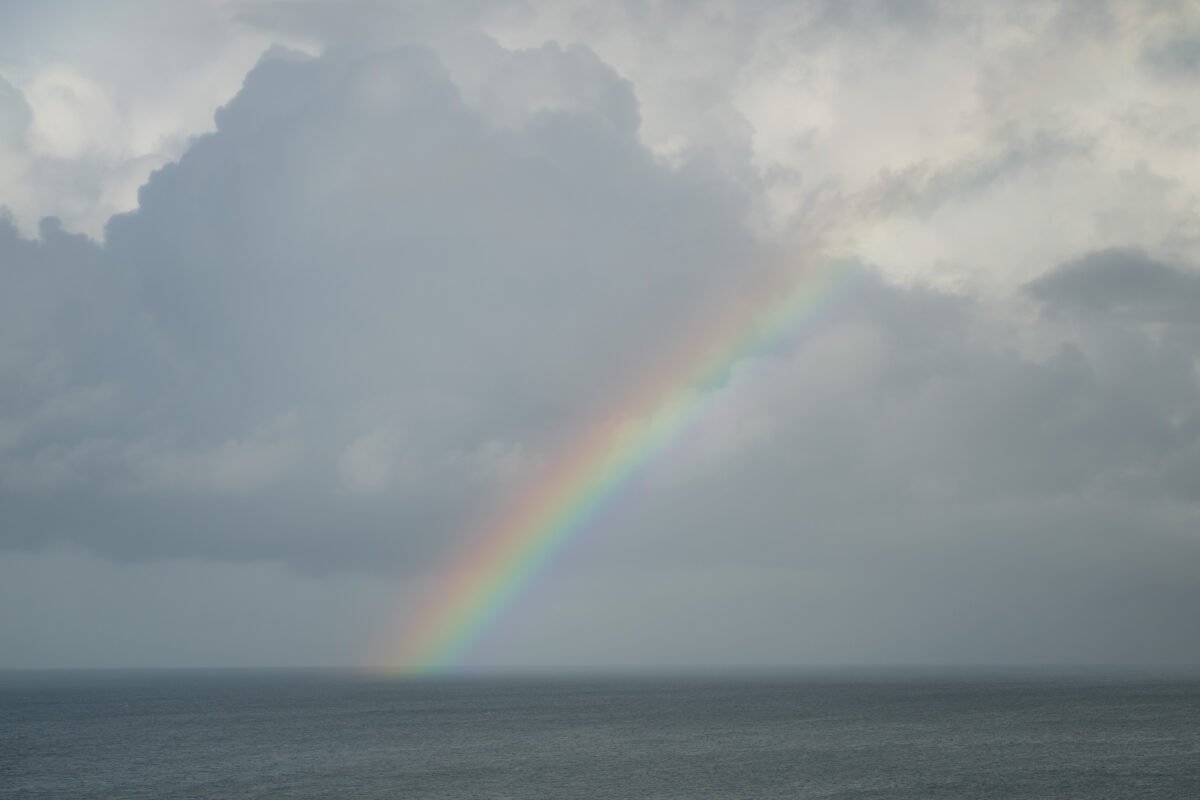
In September we spent a week in North Jutland. It was exactly the kind of week that I associate with Denmark: quiet, lots of space, and days with changeable weather. Not too warm, perfect for being active – and it’s precisely those windy days that make the Danish coast so special to me. The light constantly changes, the sound of the waves fills the air, and the landscape feels different every minute. There’s something about Denmark and Scandinavia that draws me in. It’s the tranquility, the space, but also the people who still have time for a chat.
We had rented a holiday home near Slettestrand. A holiday home in Denmark is our ideal base: lots of peace, plenty of comfort, and in the evenings the space to process photos. It feels as if the days naturally slow down. From Slettestrand you can go in any direction – forests, cliffs, beaches, and dunes. A perfect place to spend a week exploring nature.
What is Bulbjerg Knude?
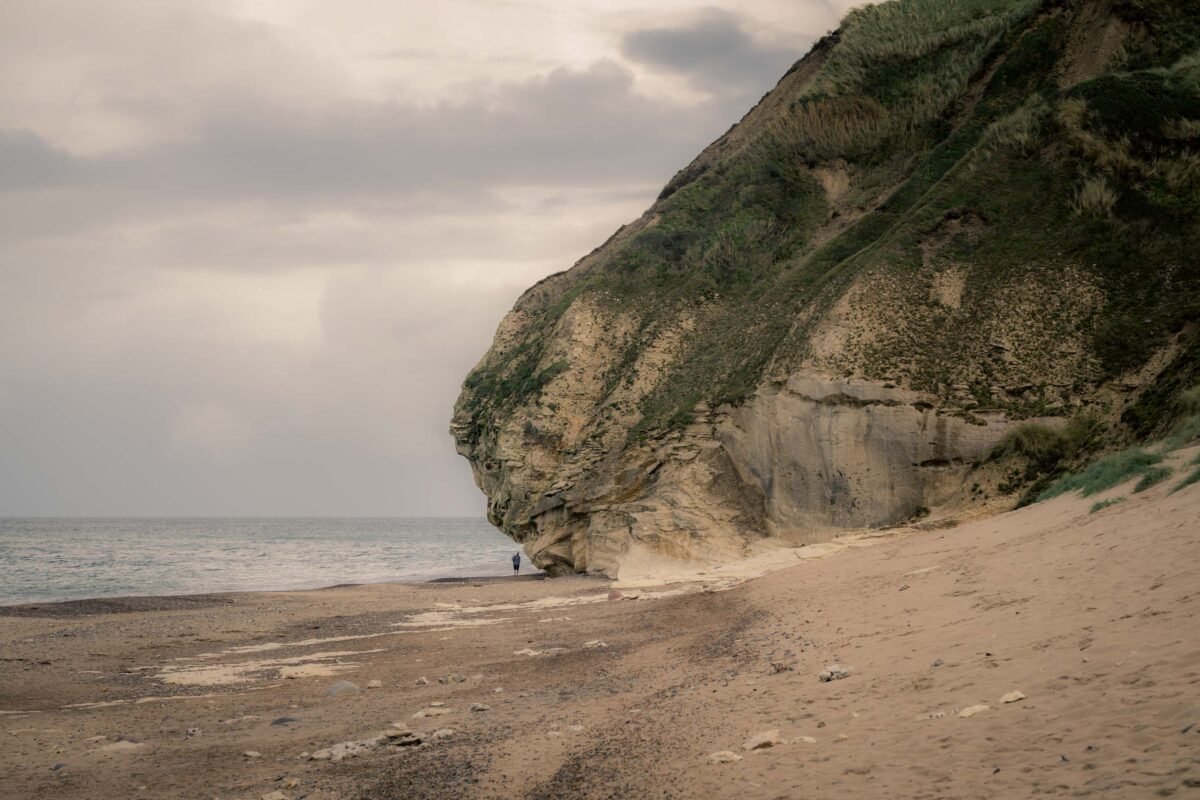
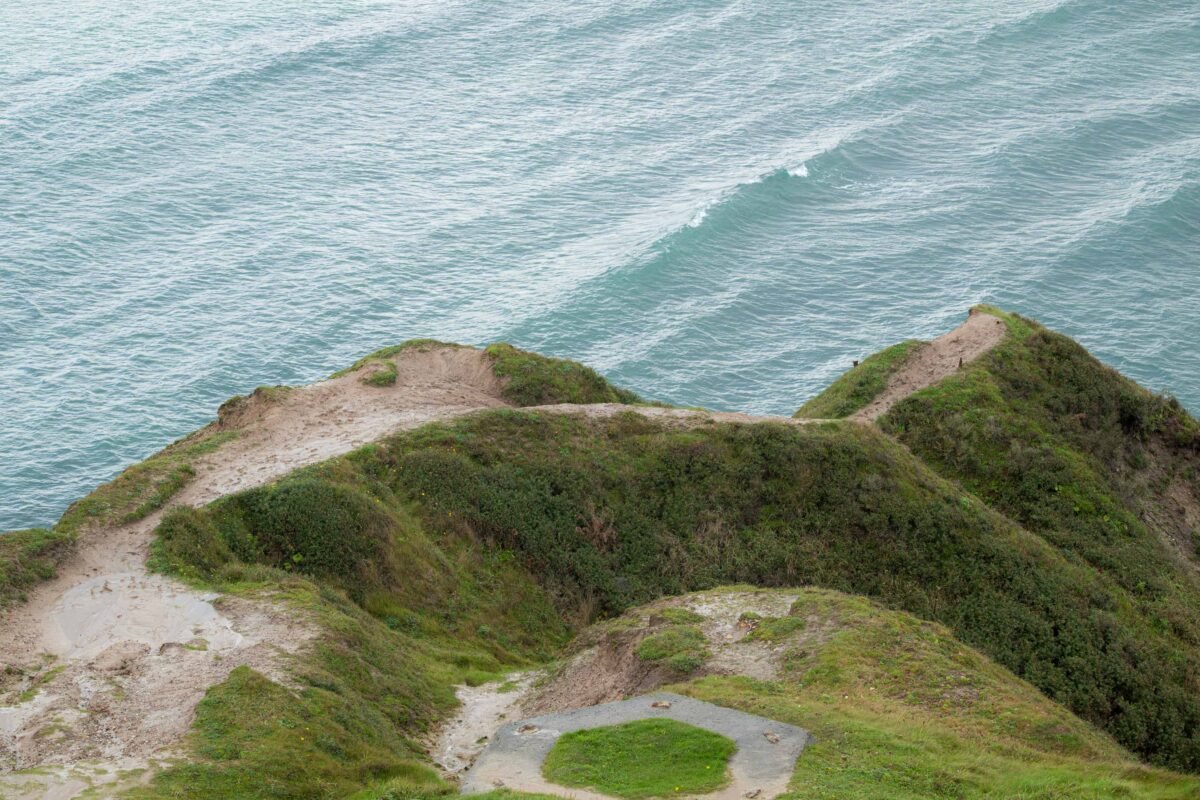
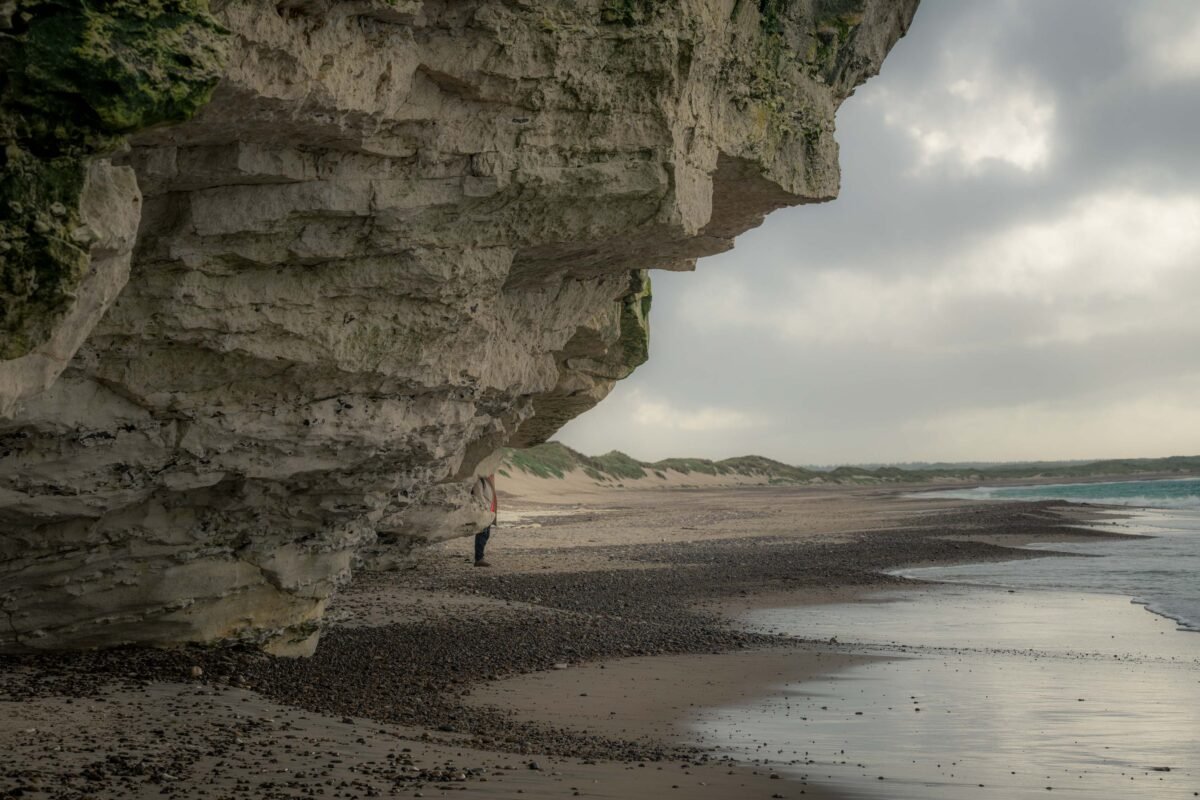
Bulbjerg Knude is a striking limestone cliff on the north coast of Denmark. At 47 metres high, it’s the only true rock formation on the Danish mainland, giving the landscape here an entirely different character. The area lies on the so-called Jammerbugt, surrounded by wide beaches, beautiful dune areas and forests.
The cliff was formed from limestone deposited around 65 million years ago during the Late Cretaceous period. At that time, this entire area was covered by a warm sea where bryozoans (moss animals) formed reefs. The hard limestone is more resistant to erosion than the surrounding sand and clay – which is why Bulbjerg stands out so prominently along the coast.
Interesting: Bulbjerg is also called “the shoulder of Jutland” because of how it looks on the map. It’s the only bird cliff on the Danish mainland – only on Bornholm will you find similar rock formations with breeding seabirds.
The Bird Cliff: Kittiwakes and Northern Fulmars
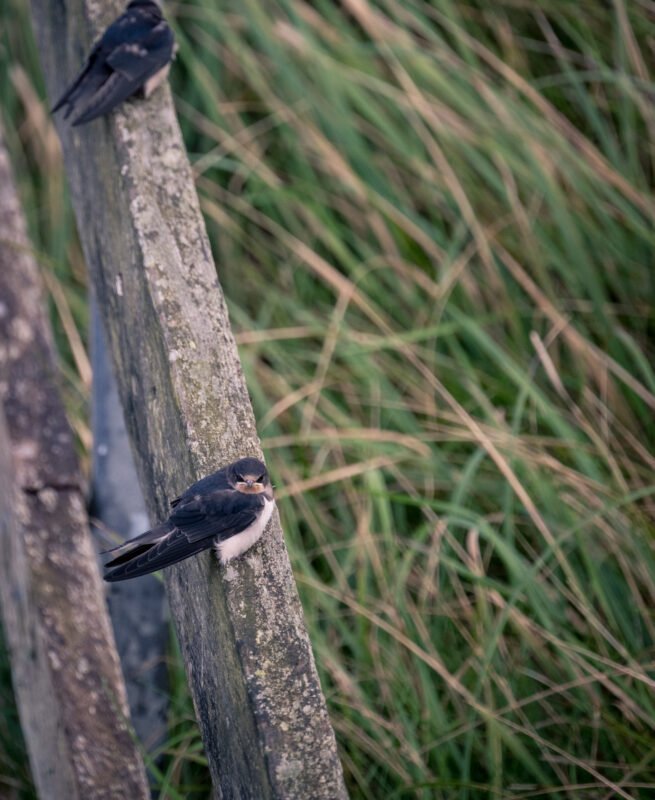
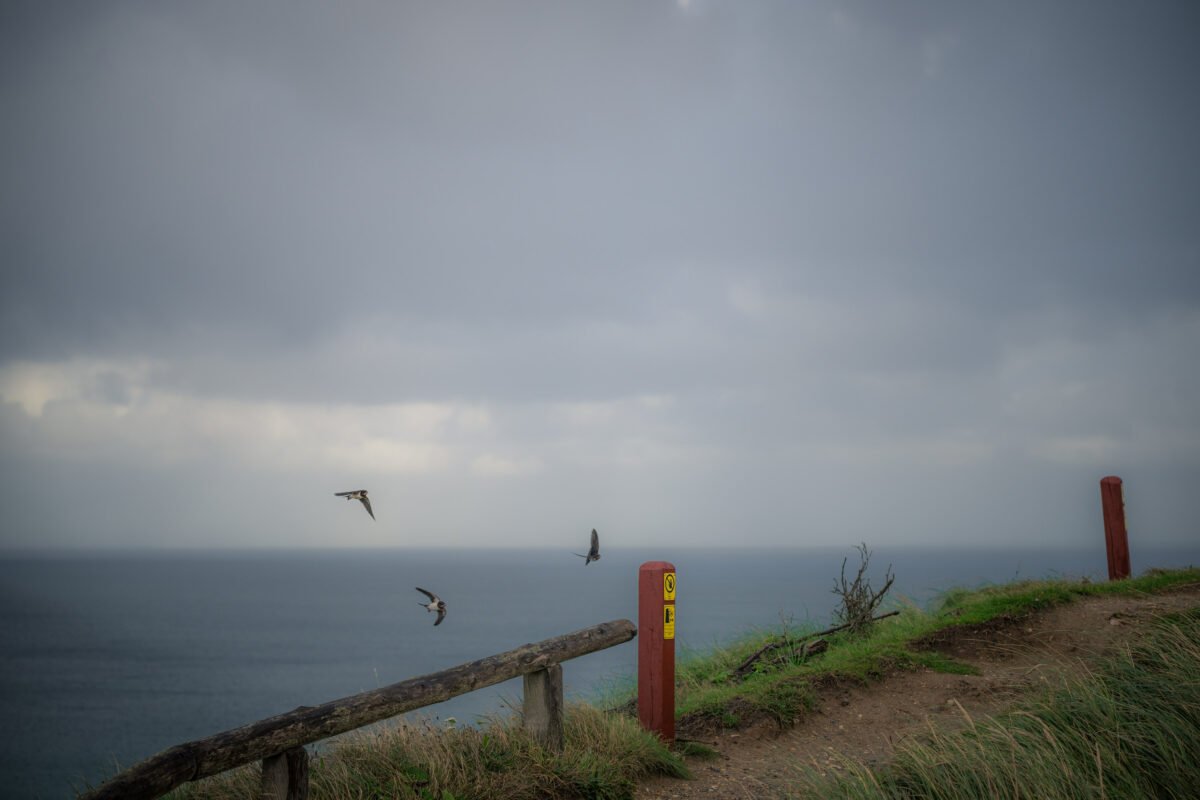
Bulbjerg is not only geologically remarkable but also ornithologically. It’s the only breeding site on the Danish mainland for the black-legged kittiwake (Rissa tridactyla), a North Atlantic gull species. Up to 500 pairs breed here annually on the narrow rock ledges. The rarer northern fulmar also breeds here in small numbers.
The area is protected as a Natura 2000 site to preserve this unique nature. During the breeding season (April-July), the cliff is filled with the sound of thousands of birds – an impressive spectacle.
Hiking Route: From Lild Strand to Bulbjerg
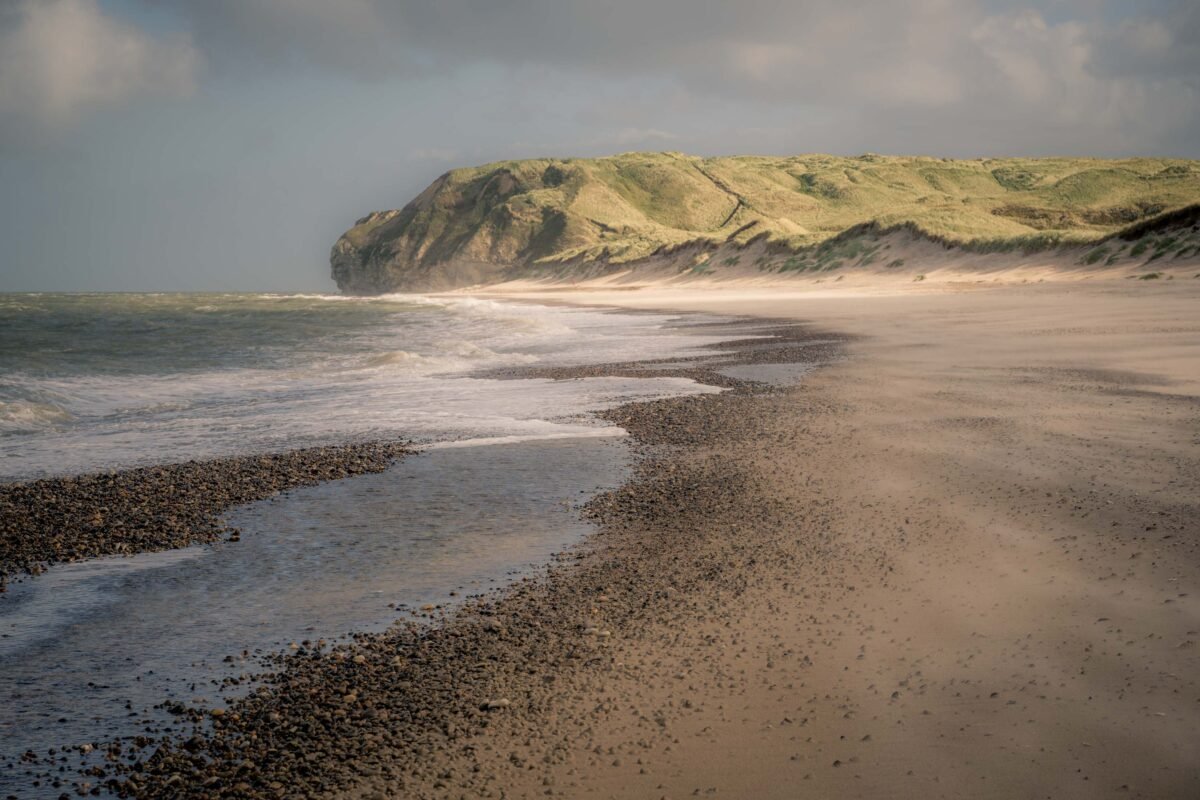
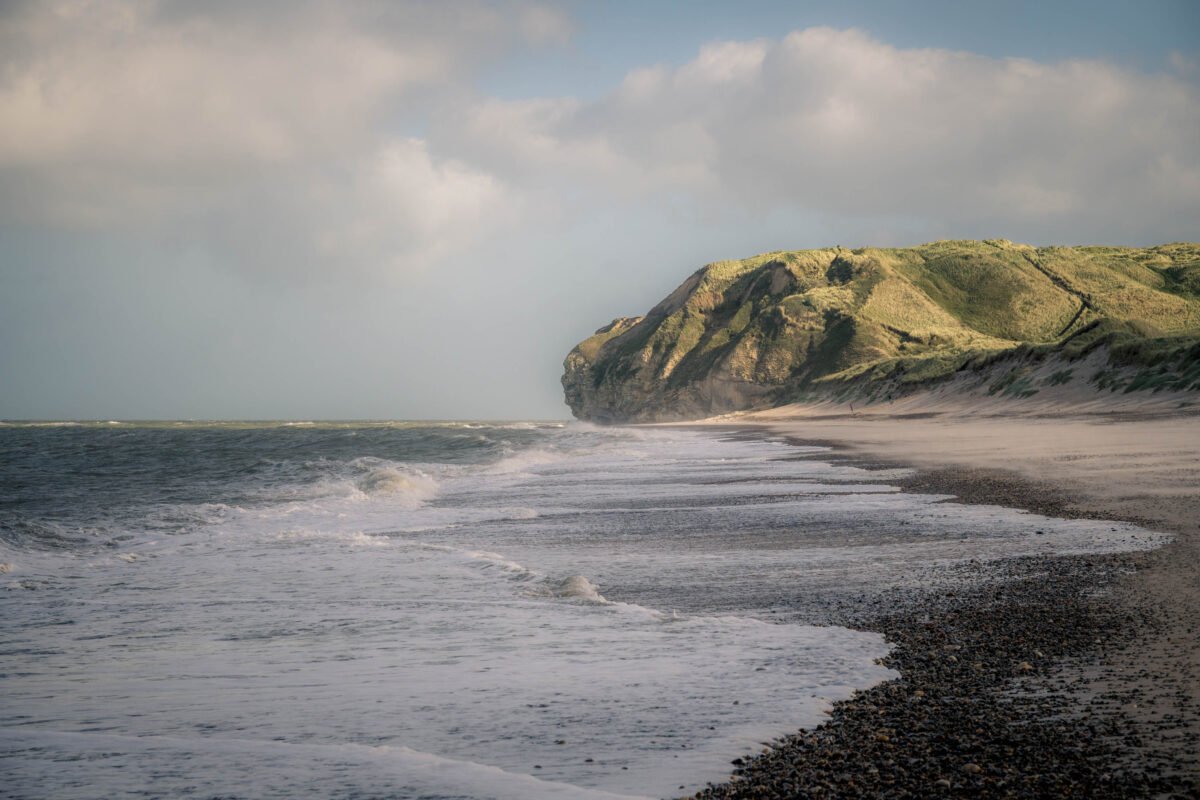
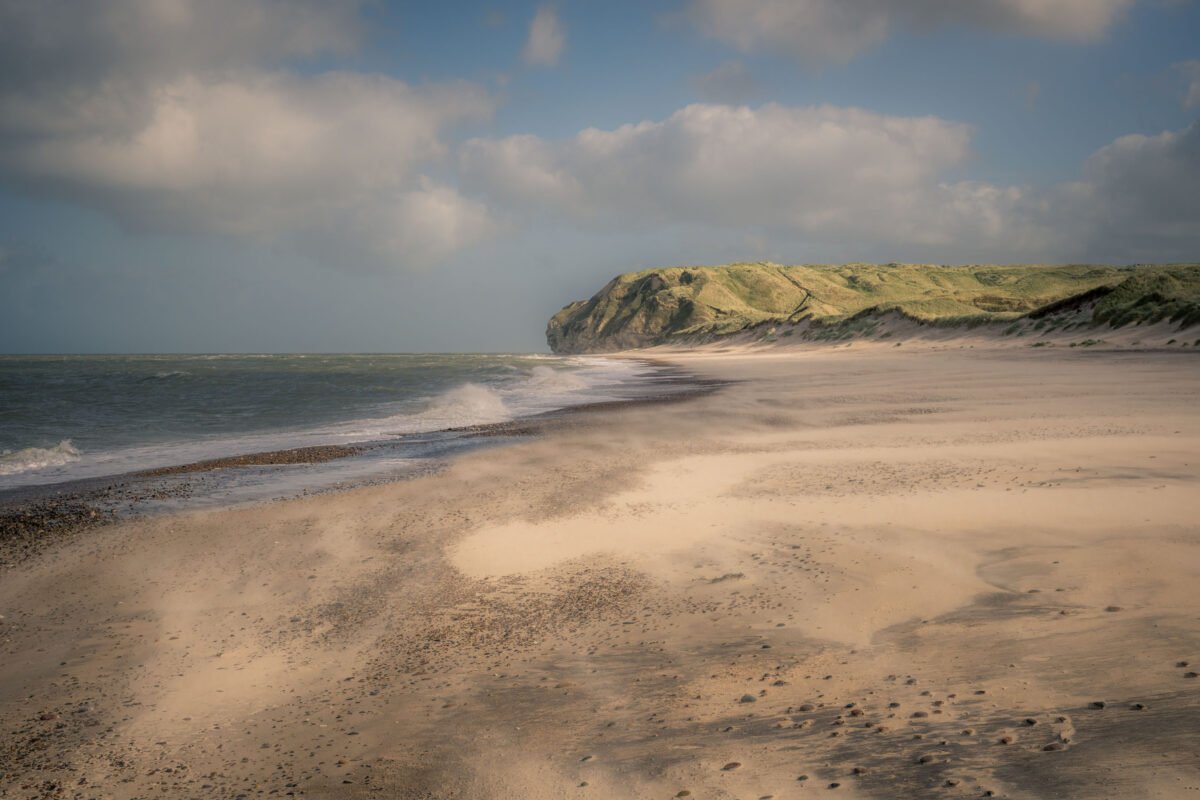
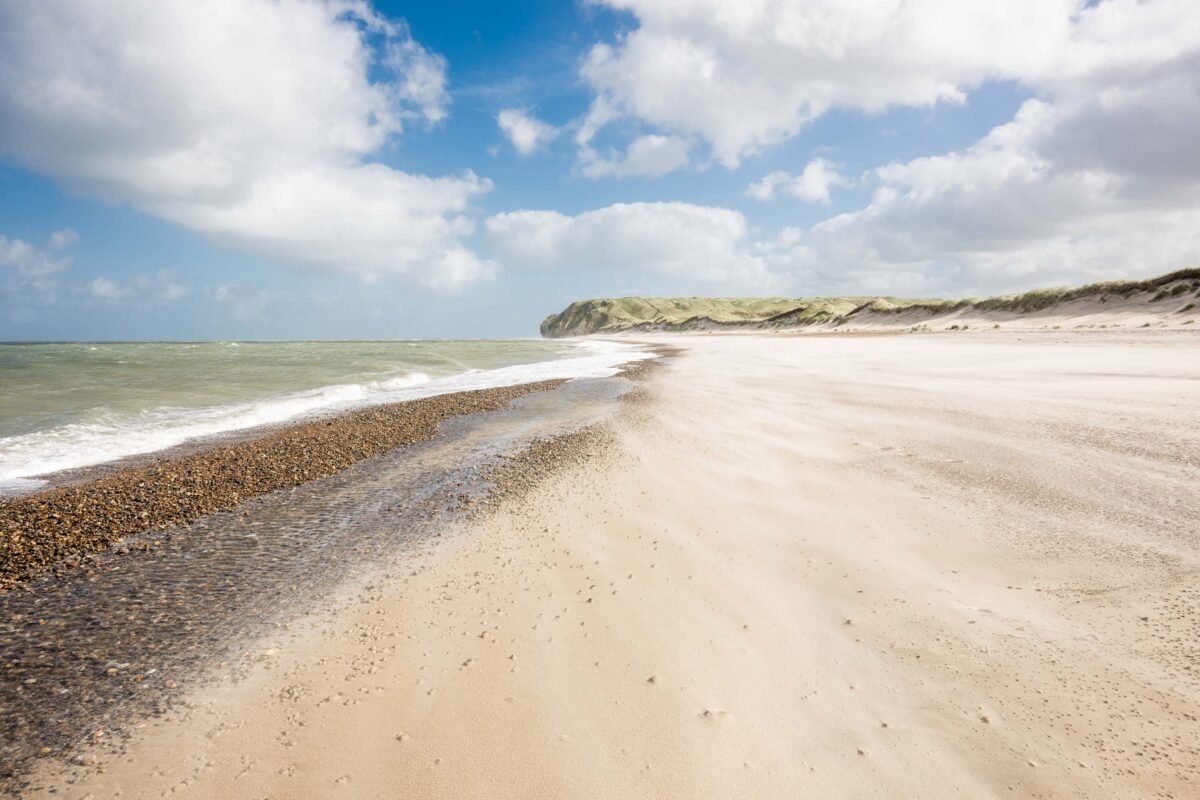
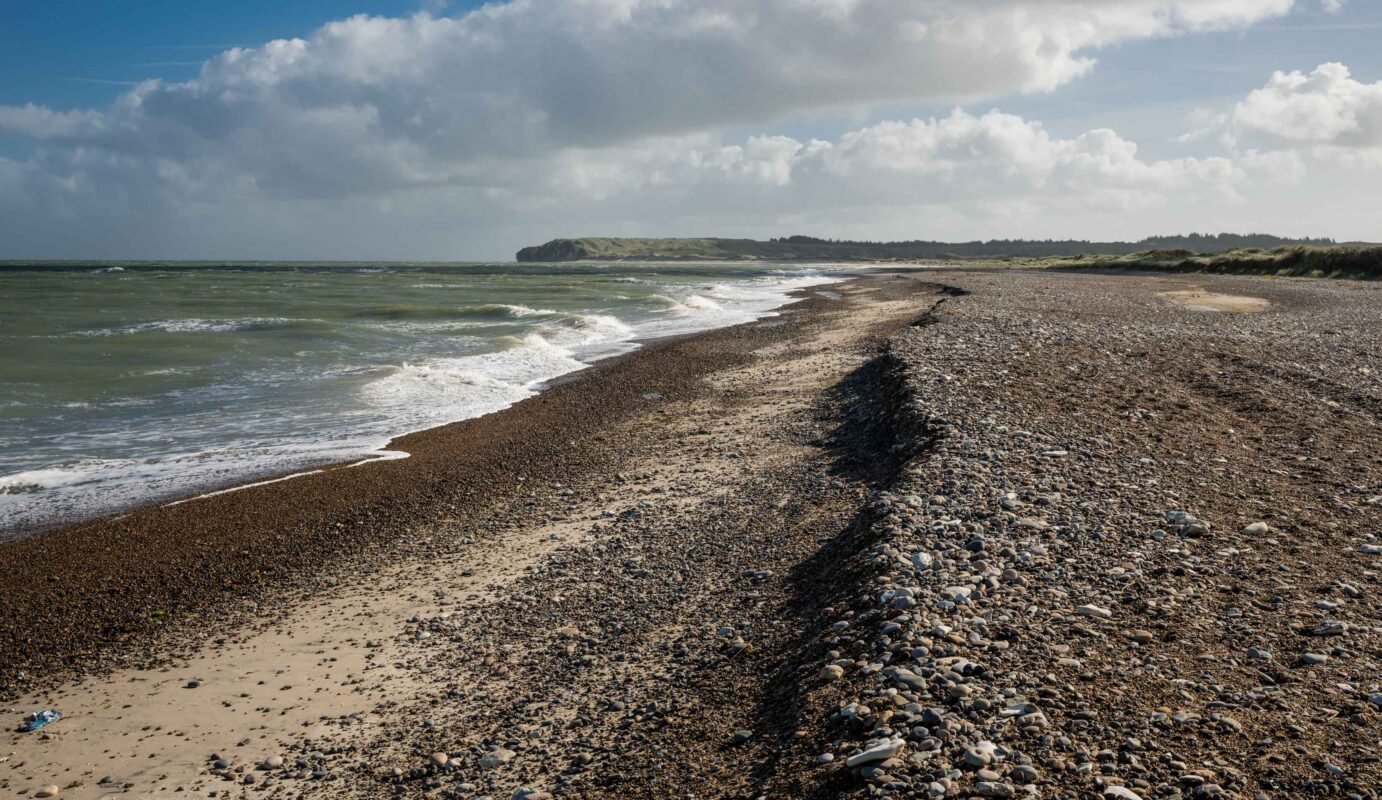
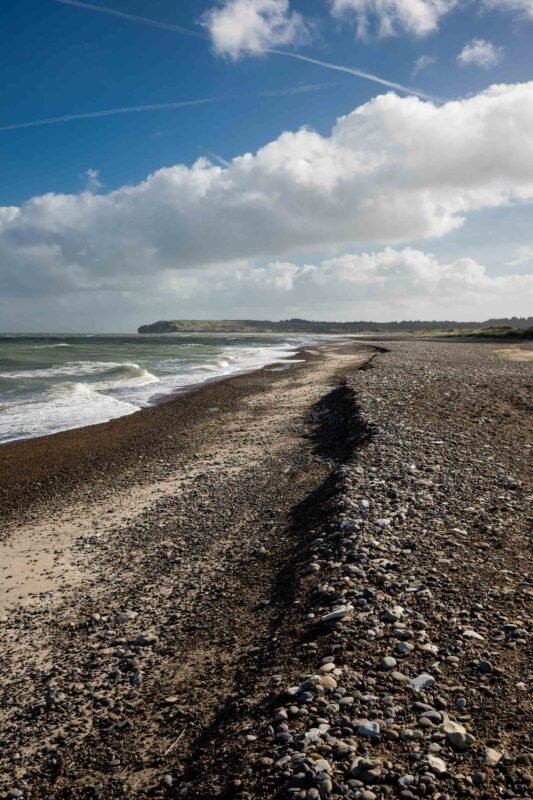
Our route started in Lild Strand, a small fishing village where traditional coastal fishing is still practised. From the village, you can easily walk along the beach towards Bulbjerg. With strong winds, you immediately feel why this is a beloved spot for nature and coastal photographers. The waves pound the coast and the sky constantly changes from soft pastels to heavy grey. The cliff slowly looms up, higher and more imposing as you get closer.
Route Details
| Distance | 8-9 km (loop walk via beach and dunes) |
| Duration | 2.5 hours |
| Difficulty | Easy to moderate – sandy beach and dune paths |
| Start/Finish | Lild Strand (fishing village) or Bulbjerg car park |
| Terrain | Sandy beach, dune paths, heathland |
| Trail marking | Part of Nordsøstien (North Sea Trail) |
| Suitable for | All levels, dogs welcome |
Route Description
The planned route was simple but beautiful: from Lild Strand to Bulbjerg Knude along the beach (about 4.5 km), and back via the dunes. This provides two completely different landscapes. On the beach it’s vast, wide and rugged; in the dunes it’s quiet, sheltered and warm in colour.
The return route through the dune area shows just how varied this coastal strip is. Narrow paths, marram grass swaying in the wind, and occasional views over the heathland. It’s an area where you could easily continue walking for hours. The route is part of the Nordsøstien, a 1,640-kilometre walking trail through all of Denmark.
Hiking Tip: At low tide, you can walk along the foot of the cliff for the most impressive perspective. Be aware though: in bad weather or high waves this isn’t safe. The limestone is constantly eroding and pieces can break off.
An Encounter with a Seal
I know this place thanks to the videos of Morten Hilmer, a Danish wildlife photographer who lives in this region and is often found at Bulbjerg. His love for nature and his way of life speaks to me enormously, so it felt almost natural to experience this place myself.
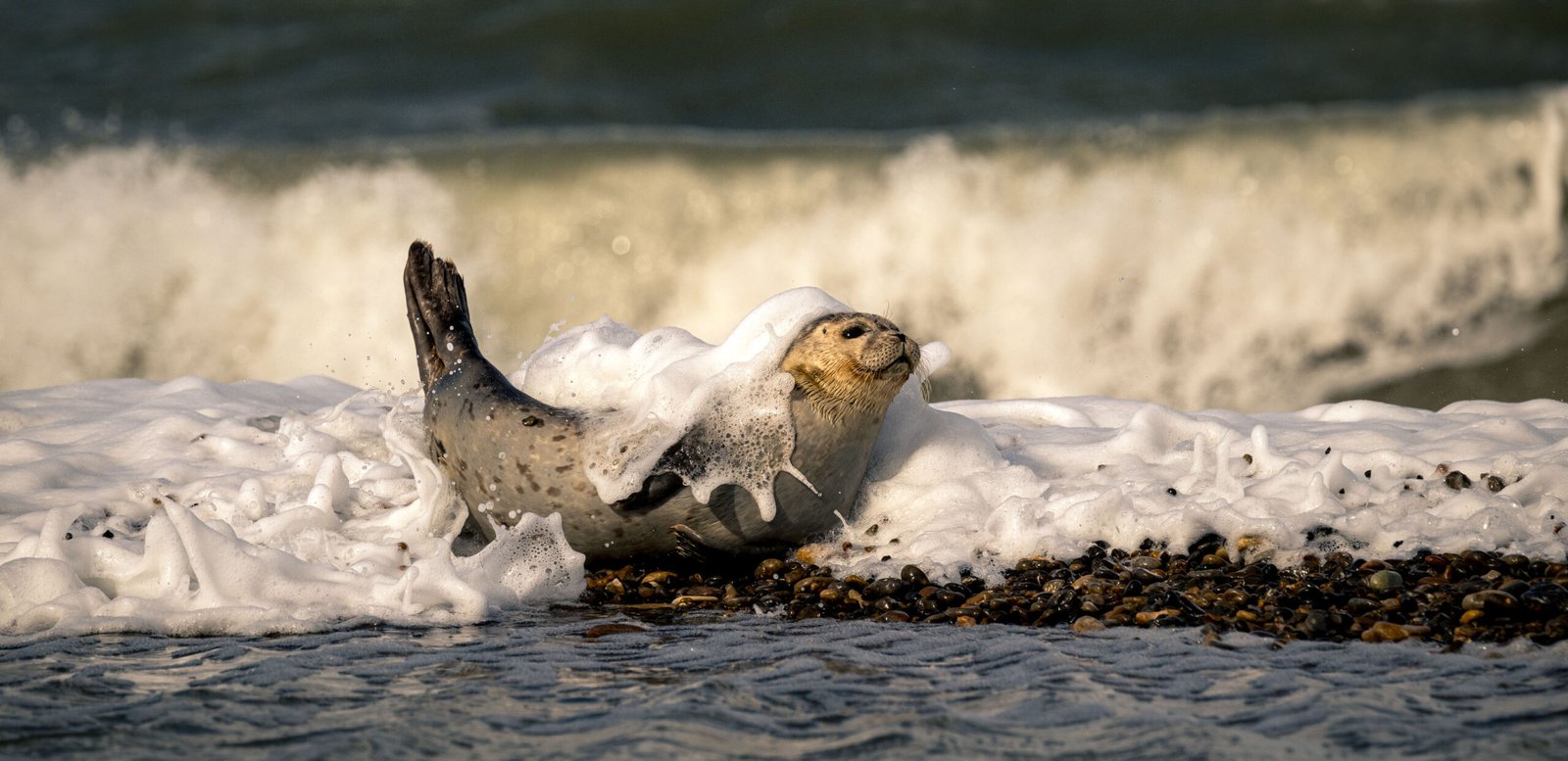
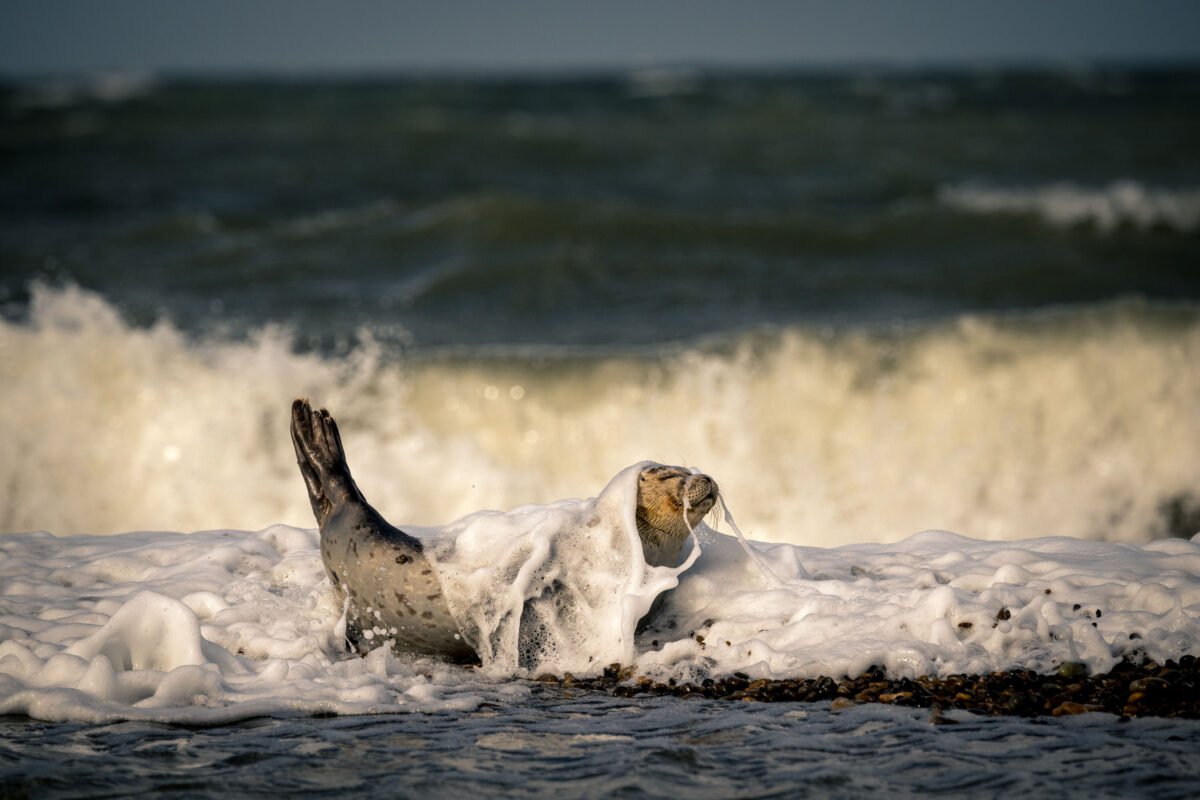
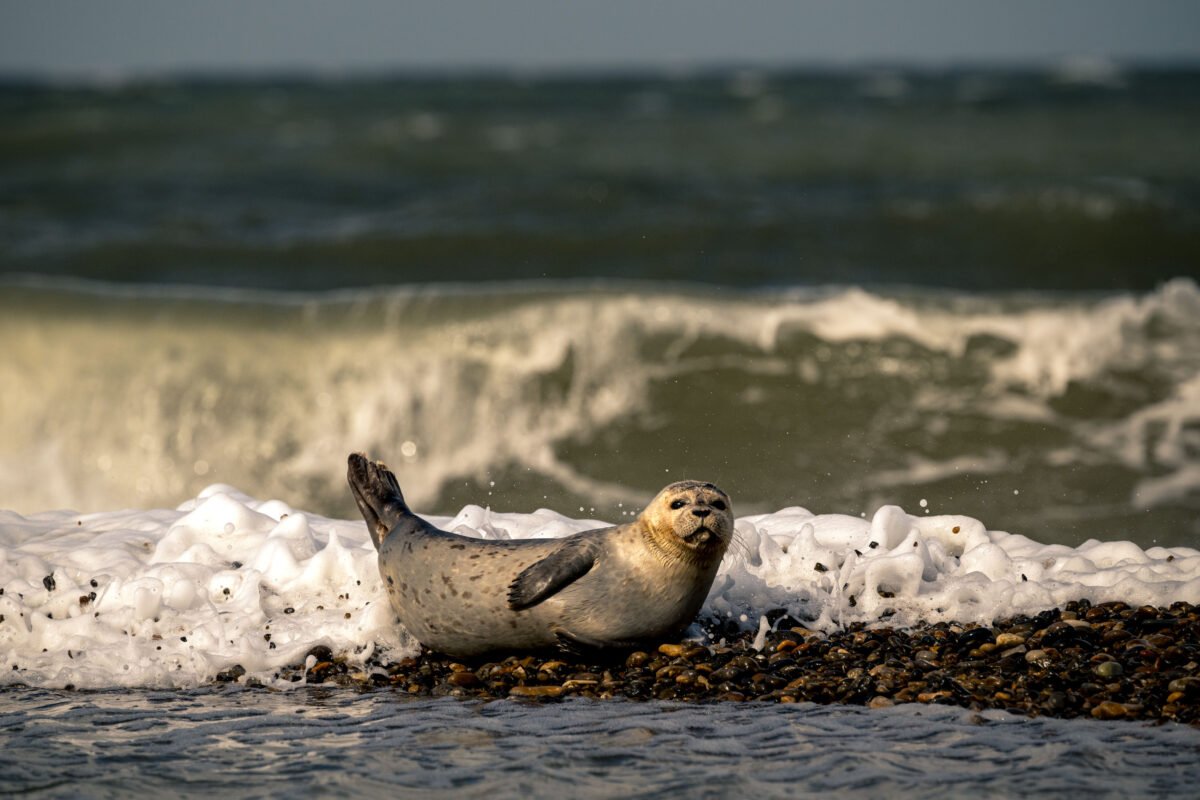
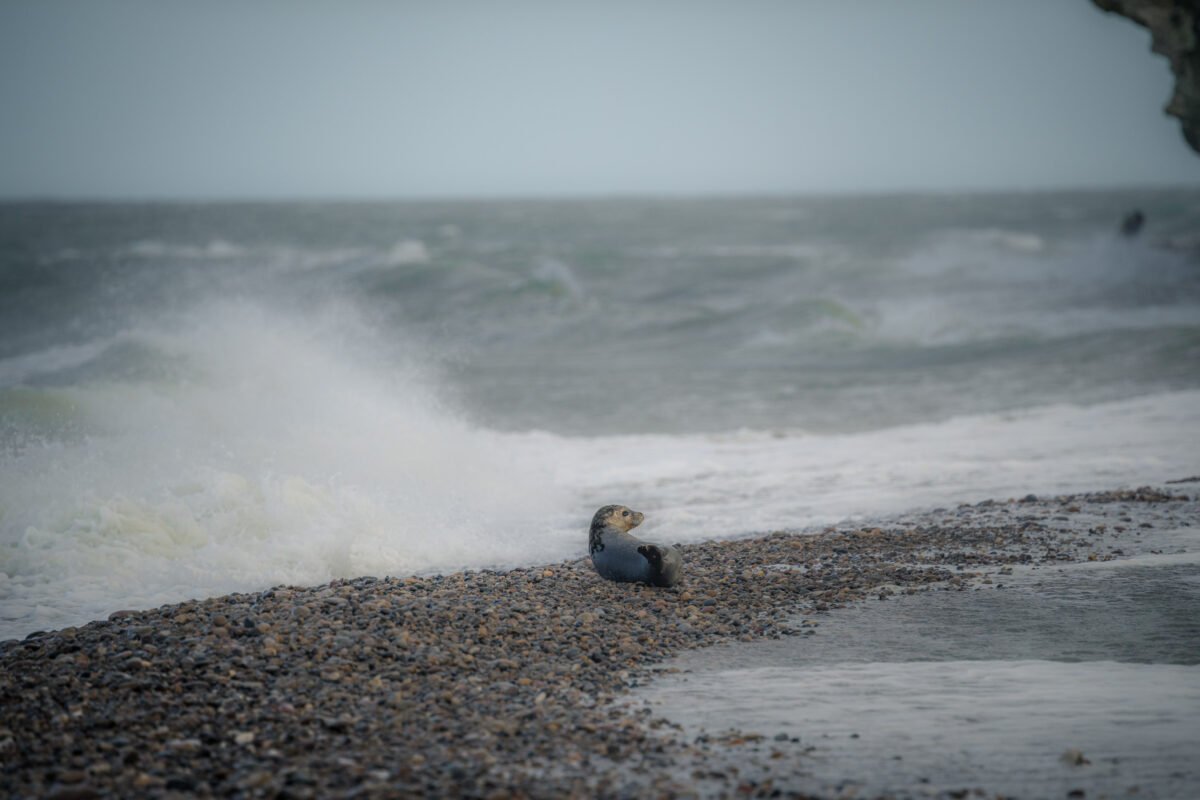
On the day of our walk, it was quite windy. The beach was wide and empty, the sea restless and foaming. As we got closer to Bulbjerg, we saw something lying on a ridge of sand and pebbles. A seal. It was sheltering from the wind, just high enough to be safe from the waves – but low enough that each large wave sent foam rolling over it.
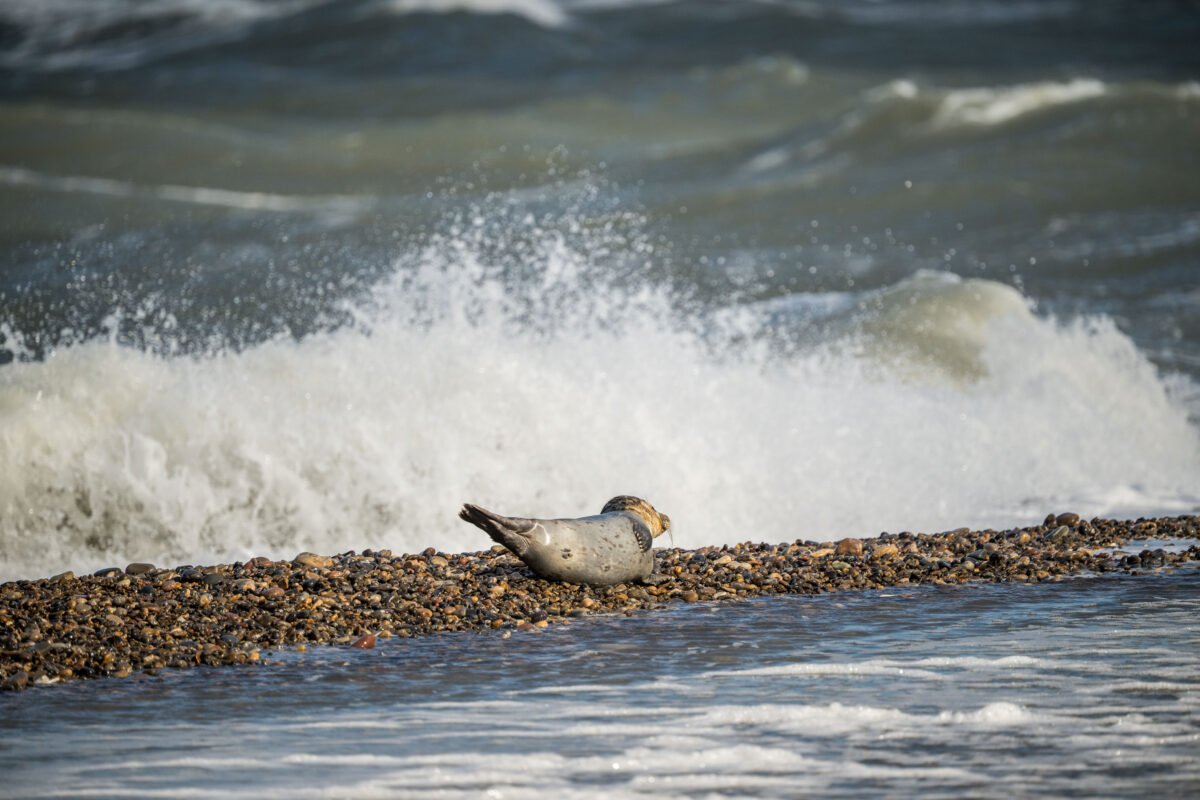
We kept our distance. We didn’t want to disturb the animal and certainly didn’t want to force it into the rough sea. But even from a distance, it was a special moment. The light, the wind, the foam, the animal resting against the elements. So I switched lenses and mounted my 100-400mm Nikon to capture a good photo from a distance.
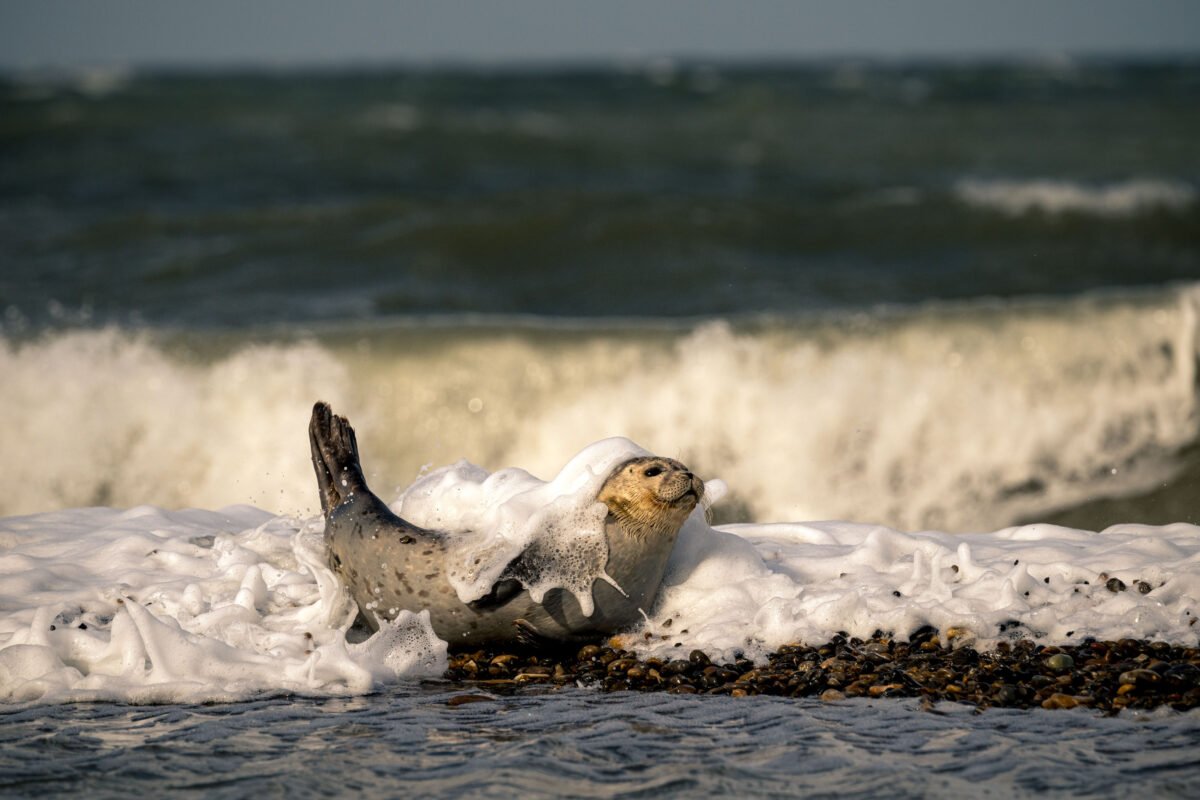
Wildlife Tip: Seals regularly rest on the beach at Bulbjerg. Always keep at least 30-50 metres distance. A telephoto lens is essential for respectful wildlife photography. Never disturb the animals – they may feel threatened and flee into the dangerous sea.
The Bunker on the Cliff
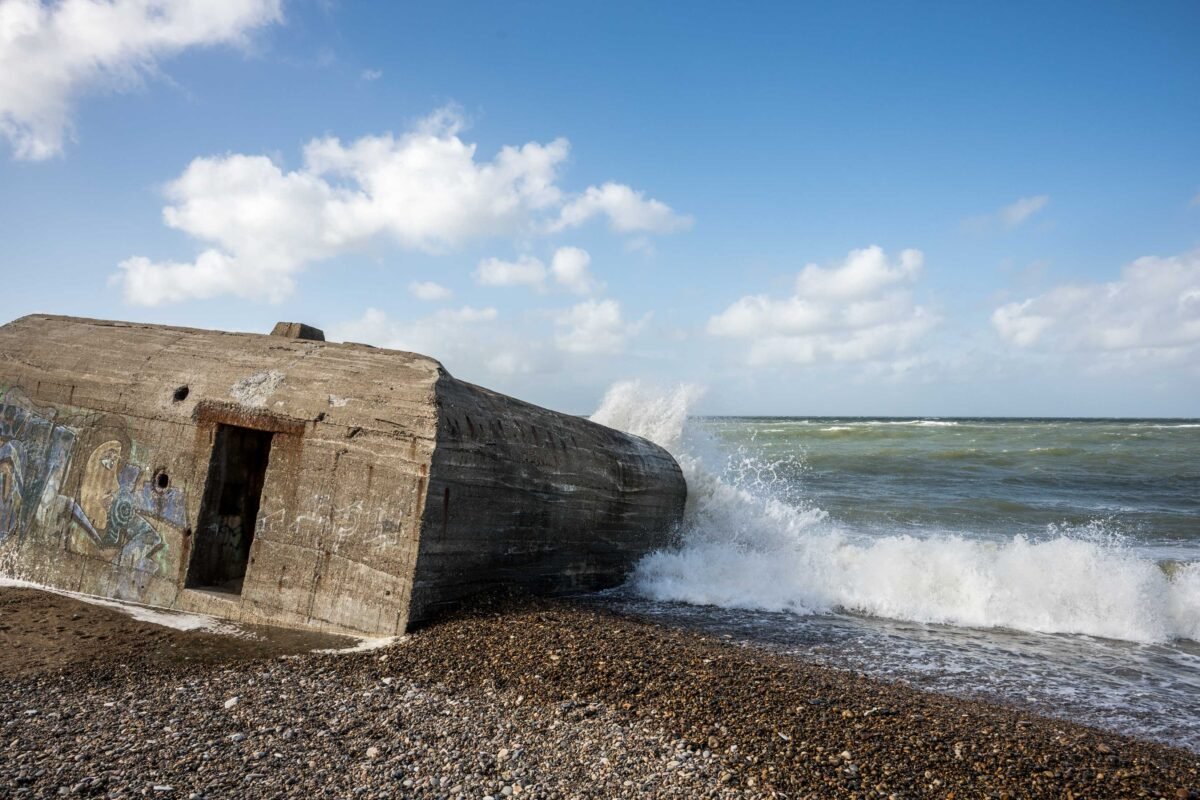
During World War II, Bulbjerg was a strategic point for the German occupiers. With its phenomenal outlook, it served as a listening and radar post for the gun positions at Hanstholm. The bunker that still stands on the cliff is now set up as a small free museum with information about Bulbjerg’s geology, the bird cliff, the occupation period and cultural history.
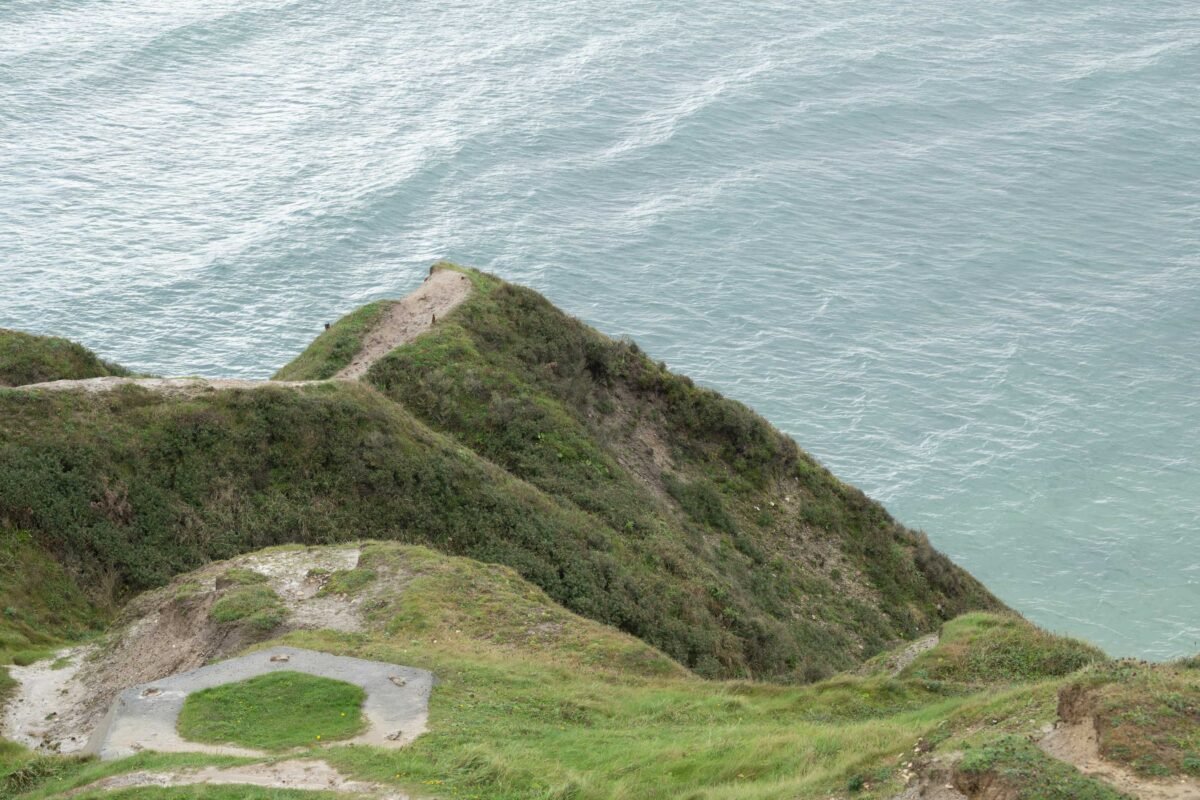
From the top of the cliff, on a clear day you can see as far as Rubjerg Knude lighthouse to the northeast and Hanstholm to the southwest. It’s one of the most beautiful panoramas on the Danish west coast.
Skarreklit: The Vanished Rock
Until 1978, there stood a 16-metre high limestone rock called Skarreklit off the coast of Bulbjerg. This “giant fang” was once connected to the cliff, but centuries of erosion had worn away the connection. During a severe autumn storm in 1978, the rock was completely swept away by the waves. At low tide and calm sea, you can still see the remains – a reminder of the power of the North Sea.
Dark Sky Park Bulbjerg
In November 2023, the Bulbjerg-Troldsting-Lild Strand area was officially certified as a Dark Sky Park by DarkSky International. It’s one of the darkest areas in Denmark, perfect for stargazing. On clear nights you can see the Milky Way in all its glory, with 2-4 billion stars, planets and classic constellations. From April to August, you can also experience the enchanting “white nights” of Scandinavia here.
Stargazing: Bring a warm jacket, a mat to lie on, and possibly binoculars. The darkest nights are around new moon. The area is accessible 24/7. Use as little artificial light as possible to let your eyes adjust to the darkness.
Accommodation and Surroundings
Our holiday home near Slettestrand proved to be a perfect choice. The region is beautiful. Lots of walking and cycling paths. Moreover, it’s ideal for photography: you can go in any direction from here, and in the evenings there’s time and space to select and process photos. Denmark always feels relaxed and spacious – exactly why we love coming here.
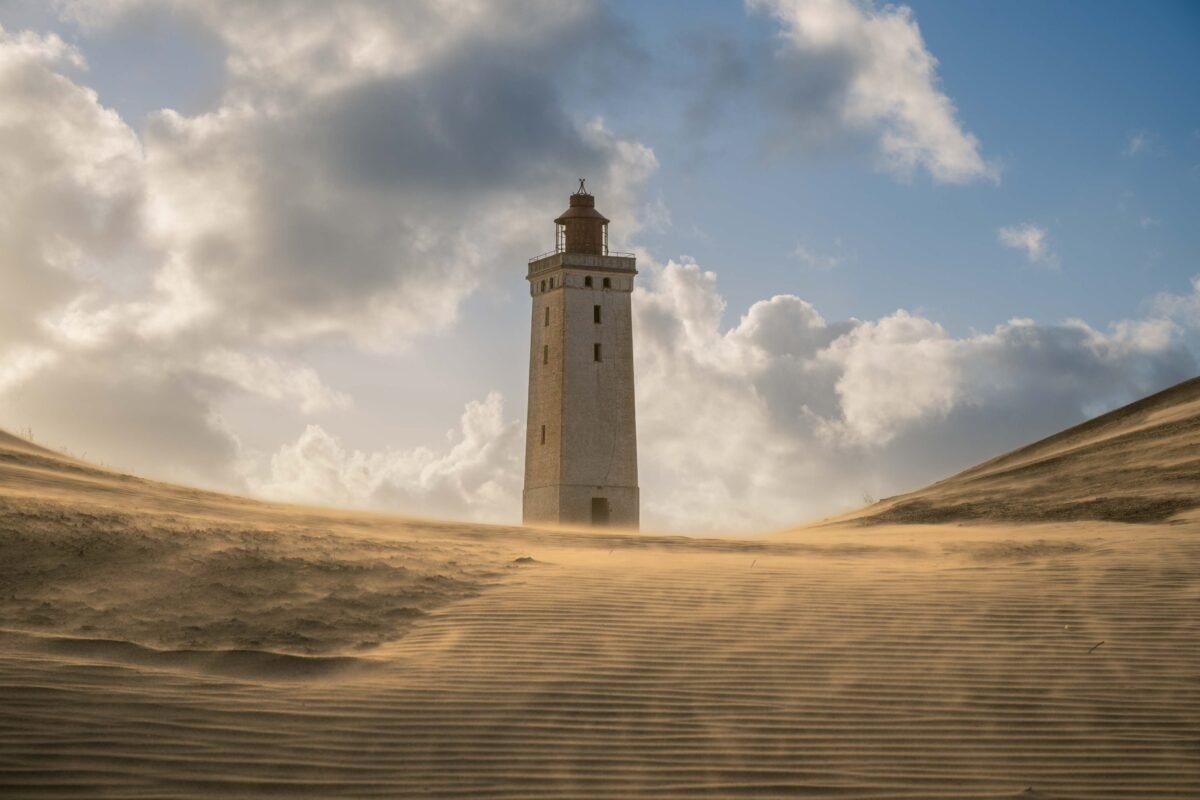
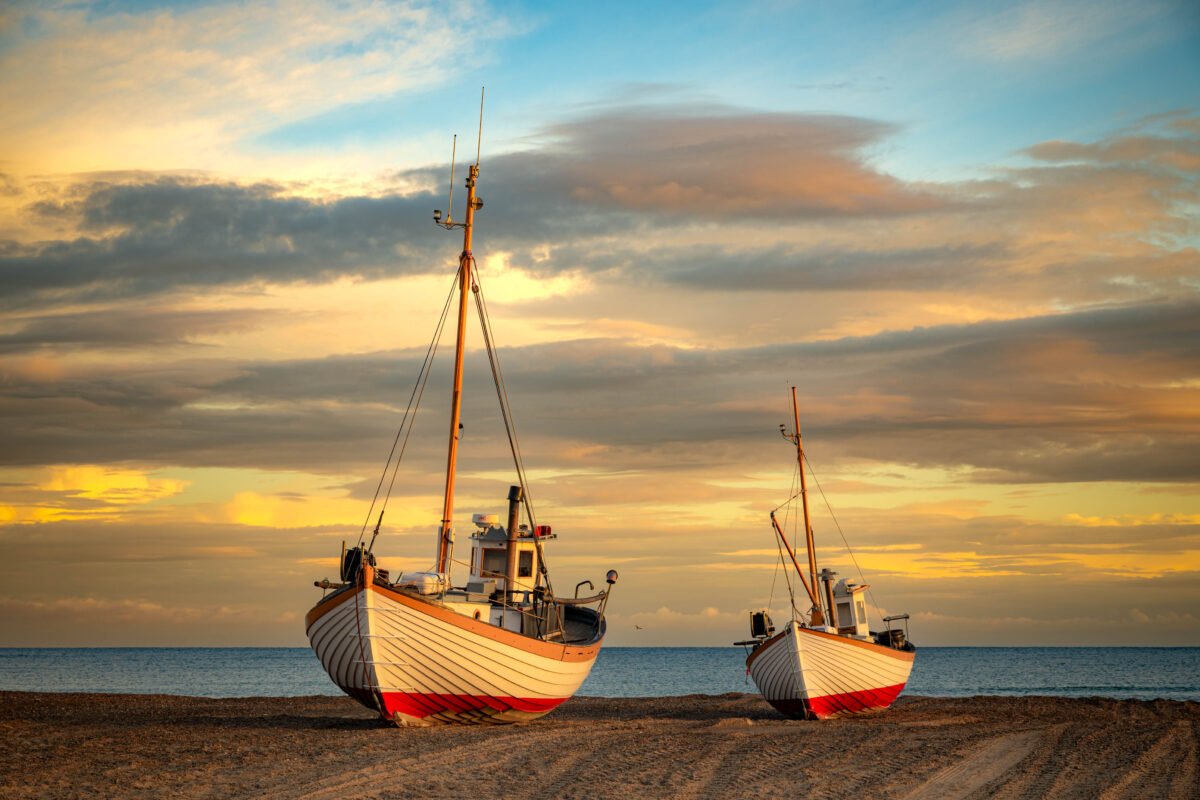
The coast at Slettestrand and Thorupstrand is also a beautiful area to explore. Fishing boats on the beach, wide dune fields and quiet walking trails that lead you straight into nature everywhere. Or visit Rubjerg Knude, the lighthouse that almost disappeared into the sea. Read more about that place in this story.
In Conclusion
Bulbjerg Knude turned out to be exactly the kind of place you go to for peace, but come home with much more than you expected. A rugged walk, changing light, wide beaches – and then suddenly an encounter with a seal you won’t soon forget. These kinds of moments make Denmark one of the finest countries for me to photograph in nature.
More inspiration? Also read my articles about Himmelbjerget – Autumn colours around Silkeborg or Rubjerg Knude lighthouse. Or check out my book Denmark – Land of the Sea and fine art prints like Resting – Fishing Boats Thorup Strand.
Practical Information
Location and Getting There
| Region | North Jutland (Nordjylland), Thy, Denmark |
| Municipality | Thisted |
| Nearest village | Frøstrup (3 km), Lild Strand (4.5 km) |
| Distance from Aalborg | 85 km (1 hour 15 min) |
| Distance from Thisted | 25 km (25 min) |
| Public transport | Limited – own transport recommended |
Parking
| Bulbjerg Top | Free car park with views, directly at bunker |
| Bulbjerg Beach | Free car park at beach, access via dunes |
| Lild Strand | Free parking in the fishing village |
| Address Bulbjerg | Bulbjergvej, 7741 Frøstrup |
Tip: Drive via Bulbjergvej – just before the cliff, the road splits. Left goes to the beach, right to the top of the cliff. Visit both for the complete picture!
Access and Costs
- Access Bulbjerg: Free, accessible 24/7
- Parking: Free
- Bunker museum: Free, open during daytime
- Dark Sky Park: Free, 24/7
Best Time to Visit
| April-July | Bird breeding season, kittiwakes active on cliff |
| May-June | Long days, white nights, mild weather |
| September | Ideal for photography, quiet, changeable weather |
| October-November | Storm season, dramatic skies, seals |
| Winter | Best for Dark Sky Park, Northern Lights possible |
Facilities
- Toilets: Not at Bulbjerg itself, available in Lild Strand
- Food & drink: None at Bulbjerg, available in Lild Strand (fresh fish)
- Benches: On the cliff near the bunker
- Accessibility: Cliff top accessible by car, beach not wheelchair accessible
What to Bring
- Windproof clothing (always windy!)
- Sturdy hiking shoes
- Binoculars for birds
- Telephoto lens for wildlife
- Water and snacks
- Rain jacket
- Headlamp (for Dark Sky Park)
- Tripod for long exposures
Frequently Asked Questions
How high is Bulbjerg Knude?
Bulbjerg Knude is 47 metres high, making it the only true rock formation on the Danish mainland. The cliff was formed from limestone that is 65 million years old. It’s also the only bird cliff in Denmark outside of Bornholm.
Which birds breed at Bulbjerg?
Bulbjerg is the only breeding site on the Danish mainland for the black-legged kittiwake (up to 500 pairs). The rarer northern fulmar also breeds here. The breeding season runs from April to July. The area is protected as a Natura 2000 site.
How long is the walk from Lild Strand to Bulbjerg?
The walk along the beach from Lild Strand to Bulbjerg is about 4.5 km and takes 1-1.5 hours. As a loop walk via beach outward and dunes back, it’s 9-10 km and about 2.5-3.5 hours. The route is part of the Nordsøstien (North Sea Trail).
What is the Dark Sky Park?
Since November 2023, the Bulbjerg-Troldsting-Lild Strand area has been certified as a Dark Sky Park by DarkSky International. It’s one of the darkest places in Denmark, ideal for stargazing. You can see the Milky Way, constellations, and sometimes Northern Lights here.
What happened to Skarreklit?
Skarreklit was a 16-metre high limestone rock that stood off the coast of Bulbjerg. Through centuries of erosion, the connection to the cliff had already disappeared. During a severe autumn storm in 1978, the rock was completely swept away. At low tide, the remains are still visible.
Is Bulbjerg accessible for wheelchairs?
The top of the cliff is accessible by car and has a car park directly at the bunker. The beach and walking trails are not wheelchair accessible due to the rugged terrain. In Lild Strand, an accessible coastal terrace was recently built with direct access from the car park.
Location on the Map
Gallery
Pictures speak louder than words:



Useful Links
- Visit Nordvestkysten – visit-nordvestkysten.com
- Bulbjerg Bird Cliff info – visit-nordvestkysten.com
- Dark Sky Park Bulbjerg – visit-nordvestkysten.com
- Thy National Park – nationalparkthy.dk
- Visit Denmark – visitdenmark.com
- Morten Hilmer (wildlife photographer) – youtube.com/@MortenHilmer