



Rubjerg Knude Lighthouse – Photography in Wind and Sand
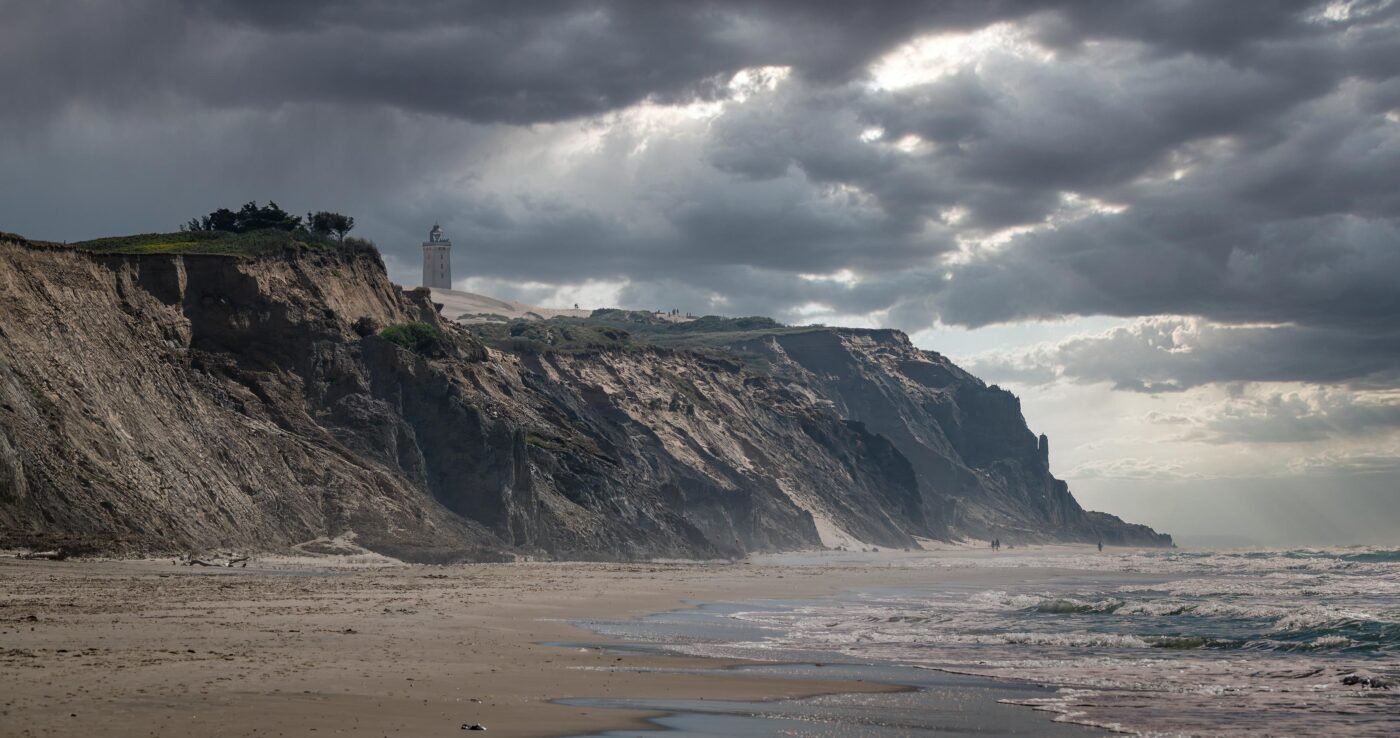
On the rugged west coast of Jutland, high above the sea and dunes, stands the iconic Rubjerg Knude lighthouse. It’s one of the most photographed places in Denmark – and for good reason. The lighthouse towers above the sand and waves, seemingly in constant battle with the elements.
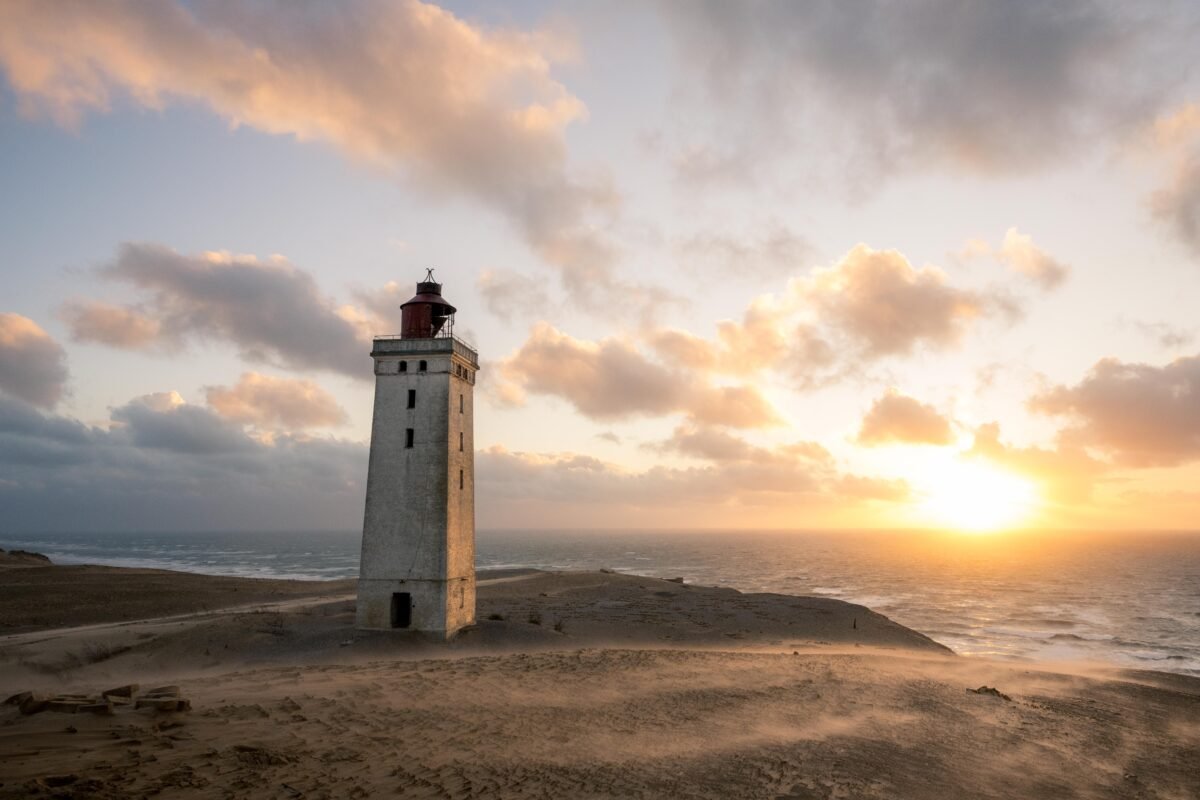
When I was there recently, the weather forecast predicted two days of strong winds. For me as a photographer, this was the perfect moment: the power of the wind combined with the coast produces spectacular images. The blowing sand and wild sea created an atmosphere you won’t find anywhere else.
In this article, I’ll take you through my experience at the Rubjerg Knude lighthouse and share tips for anyone who wants to visit or photograph this place themselves.
About Rubjerg Knude
Rubjerg Knude (pronounced: “Roob-yerg K’noo-the”) is one of the most dramatic places in Denmark. The lighthouse sits atop Lønstrup Klint, a cliff 60 metres high on the North Sea. What makes this place so special is the constant battle between nature and human structures: the coast erodes here by an average of 1.5 metres per year, while blowing sand from the sea threatens to bury everything.
The lighthouse attracts more than 250,000 visitors annually, making it one of the most popular attractions in North Jutland. Yet it never feels crowded here – the vast dunes and inhospitable landscape always give you the feeling of being alone with the elements.
| Location | Between Løkken and Lønstrup, North Jutland |
| Lighthouse height | 23 metres |
| Height above sea | 60 metres (on the cliff) |
| Built | 1899, first lit 27 December 1900 |
| Decommissioned | 1 August 1968 |
| Relocated | 22 October 2019 (70 metres inland) |
| Annual visitors | 250,000+ |
| GPS car park | 57.4483° N, 9.7736° E |
The Remarkable History of Rubjerg Knude
The Rubjerg Knude lighthouse was built in 1899 on a high cliff on the coast of North Jutland, designed by architect Thomas Sehested. Originally, the tower stood safely more than 200 metres from the cliff edge, but due to the constant force of wind and sand, the landscape soon began to change. Dunes slowly shifted towards the tower and eventually covered the buildings around it.
Until 1908, the lighthouse operated on gas produced on site. The buildings around the tower – the lighthouse keeper’s residence, outbuildings and a vegetable garden – were soon overwhelmed by sand. Marram grass was planted to control the sand, but it had the opposite effect: the sand only piled higher.
Due to the advancing sand dunes and crumbling cliff, the lighthouse was decommissioned on 1 August 1968 – the light was simply no longer visible from the sea. In 1980, a museum about sand drift opened in the outbuildings, but this too had to close in 2002 when the sea came too close. Since then, the place has become a symbol of nature’s unstoppable force.
The Spectacular Relocation in 2019
In 2019, the lighthouse was moved more than 70 metres inland in an enormous operation to prevent it from collapsing into the sea. On 22 October 2019, the 720-tonne tower was placed on specially constructed rails and rolled to its new location in approximately six hours. The operation, led by local master bricklayer Kjeld Pedersen, cost 5 million Danish kroner (approximately €670,000 / £600,000 / $750,000) and was funded by Hjørring Municipality with support from the Danish government.
Thanks to this rescue operation, everyone can still enjoy this unique monument today. The lighthouse should now be safe until approximately 2060.
Tip: Fascinating timelapse videos of the relocation can be found on YouTube – search for “Rubjerg Knude lighthouse move” for an impressive view of this technical achievement.
Photography on the Coast: Wind, Sand and Light
Photographing at the Rubjerg Knude lighthouse is a unique experience, but requires some preparation, especially when strong winds are forecast. The wind can be enormously powerful here, keeping sand constantly in motion. This creates spectacular effects in your photos, but also means you need to be careful with your equipment. A rain cover or protective sleeve for your camera is essential. Protection for yourself is also useful – as I found out. I wish I had prepared better for what was to come!
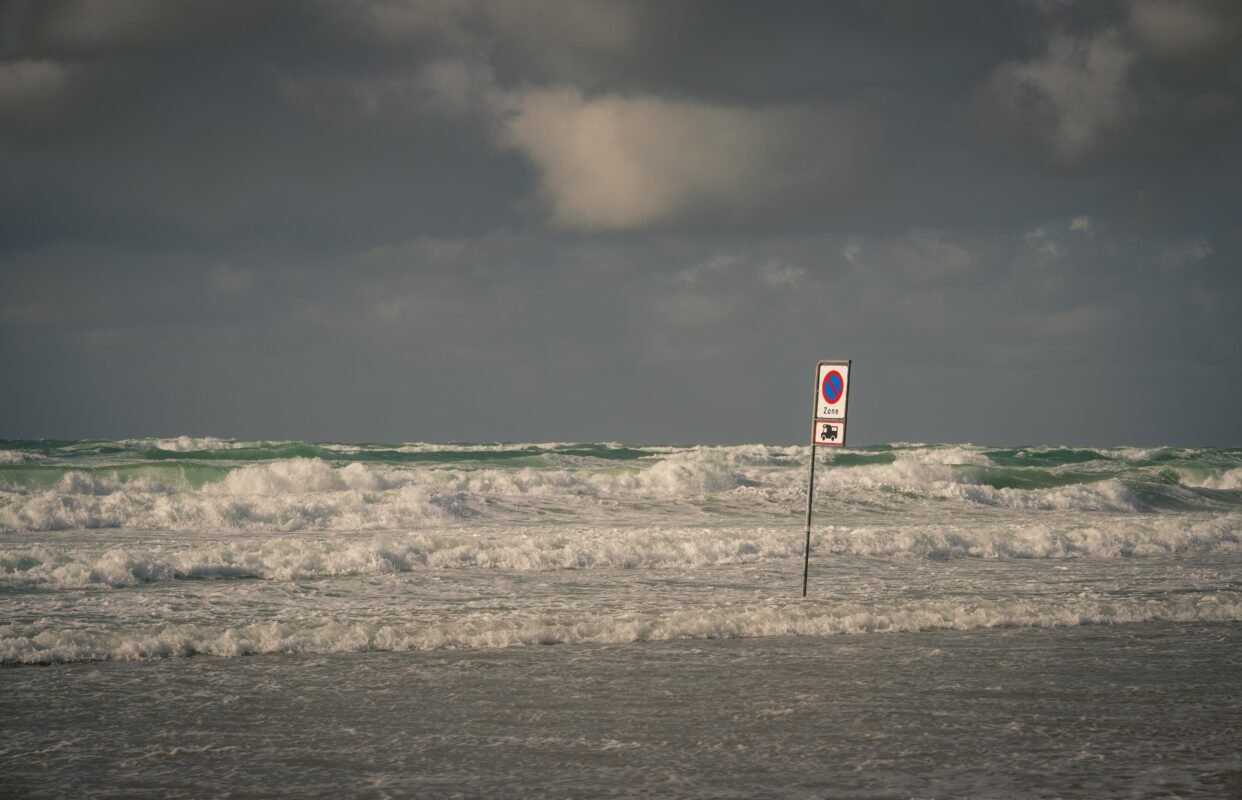
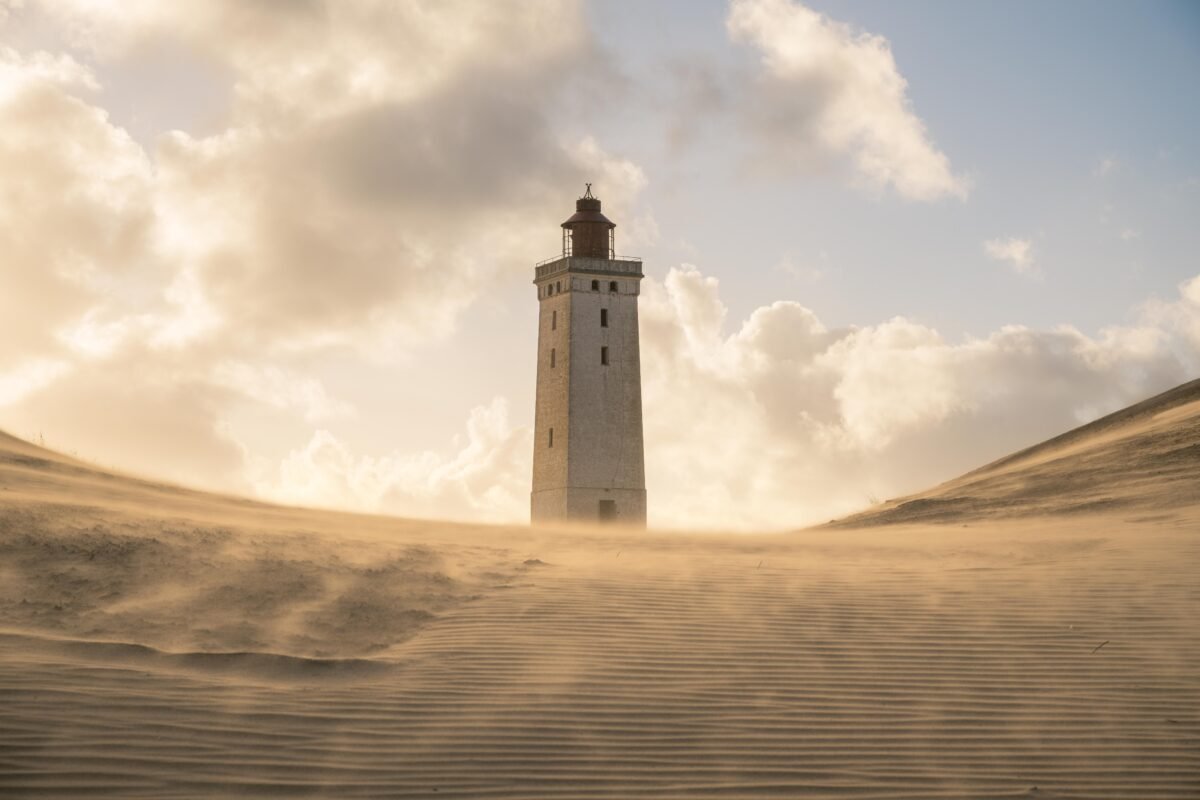
The interplay between sand, sea and sky creates different conditions every time. On days with strong wind, the air fills with blowing sand and your photos take on a dramatic atmosphere. On clear days with soft light, you can play with the lines of dunes, cloud formations and the lighthouse as a focal point.
The most beautiful time of day is often around sunrise or sunset. In this case, my preference is sunset, given the lighthouse’s location. The dunes turn gold and the low sun casts long shadows across the sand. The combination of changing light and rugged nature makes the lighthouse a place where you can capture different images every time.
The Preparation
I’ve been to Denmark many times. Very often, actually. This has to do with my previous work, and I have nothing but good memories. Perhaps Denmark seems less spectacular to some landscape photographers than popular destinations, but those who look closely discover beautiful images. Especially minimalist scenes, or the wild sea with high waves crashing against the coast.
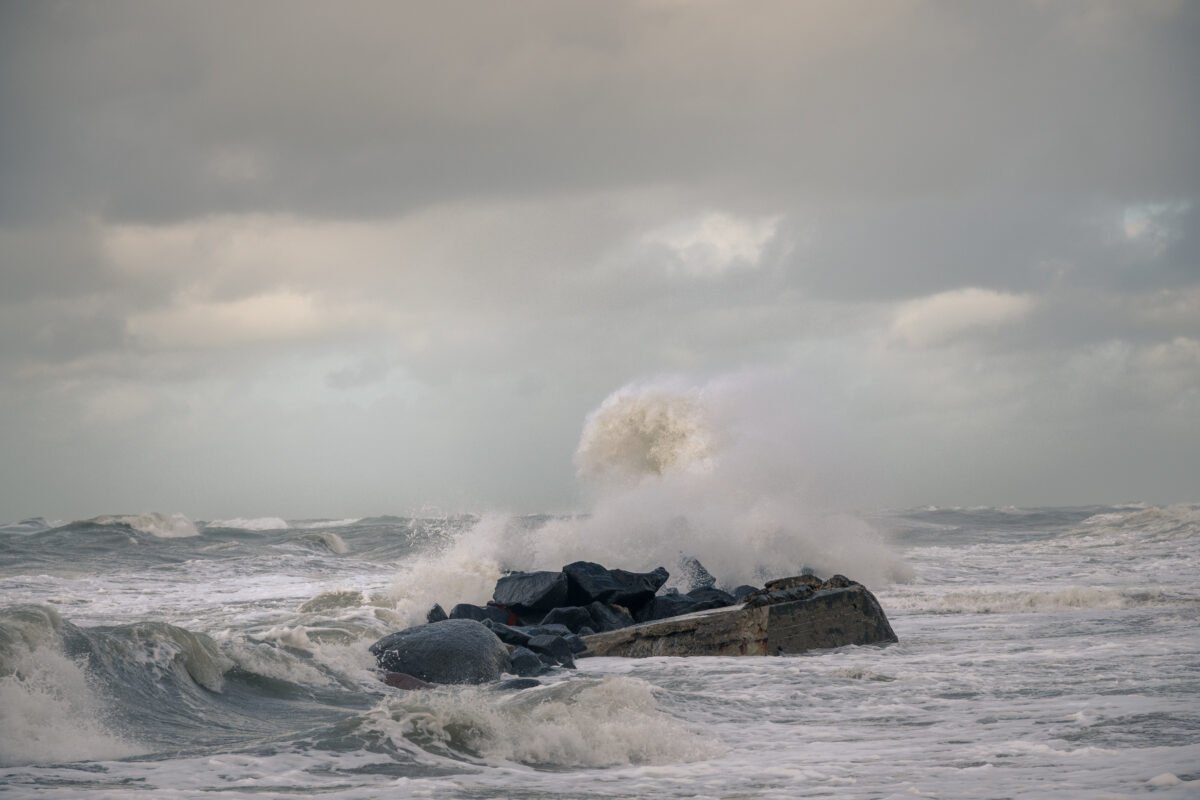
During my stay, I always keep a close eye on the weather. I saw that several days of strong wind and a sunset with some clouds were forecast. A perfect combination in my view. Plus, it’s often much quieter then – many visitors stay away in strong wind.
I could already picture the lighthouse: blowing sand creating a beautiful effect, right at sunset. The plan formed in my head – now just wait for the right moment.
The Moment of Truth
Arriving at the car park, my suspicions were confirmed: not a single car, just a few campervans. I grabbed my gear and headed for the lighthouse. Allow for a walk of about 30-45 minutes; walking in sand is slower.
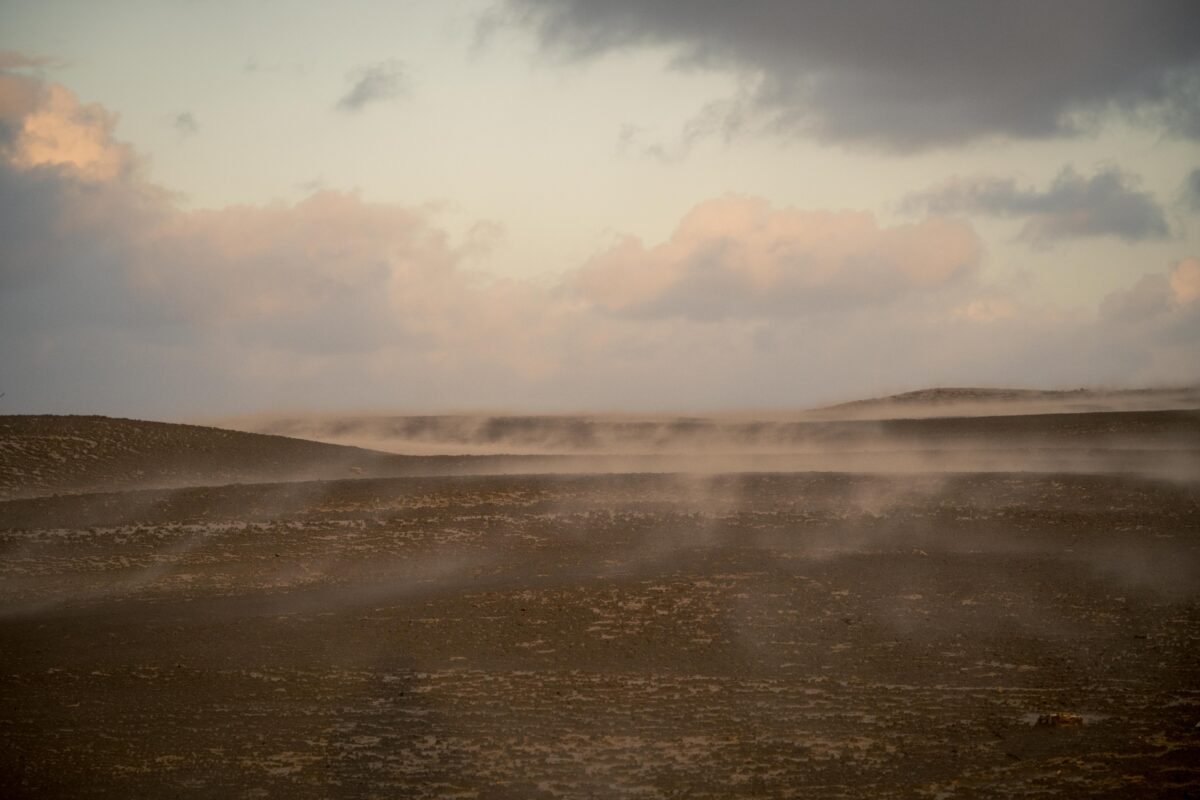
It was windier than I expected. Sand swirled around me and you could barely see ahead. Wow, what a lot of sand! But at the same time beautiful – what incredible natural power.
The sand blew in long streaks along the dunes, giving the entire surroundings a surreal appearance. It was as if the tower was slowly being swallowed by a moving desert, while the sea pounded relentlessly at the base of the cliff.
A Plan is Good, but Improvising is Better
Plans can change just like that. I had brought my tripod, but it proved completely unusable. The wind was so strong it was impossible to set up the tripod stably. Change of plan: handheld photography and keeping the shutter speed fast enough for sharp images. I would have loved to experiment with long exposures, but that was simply impossible under these conditions.
Changing lenses wasn’t an option either. Fortunately, I had anticipated that. Yet I couldn’t resist continuing to shoot in the middle of the wind. My Nikon took a beating but held up fantastically – proof of quality.
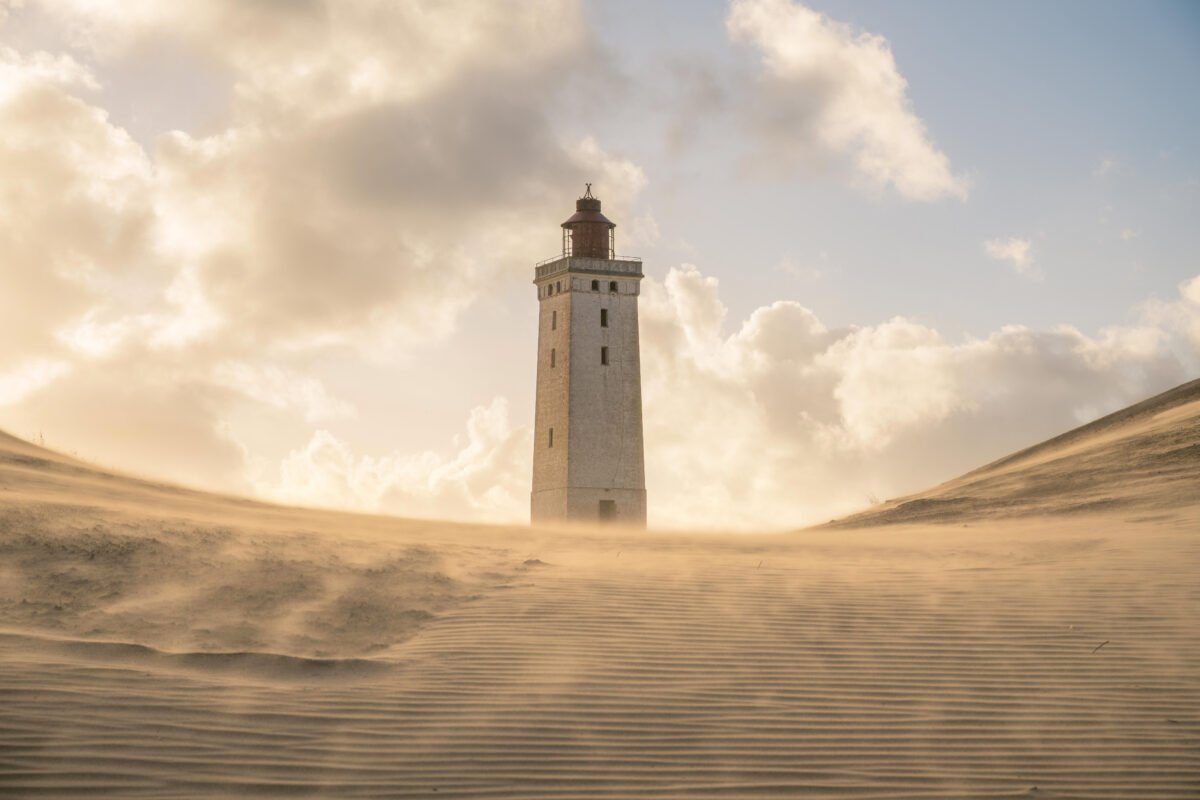
In my plan, I had also already envisioned which photo I wanted of the lighthouse, but conditions dictated otherwise. There were so many beautiful new angles begging to be captured.
I arrived well before sunset and decided to take shelter in the lighthouse. By then I was covered in sand – in my mouth, ears and eyes. That break came at just the right time.
The most impressive moments were when the sun broke through the clouds. The light fell perfectly over the dunes and illuminated the tower. The landscape seemed even more powerful and dramatic. It’s those short, unexpected moments that make photography at this location so special. What a wonderful experience!
Photography Tips for Rubjerg Knude
Photographing at the Rubjerg Knude lighthouse is an unforgettable experience, but conditions can be challenging. Depending on the weather, these tips may be more or less useful – as I experienced myself:
Protect your equipment: The wind constantly blows sand over the dunes. Use a rain cover or plastic sleeve to protect your camera and bring a blower or soft cloth. During my visit, only a lens brush still worked somewhat – the sand was literally everywhere.
Choose the right lens: A wide-angle is ideal for capturing the vastness of the landscape and the tower. For details like sand patterns or lighthouse textures, a telephoto or zoom lens is handy. But: don’t change lenses in the dunes in strong wind! Choose beforehand and stick with it.
Be prepared for changing light: Due to clouds and wind, the light changes constantly. Shoot in RAW for more flexibility later. A tip every photographer should know, but I’ll emphasise it anyway.
Use a tripod (but be realistic): In low light or for longer exposures, a tripod is essential. But in extreme conditions, it even blows away! So improvise and know your camera. I chose a fast shutter speed and higher ISO. Better some noise than blurry images. Fortunately, with the Nikon Z8, that’s no problem at all.
Plan your visit: Around sunrise and sunset, the light is often most beautiful. Check the weather forecast beforehand, particularly wind strength and cloud cover, for extra dramatic conditions. Come early or late for fewer crowds and better light.
Walking Routes at Rubjerg Knude
The area around Rubjerg Knude offers more than just the lighthouse. There are several walking options that take you along the most dramatic stretches of coast.
Car Park to Rubjerg Knude
| Distance | ~1.5 km (one way) |
| Duration | 15-30 minutes (depending on sand and wind) |
| Difficulty | Easy to moderate (last section through soft sand) |
| Elevation gain | ~60 metres (climb to dune top) |
The route starts at the large car park on Rubjergvej. The first part is a paved path, then you transition to soft sand for the final climb to the lighthouse. In strong wind, this can be challenging!
Along the Coast, Mårup Kirke to Rubjerg Knude
| Distance | ~10 km |
| Duration | 3.5 – 4.0 hours |
| Difficulty | Moderate (hilly, partly soft sand) |
| Elevation gain | ~70 metres |
This classic walk takes you past the remains of Mårup Kirke – a medieval church from around 1250 that was demolished in 2008 due to coastal erosion. Today only the cemetery with some gravestones and an anchor from the British warship HMS Crescent remain, which sank here in 1808 with the loss of 226 sailors. The walk offers spectacular views over the North Sea and cliffs.
Attractions in the Area
The Rubjerg Knude lighthouse is perhaps the most famous symbol of the Danish north coast, but certainly not the only photogenic landscape. Along the coast of Jutland, you’ll find countless places where sand, sea and wind together form a dynamic backdrop.
Mårup Kirke (Remains)
The remains of this medieval church (circa 1250) lie just 3 km north of the lighthouse. The church was completely demolished between 2008-2016 due to coastal erosion. The cemetery, some gravestones and the anchor from HMS Crescent (1808) can still be visited – a poignant example of nature’s power.
Lønstrup
This picturesque coastal village, 4 km from Rubjerg Knude, is known for its art galleries, glassblowers and cosy cafés. A perfect place to warm up after a cold walk along the coast.
Løkken
On the other side lies Løkken, a classic Danish seaside resort with white beach huts and a pleasant atmosphere. The characteristic beach huts are an icon of the Danish coast.
Den Tilsandede Kirke (Skagen)
Approximately 60 km to the north, near Skagen, you’ll find another “sand church” – the Den Tilsandede Kirke (Sand-Covered Church). Here too, the blowing sand has half-buried a church, with only the tower protruding above the sand.
Thy National Park
A bit further south lies Thy National Park, Denmark’s first national park. Here you’ll find vast dune landscapes, heathlands and kilometres of unspoilt beach – perfect for those with more time to explore.
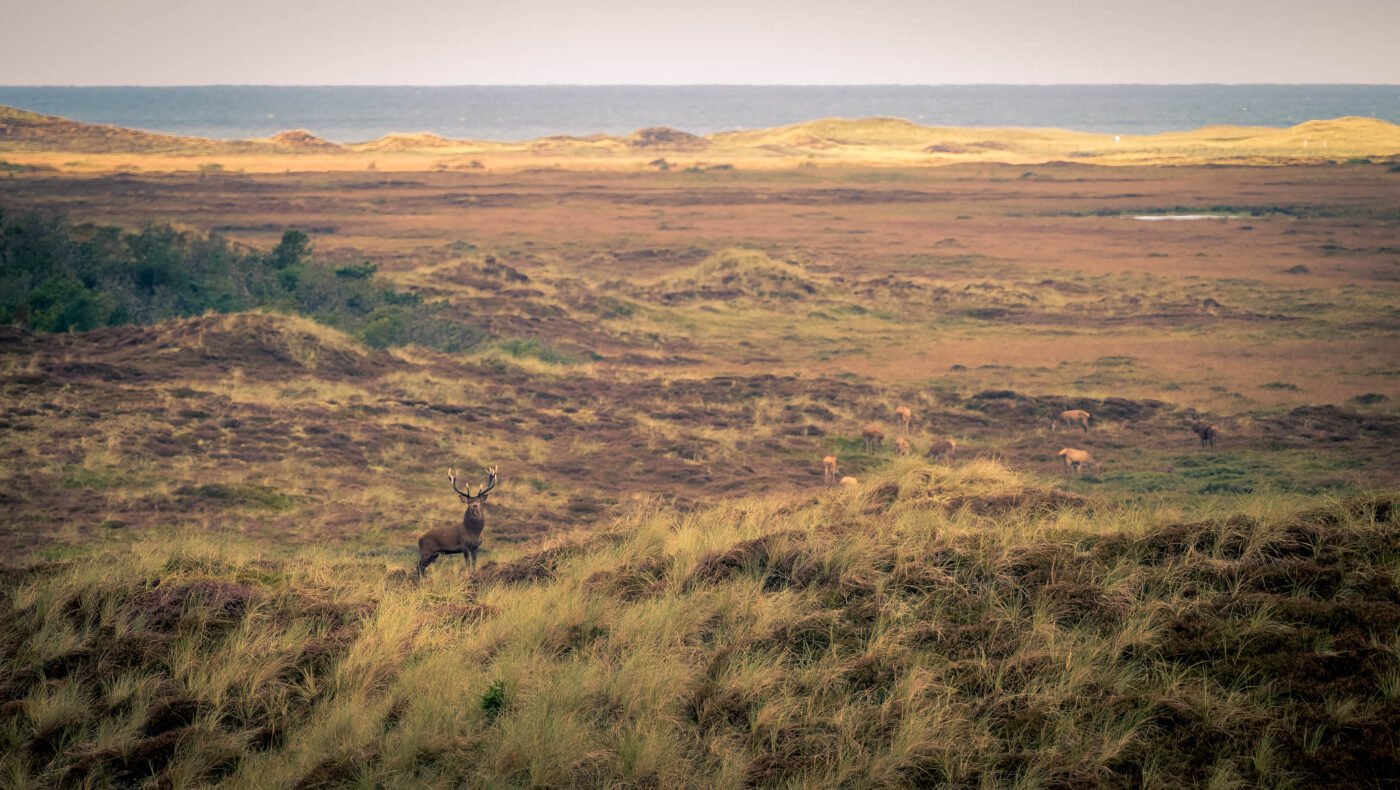
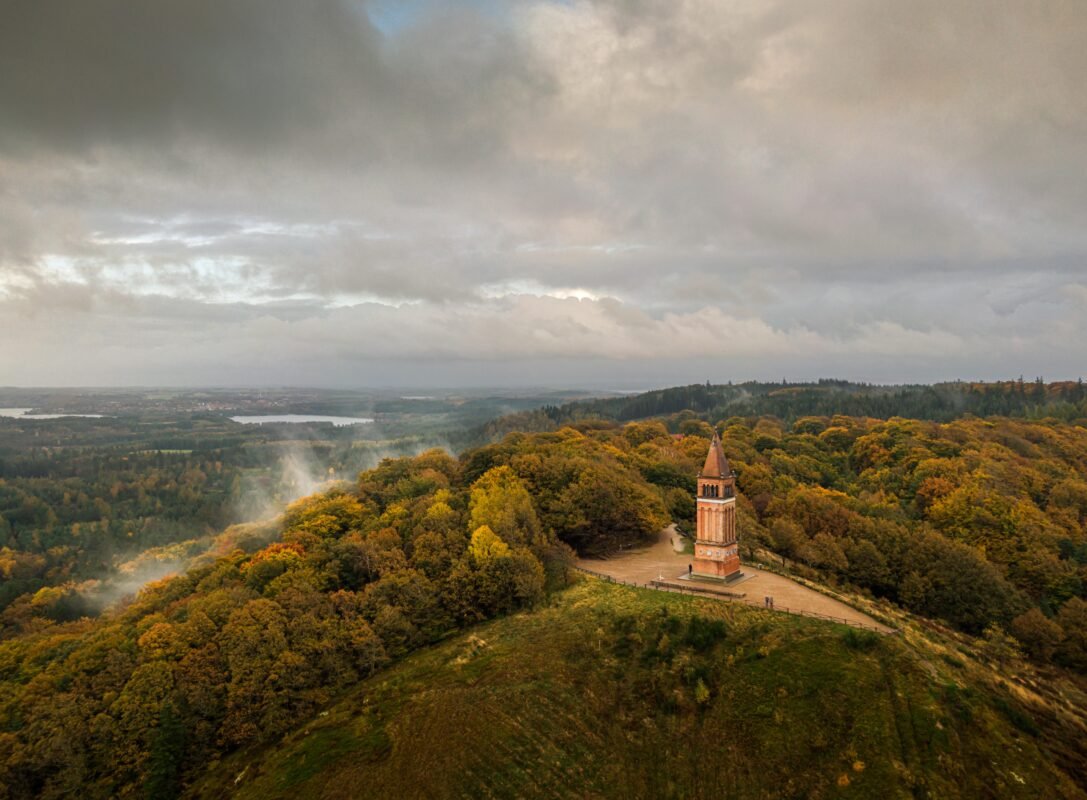
Further inland, you’ll discover a different kind of landscape, such as the lakes and forests around Silkeborg. In autumn, the forests here turn deep orange and red, while morning mist gives the lakes a mysterious atmosphere. The contrast with the rugged coast makes Denmark remarkably versatile for photographers. For true enthusiasts, the island of Bornholm is also highly recommended.

Together, these areas show that Denmark has much more to offer than just cities or well-known attractions. It’s a destination where nature still plays the leading role – and where photographers constantly find new inspiration. Whether at a lighthouse in the dunes or in the silence of an autumn forest. Moreover, it’s the Danes themselves who give the country a unique atmosphere of calm and relaxation.
Best Time to Visit Rubjerg Knude
Rubjerg Knude is accessible year-round, 24 hours a day. Each season has its own charm:
| Spring (March-May) | Fresh air, wilder sea, fewer tourists, beautiful cloud formations |
| Summer (June-Aug) | Warmest period, longest days, busiest season – come early or late |
| Autumn (Sept-Nov) | Dramatic storms, spectacular light, few visitors |
| Winter (Dec-Feb) | Raw and authentic, sometimes snow on the dunes, ultimate solitude |
Photography tip: The best conditions are often in bad weather. Strong wind creates blowing sand, stormy skies add drama. Come at sunrise (~5:00 AM in summer) or sunset (~9:00 PM in summer) for the best light and fewest crowds.
Experience the Magic of Denmark Yourself
The power of the wind, the interplay of sand and sea, and the iconic Rubjerg Knude lighthouse make the Danish coast an impressive place. These are moments you won’t soon forget: rugged, pure and full of energy.
Want to experience this atmosphere at home? Discover my book about Denmark where I capture these kinds of landscapes, or browse the collection of fine art prints with images of coast, mountains and forests. My fine art print “Fierce” of Rubjerg Knude is also available. Bring not only the magic of Denmark, but also the beauty of nature into your living room.
Practical Information
Getting There
| From Aalborg | ~60 km (~1 hour) |
| From Aarhus | ~180 km (~2 hours) |
| From Copenhagen | ~400 km (~4.5 hours) |
| Nearest airport | Aalborg Airport (60 km) |
| Parking address | Fyrvejen 110, 9480 Løkken |
Facilities at Rubjerg Knude
- Admission: Free, 24 hours a day, 365 days a year
- Parking: Free, large car park on Rubjergvej
- Toilets: At the car park
- Climbing the lighthouse: Free, spiral staircase to the top
- Food & drink: Not on site – bring your own
- Wheelchair accessible: Not recommended (soft sand, steep climb)
- Dogs: Welcome, on lead
What to Bring
- Sturdy shoes: Walking through soft sand is hard work
- Windproof clothing: It’s almost always windy here
- Sunglasses or glasses: Protection against blowing sand
- Camera protection: Rain cover or plastic bag for your equipment
- Water and snacks: No facilities at the lighthouse
Frequently Asked Questions
How do you get to Rubjerg Knude?
Rubjerg Knude is located between Løkken and Lønstrup on the west coast of North Jutland. Drive to the car park at Fyrvejen 110 in Løkken. From there, it’s approximately 1.5 km walk (15-30 minutes) to the lighthouse. The last section is through soft sand and can be challenging in wind.
How much does it cost to visit Rubjerg Knude?
Absolutely nothing! Both the car park and access to the lighthouse and dunes are completely free. You can also climb the lighthouse for free via the spiral staircase.
How long does a visit to Rubjerg Knude take?
Allow at least 1.5 to 2 hours for the walk there and back plus time to explore the area and take photos. Photographers and walkers can easily spend half a day here, especially if you also visit Mårup Kirke.
Is Rubjerg Knude suitable for children?
Yes, but consider the distance (1.5 km through sand) and the wind. Children often love playing in the dunes and climbing the lighthouse. Do be careful at the cliff edges – there are no fences and the coast is constantly eroding.
Why was the lighthouse moved?
The coast erodes here by an average of 1.5 metres per year. In 2019, the lighthouse stood just a few metres from the cliff edge and would have fallen into the sea around 2023 without intervention. On 22 October 2019, the 720-tonne tower was moved 70 metres inland. It should now be safe until approximately 2060.
When is the best time to photograph Rubjerg Knude?
The best photos are taken around sunset (the lighthouse faces west) or in dramatic weather with strong wind and blowing sand. Come early morning or late evening for fewer crowds. Autumn and winter offer the most spectacular conditions, but also the strongest wind.
Location on the Map
Gallery
Pictures speak louder than words:



Useful Links
- VisitDenmark – lighthouses in Denmark: visitdenmark.com
- Visit Nordvestkysten – Rubjerg Knude information: visit-nordvestkysten.com
- Thy National Park – official website: nationalparkthy.dk
- Denmark.dk – official tourism website: denmark.dk
- Morten Hilmer – Danish wildlife photographer: YouTube
Related Articles
- Himmelbjerget and Silkeborg – autumn colours in the Danish lake district
- Slettestrand and Thorup Strand – fishing boats on the beach
- Bulbjerg Knude – Denmark’s only bird cliff