



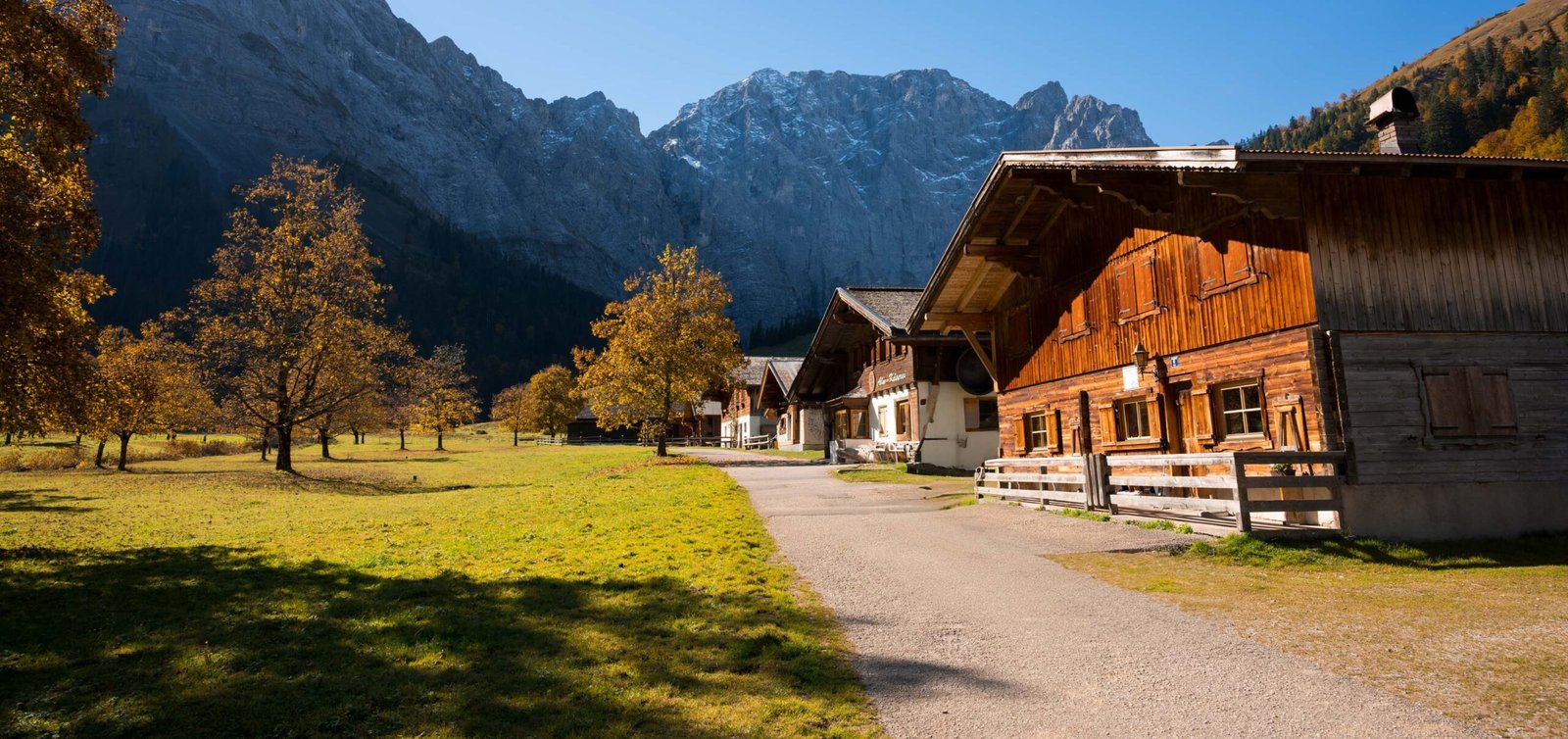
Ancient Maples and Autumn Light in the Karwendel Mountains
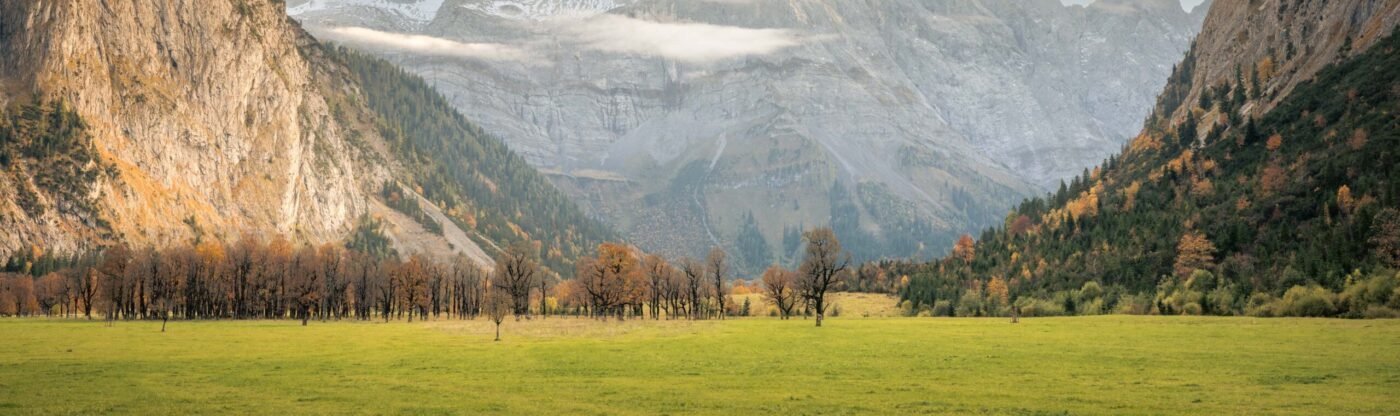
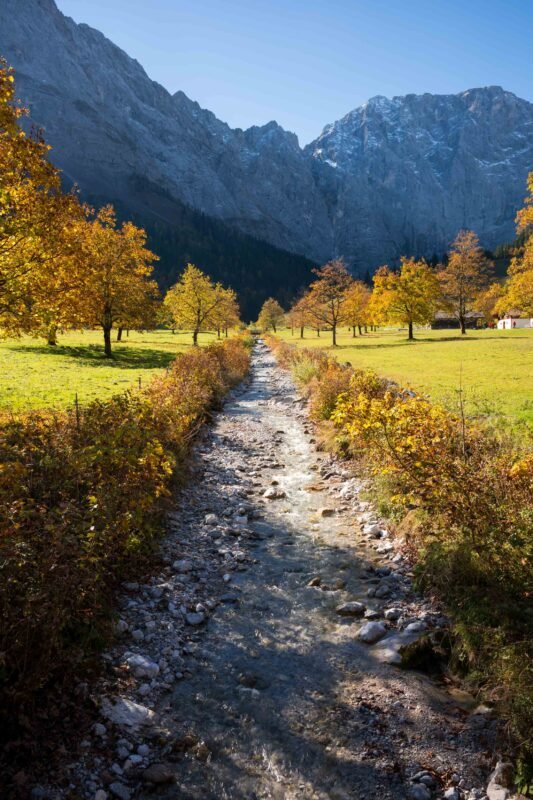
In the heart of the Karwendel Mountains, on the border of Tyrol and Bavaria, lies one of the most beautiful places in the Alps: the Grosser Ahornboden. A vast valley with hundreds of centuries-old maple trees, surrounded by imposing limestone walls. Especially in autumn it’s a true feast of colours here — yellow, gold and orange against the grey of the mountains. It’s a landscape that seems almost frozen in time.
We had been here a few times before. It really is a beautiful location if you love nature. For landscape photographers, it’s a dream location. Everywhere you look there are compositions. You can easily spend several days here, especially if you love hiking like we do. So when we decided to go to Bavaria for an autumn trip this year, this was the first location I put on my list.

About the Grosser Ahornboden
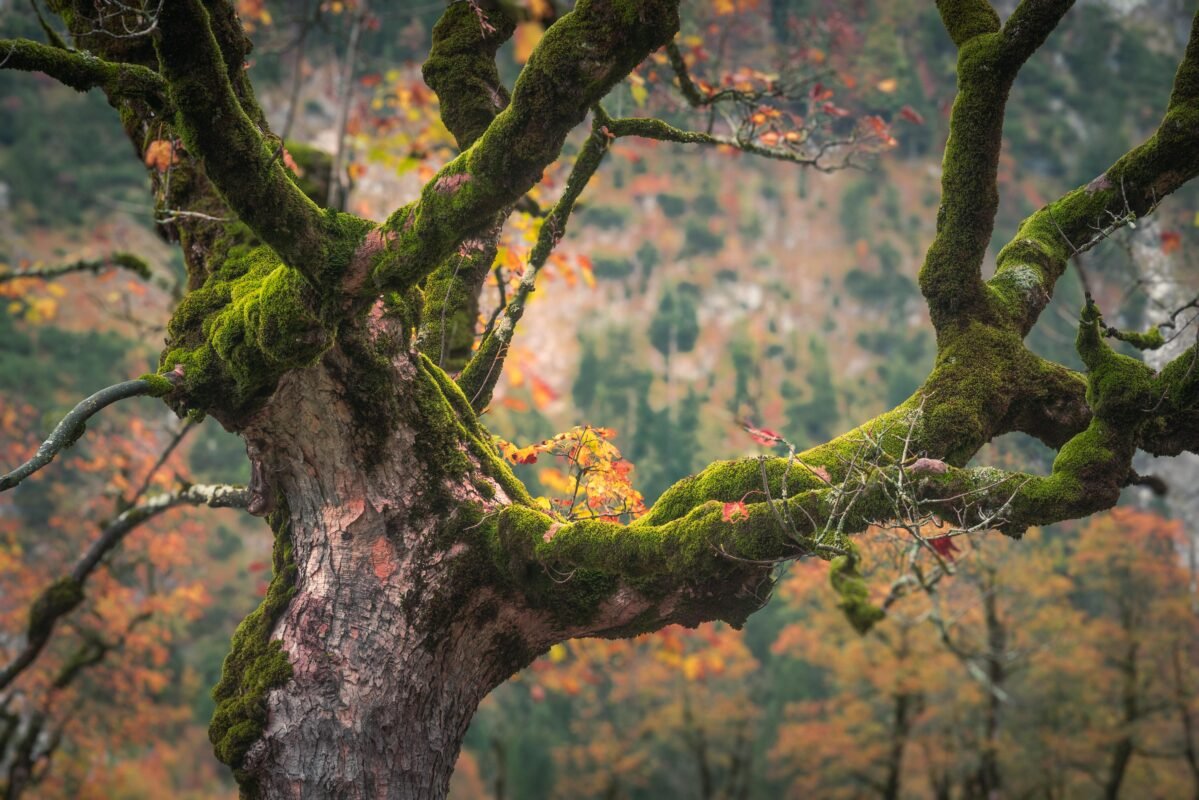
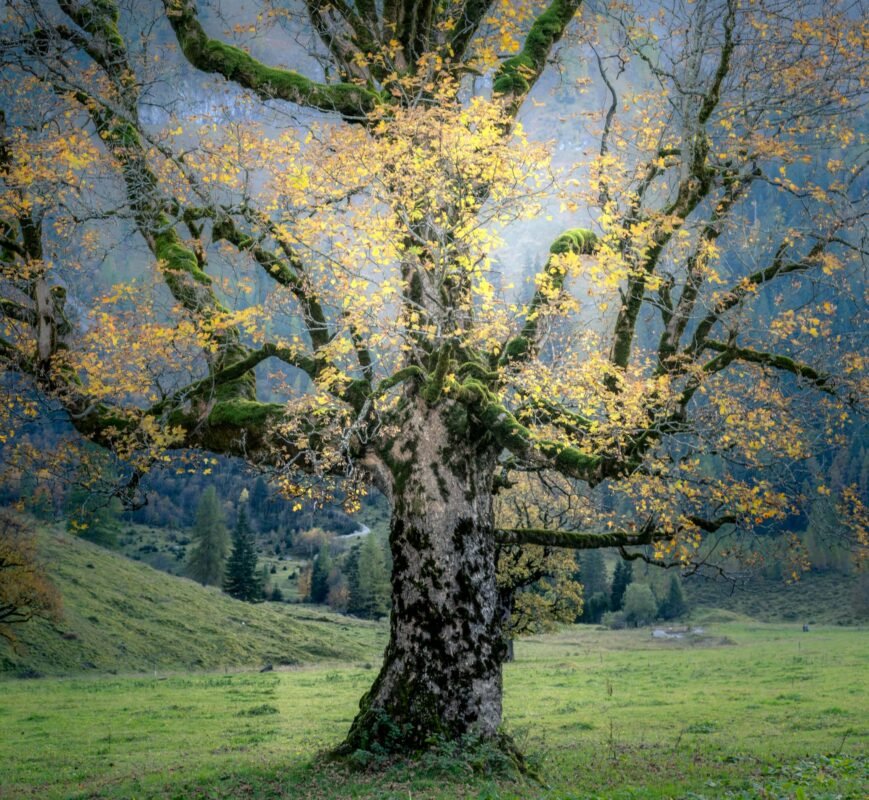
The Grosser Ahornboden is a unique high-alpine cultural landscape and one of Austria’s most famous natural monuments. At an altitude of approximately 1,200 metres, more than 2,200 sycamore maples (Bergahorn) are scattered across a pasture area of around 200 hectares. Some of these majestic trees are 600 to 700 years old — gnarled and marked by time.
This natural wonder lies in Karwendel Nature Park, Austria’s largest nature park, and has been protected as a natural monument since 1927. Although it officially lies in Tyrol (Austria), curiously it can only be reached via Bavaria (Germany).
| Location | Karwendel Nature Park, Tyrol, Austria |
| Elevation | 1,080 – 1,300 metres |
| Area | Approximately 200 hectares |
| Number of maples | More than 2,200 |
| Age of oldest trees | Up to 700 years |
| Protected since | 1927 |
The Journey to the Ahornboden
The road to the Ahornboden is an experience in itself. From Hausham, where we stayed at the cosy Ferienwohnung Übernberg, you drive via Bad Tölz and Lenggries towards the Karwendel. The route winds through forests and valleys, with constantly changing views of mountain peaks and river valleys. The drive itself is already an experience. You’ll also pass the Sylvenstein Lake.
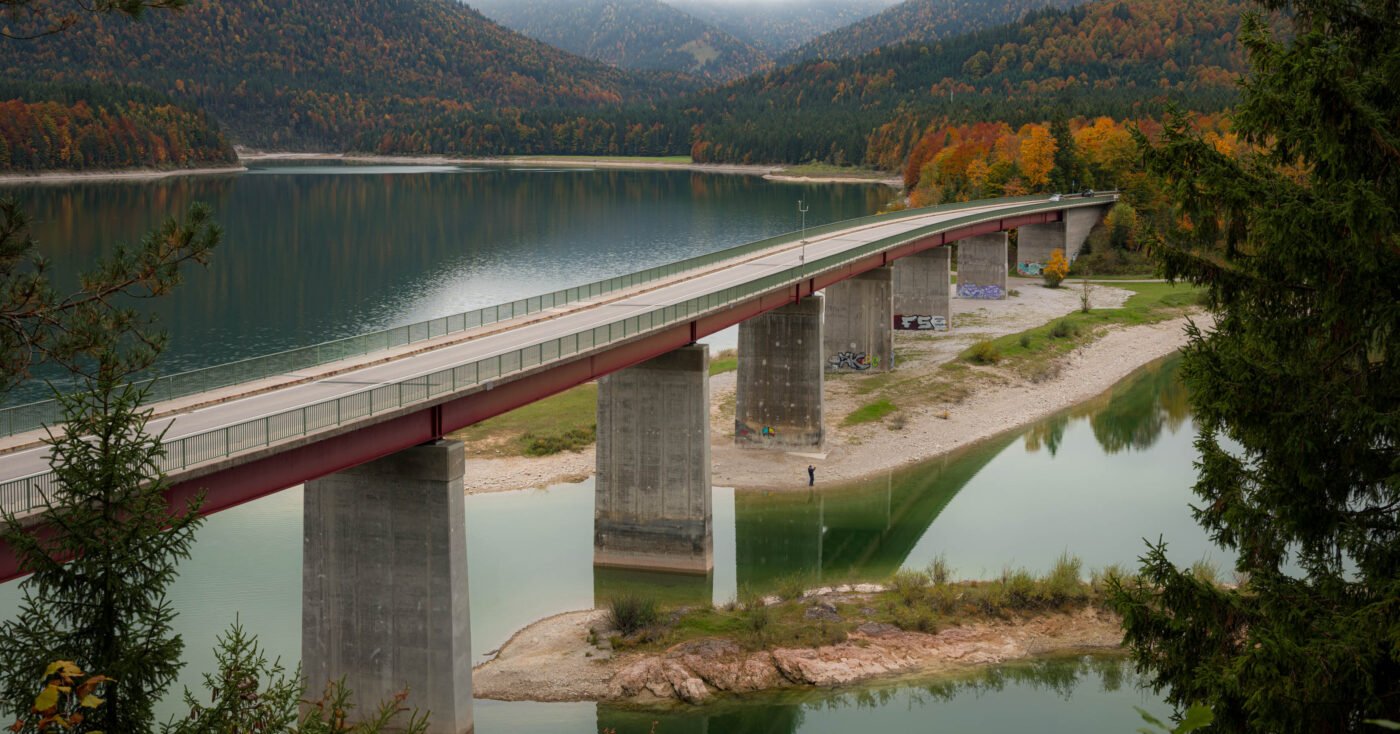
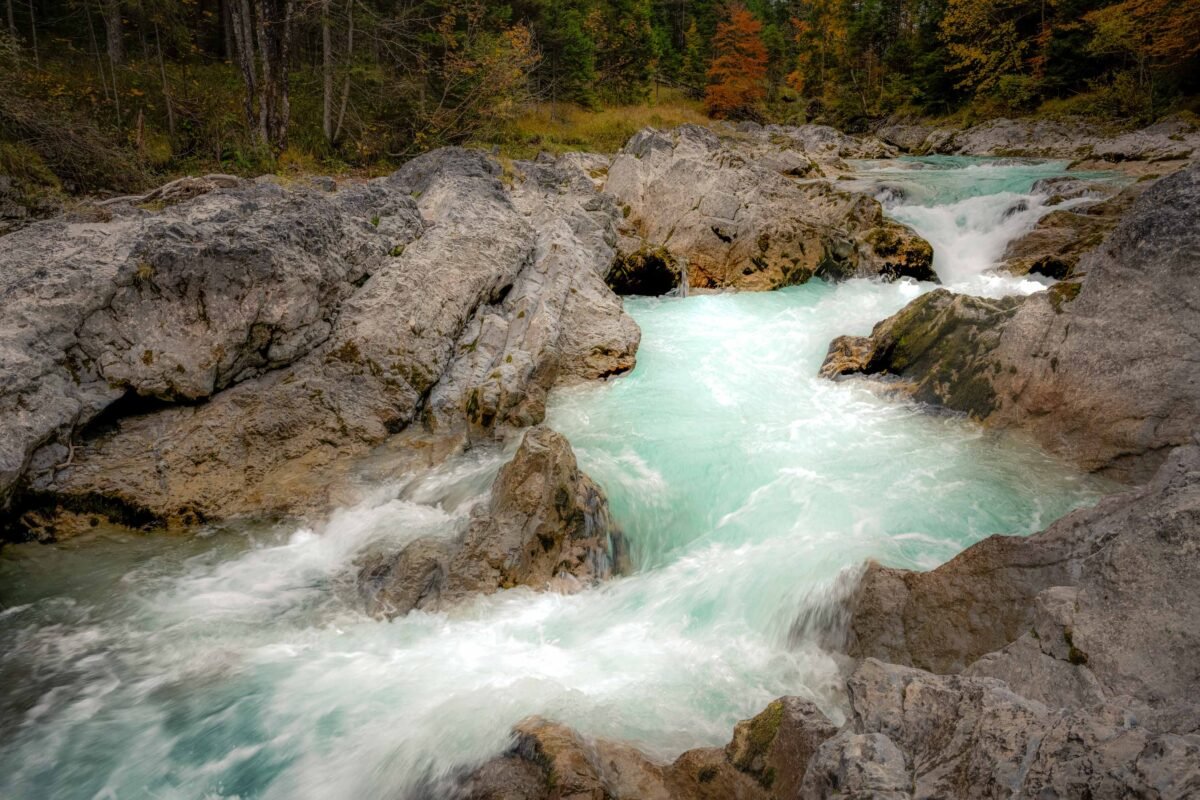
As soon as you cross the border into Austria, the landscape slowly transforms into an impressive mountain setting. The final stretch, through the Riss Valley towards Eng Alm, is narrow but breathtakingly beautiful. Along the way you’ll encounter many places where you can let your camera do its work. You have to be careful not to lose sight of your main goal for the day. Here nature shows itself at its very best.
Tip: Keep your eye on the goal. On the way to the Ahornboden you’ll encounter countless beautiful spots. Definitely stop there and look around, but don’t forget that there’s still much beauty ahead of you.
Getting There and Distances
| From Munich | 90 km (1 hour 30 min) |
| From Bad Tölz | 45 km (50 min) |
| From Innsbruck | 85 km (1 hour 30 min via Mittenwald) |
| From Garmisch-Partenkirchen | 55 km (1 hour) |
The route runs via the B13 to Lenggries and Fall, then on to Vorderriss and Hinterriss. The final stretch from Hinterriss to Eng Alm is a toll road (Mautstrasse) of 15 km.
The Magic of the Ahornboden
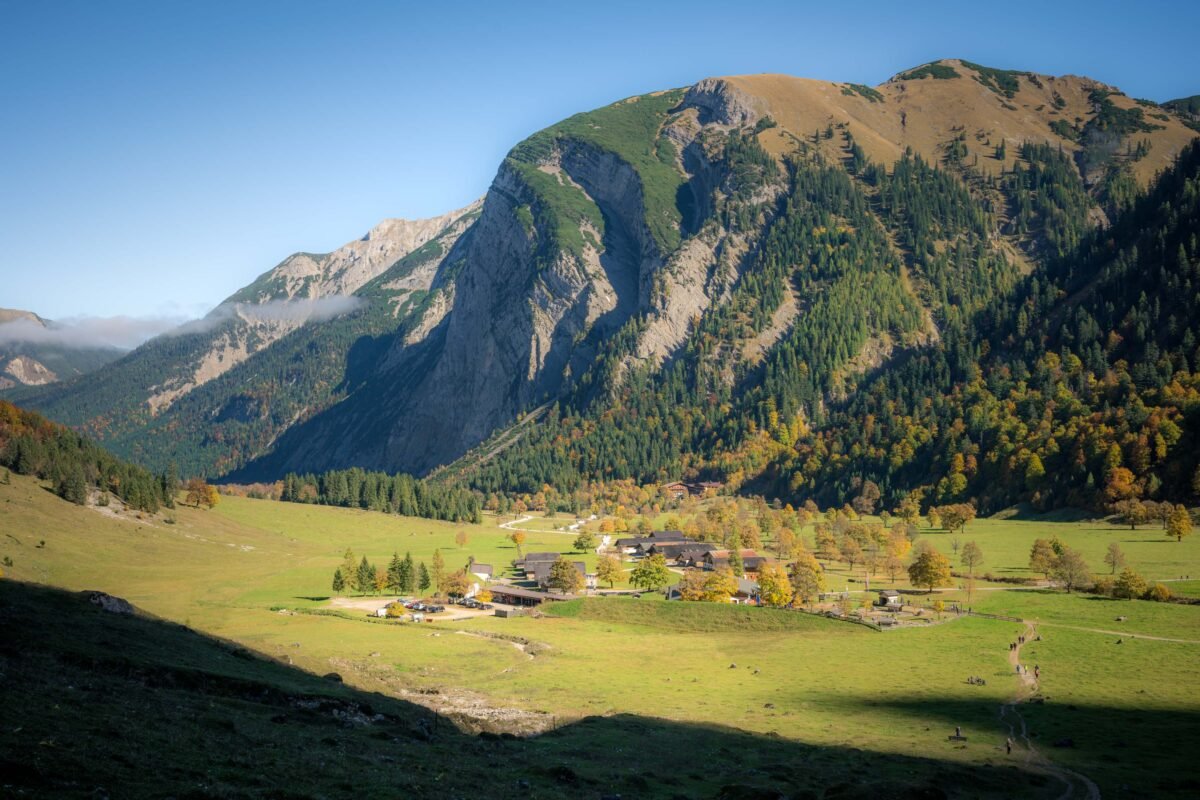
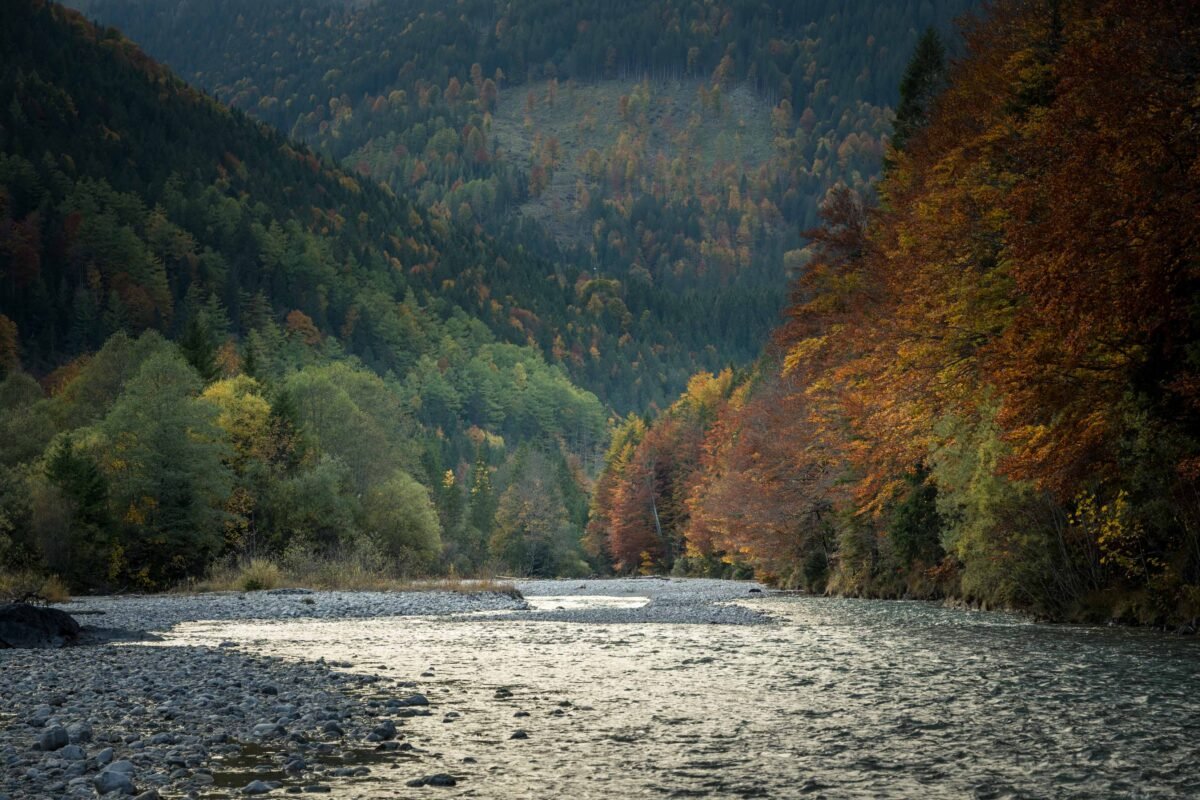
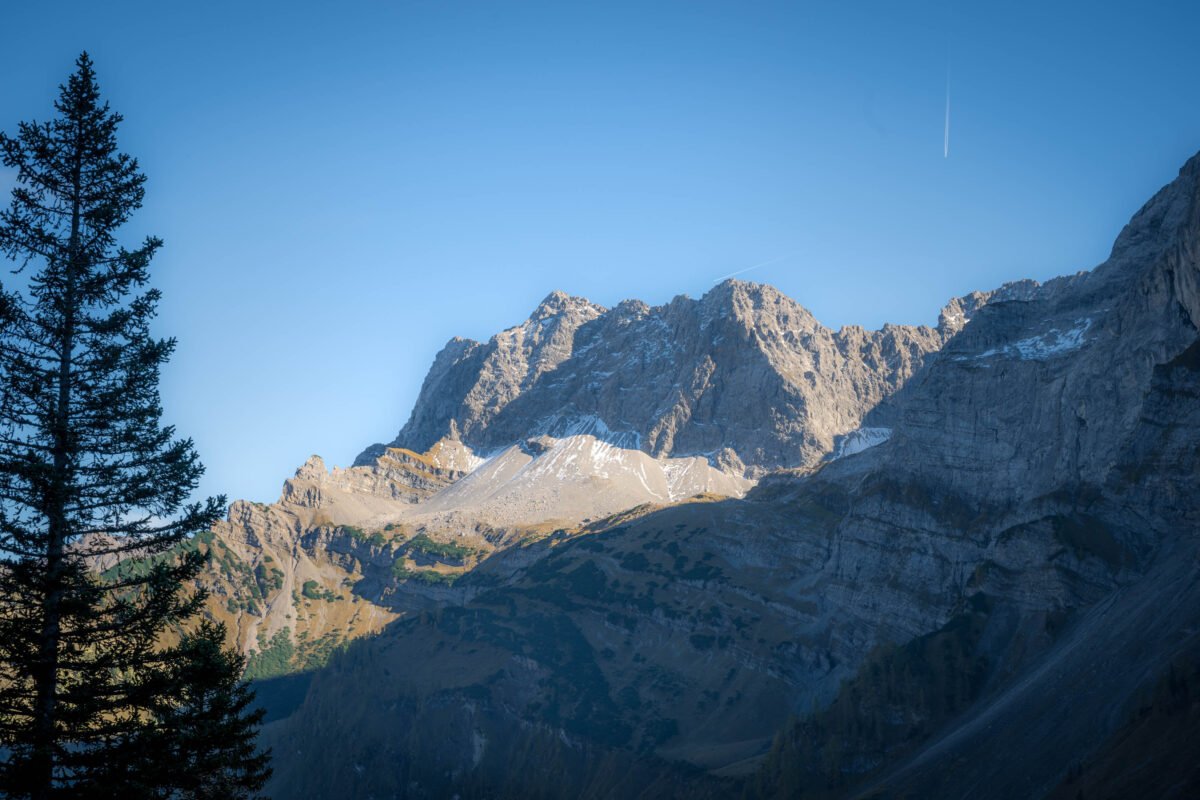
The Grosser Ahornboden lies at approximately 1,200 metres elevation in Karwendel Nature Park. Here, more than 2,200 old maples grow – some over 600 years old – scattered across a meadow plain with the imposing rock walls of the Karwendel in the background. In October it’s a fairy-tale sight: the trees turn golden yellow while the peaks are already covered with the first snow. The silence, interspersed with the sound of the Rißbach river, makes it a place that leaves a deep impression.
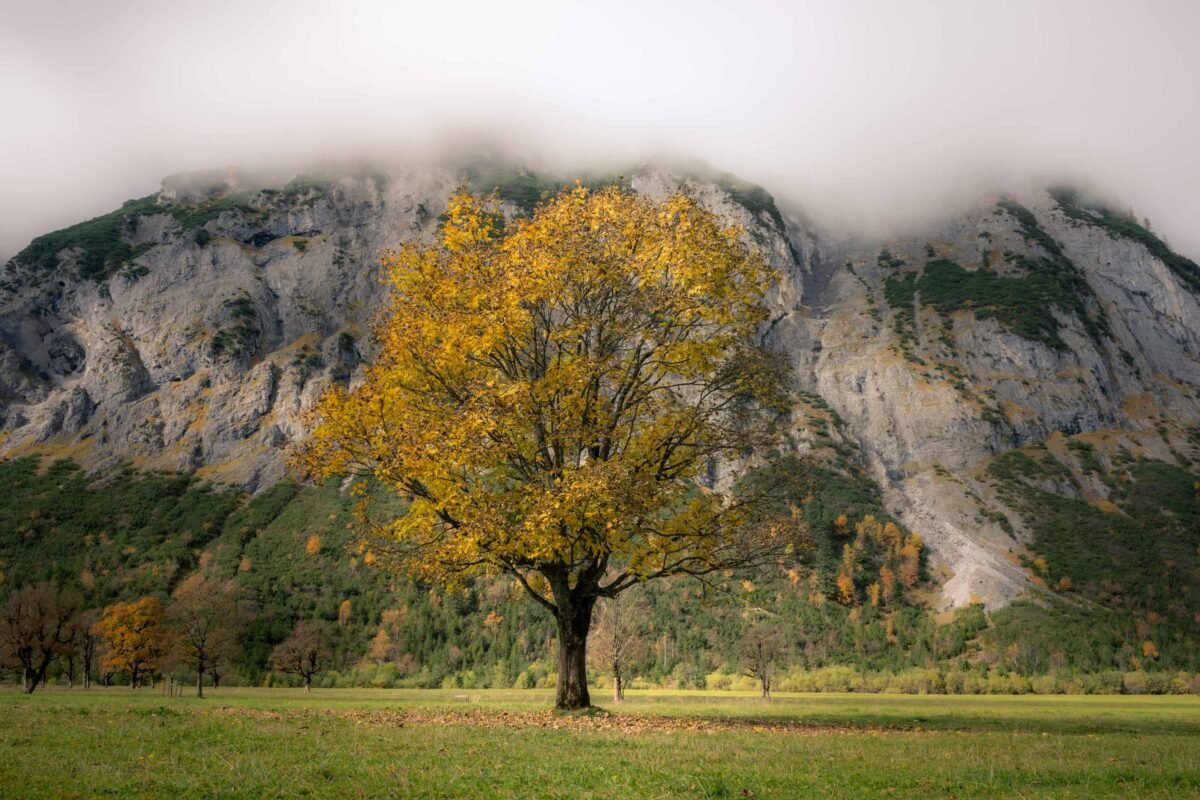
Photography tip: If you love photography and enjoy photographing trees, don’t forget to zoom in on the details too. The texture of old bark, leaf veins in backlight, mushrooms at the base – there are endless compositions to be found.
Hiking Around the Ahornboden
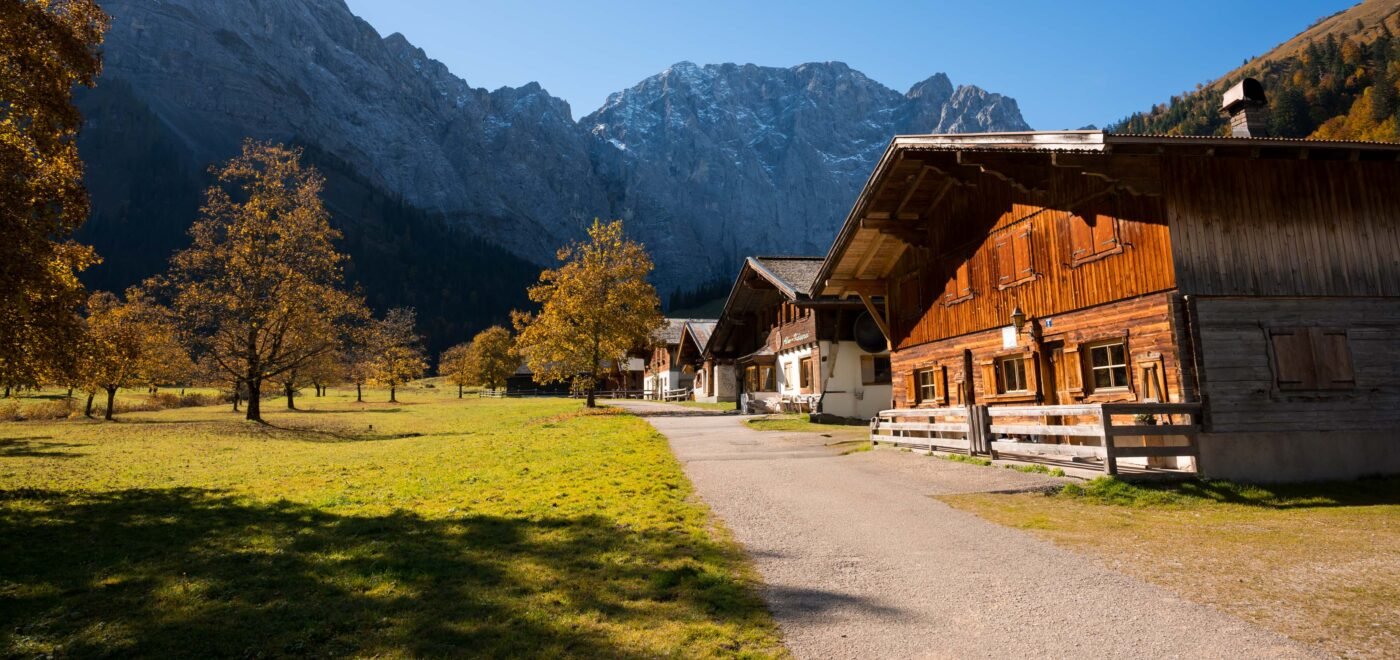
Various hiking routes start from the car park at Eng Alm. A nice hike to start with takes you across the flat valley past the old maples, with constant views of the mountains.
The route is easily walkable and perfectly suited for a relaxed day hike. Take time to stop occasionally – the light constantly changes and each moment offers new colours and contrasts. For photographers this is a dream location: the interplay of mountains, trees and shadows seems specially made for autumn.
Route 1: Walk through the Enger Grund
| Distance | 5,5 km (return) |
| Duration | 2 hours |
| Difficulty | Easy |
| Elevation gain | Minimal (~150 m) |
| Highlights | Waterfall, limestone walls, Eng Alm |
Route 2: Walk Past the Waterfall
There are countless beautiful routes, including this one past the waterfall:
Route 3: Hike to the Binsalm (our choice)
This time we chose the route to the Binsalm. A beautiful route that’s perfectly doable. The Binsalm is a wonderful resting point for refreshments. Afterwards you can also visit the Rasthütte Eng-Alm and enjoy a delicious bowl of pea soup.
| Distance | 6-7 km (loop) |
| Duration | 2.5-3 hours |
| Difficulty | Moderate |
| Elevation gain | ~400 metres |
| Binsalm elevation | 1,502 metres |
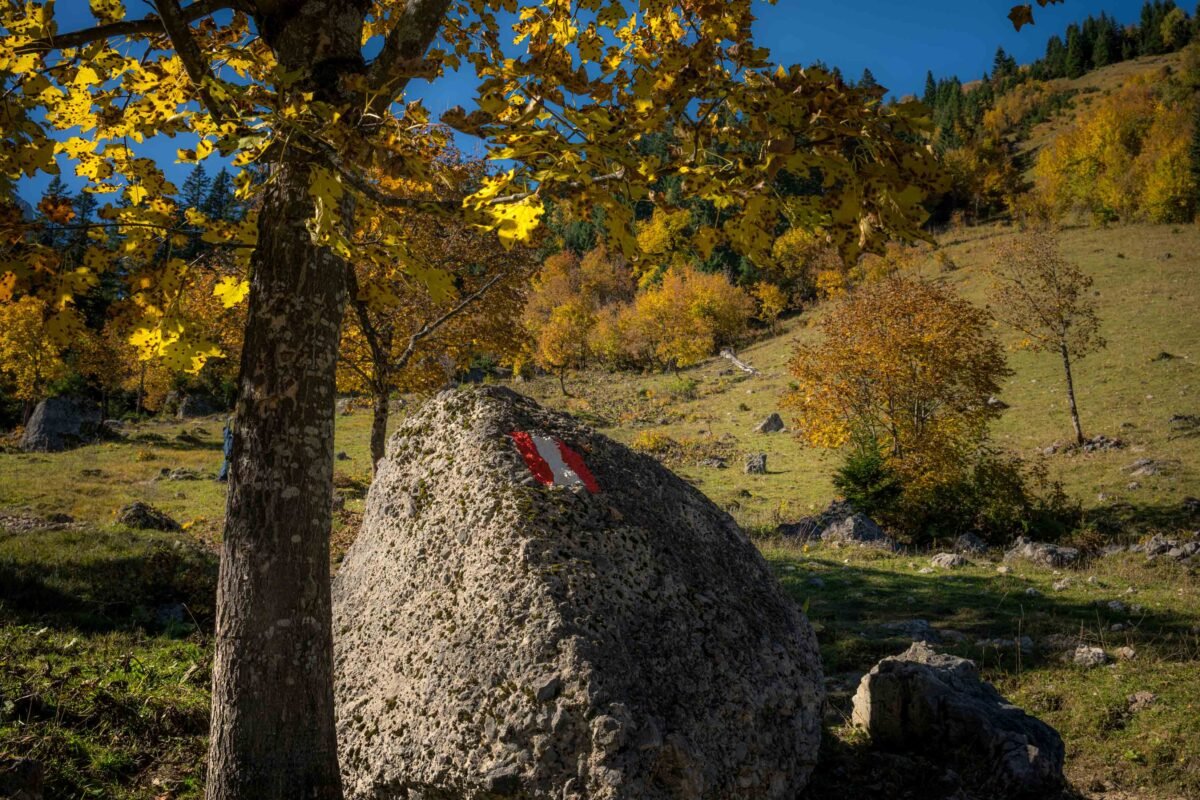
Hiking tip: From Eng Alm you can reach the Binsalm via the panoramic trail (about 1 hour, with beautiful views over the Ahornboden) or via the forest road (about 40 minutes, slightly faster). The panoramic route is absolutely worth it!
Mountain Huts and Dining
One of the highlights of a visit to the Ahornboden are the authentic mountain huts:
- Eng Alm (1,227 m) – The famous alpine village with traditional wooden huts and its own cheese dairy. Taste the genuine Enger Almkäse!
- Rasthütte Eng-Alm – Cosy inn with terrace and Tyrolean dishes. Recommendation: the fried alpine cheese or pea soup.
- Binsalm (1,502 m) – Authentic alp above the valley with homemade specialties. Open mid-May to end of October.
- Alpengasthof Eng (1,203 m) – Larger restaurant near the car park with terrace and views.
Culinary tip: Eng Alm is famous for its cheese. Here, Enger Almkäse is still made in the traditional way from fresh milk from the grazing cows. You can taste and buy the cheese in the shop at the cheese dairy – a delicious souvenir to take home!
Staying in the Region
We stayed at Ferienwohnung Übernberg in Hausham, an excellent base for exploring both the Karwendel area and the Bavarian Alps. The friendly owners gave us useful tips for day trips in the area.
Those who want to stay closer to the Ahornboden will find an atmospheric inn with terrace and views of the valley at Eng Alm. The Alpengasthof und Naturhotel die Eng offers overnight accommodation right at the edge of the Ahornboden – ideal for sunrise and sunset photography. For those who love peace, hiking and photography, this is a dream location. You can easily spend several days in this beautiful area.
Tip: The most beautiful moments at the Ahornboden are early in the morning and late in the afternoon, when the day-trippers have left. Staying overnight in the region gives you the chance to truly experience the silence.
Best Time to Visit the Ahornboden
The Grosser Ahornboden is impressive all year round, but in October it shows itself at its very best:
| Spring (May-June) | Fresh green, flowering meadows, still quiet. Road opens 1 May. |
| Summer (July-Aug) | Green landscape, all huts open. Can be busy on nice days. |
| Autumn (Sept-Oct) | Golden colours, first snow on peaks, magical light. Our favourite! |
| Winter (Nov-Apr) | Road closed, only accessible on skis or on foot. Huts closed. |
The days in October are clear, the air crisp and the light warm. The trees turn gold, the mountains show their first snow and the tourist crowds have largely disappeared. Do bear in mind that the road to Eng Alm is usually closed in early November for the winter, so don’t plan your visit too late in the season.
In Conclusion
The Ahornboden is a place where nature, tranquility and timeless beauty come together. It’s not a spectacular destination in terms of highlights or adrenaline, but that’s exactly what makes it so special. A day in this valley lets you hear the silence of the mountains and feel the power of simplicity. For me, this was one of the most memorable days of autumn.
More autumn inspiration? Check out my book Autumn – The Splendour of Nature which also includes various photos of the Grosser Ahornboden as well as photos from the Dolomites, Königssee and other beautiful autumn locations.
Or read about our visit to the Königssee and Ramsau in this story.
Practical Information
Location and Getting There
| Region | Tyrol, Austria (accessible via Bavaria) |
| Nature Park | Karwendel (Austria’s largest) |
| Ahornboden elevation | 1,080 – 1,300 metres |
| Eng Alm elevation | 1,227 metres |
| GPS Car park P10 | 47.4097° N, 11.5617° E |
Toll Road (Mautstrasse) and Costs
The final stretch from Hinterriss to Eng Alm (15 km) is a toll road. Payment is possible by cash or debit card. Parking is included in the toll fee at all car parks along the route.
| Car (day rate) | €7 (2025) |
| Car (with overnight stay) | €10 (for duration of stay) |
| Motorcycle | €5 |
| Campervan | €12 |
| Bus | €1 per passenger |
| Bicycle | Free |
Opening Times
- Toll road: 1 May to 31 October (daily)
- Winter: Road closed, only accessible on foot or cross-country skis
- Eng Alm: Mid-May to end of October
- Binsalm: 1 May to 31 October
Note: You don’t need an Austrian vignette! The route runs via Germany and the toll road is a separate, local toll. The road between Vorderriss and Hinterriss is free.
Facilities
- Large car park (P10) at Alpengasthof Eng
- Toilets at the car park and mountain huts
- Restaurants and huts (see above)
- Playground for children at Eng Alm (“Spielschatz Eng”)
- Cheese shop at Eng Alm
What to Bring
- Good hiking boots
- Warm clothing (layers)
- Rain jacket
- Camera and tripod
- Water and snacks
- Cash (for toll and huts)
Frequently Asked Questions
How do you get to the Grosser Ahornboden?
The Ahornboden lies in Tyrol (Austria) but can only be reached via Bavaria (Germany). Drive via Bad Tölz and Lenggries to Vorderriss and Hinterriss. From Hinterriss, take the toll road (15 km, €7 for cars) to the car park at Eng Alm. From Munich it’s approximately 1.5 hours’ drive.
How much does the toll road to the Ahornboden cost?
The toll road (Mautstrasse Hinterriss-Eng) costs €7 per car per day, €5 for motorcycles and €12 for campervans (2025 prices). With an overnight stay in the Eng, you pay €10 for your entire stay. Parking at all car parks along the route is included in the toll. Bicycles are free.
When is the road to the Ahornboden open?
The toll road is open from 1 May to 31 October. In winter the road is closed due to snow. You can then only reach the Ahornboden on cross-country skis or on foot – an adventurous undertaking! The mountain huts are also closed in winter.
What is the best time to visit the Ahornboden?
October is our absolute favourite: the maples turn gold and orange, the mountain peaks often already have a layer of snow and there are fewer crowds than in summer. The light is soft and warm. Come early in the morning or late in the afternoon for the most beautiful atmosphere and the fewest crowds.
Are there hiking routes at the Ahornboden?
Yes, there are various hiking routes for all levels. An easy walk through the Enger Grund (4-5 km, 1.5-2 hours) is ideal for families. The hike to the Binsalm (6-7 km, 2.5-3.5 hours, 300m ascent) is a bit more challenging but well worth it. For experienced hikers there are routes to the Falkenhütte, Lamsenjochhütte and Gamsjoch.
Can you stay overnight at the Ahornboden?
Yes! The Alpengasthof und Naturhotel die Eng offers overnight accommodation right at the Ahornboden. The Binsalm also has sleeping places. Staying overnight is ideal for photographing sunrise and sunset when the day-trippers have left. Camping is prohibited throughout the nature park.
Location on the Map
Gallery
Pictures speak louder than words:



Useful Links
- Eng Alm & Grosser Ahornboden – engalm.at
- Toll Road Hinterriss-Eng – mautstrasse-hinterriss-eng.at
- Alpengasthof und Naturhotel die Eng – eng.at
- Binsalm – binsalm.at
- Karwendel Nature Park – karwendel.org
- Tyrol Tourism – tyrol.com