



Klostermølle – Lake District of Central Jutland
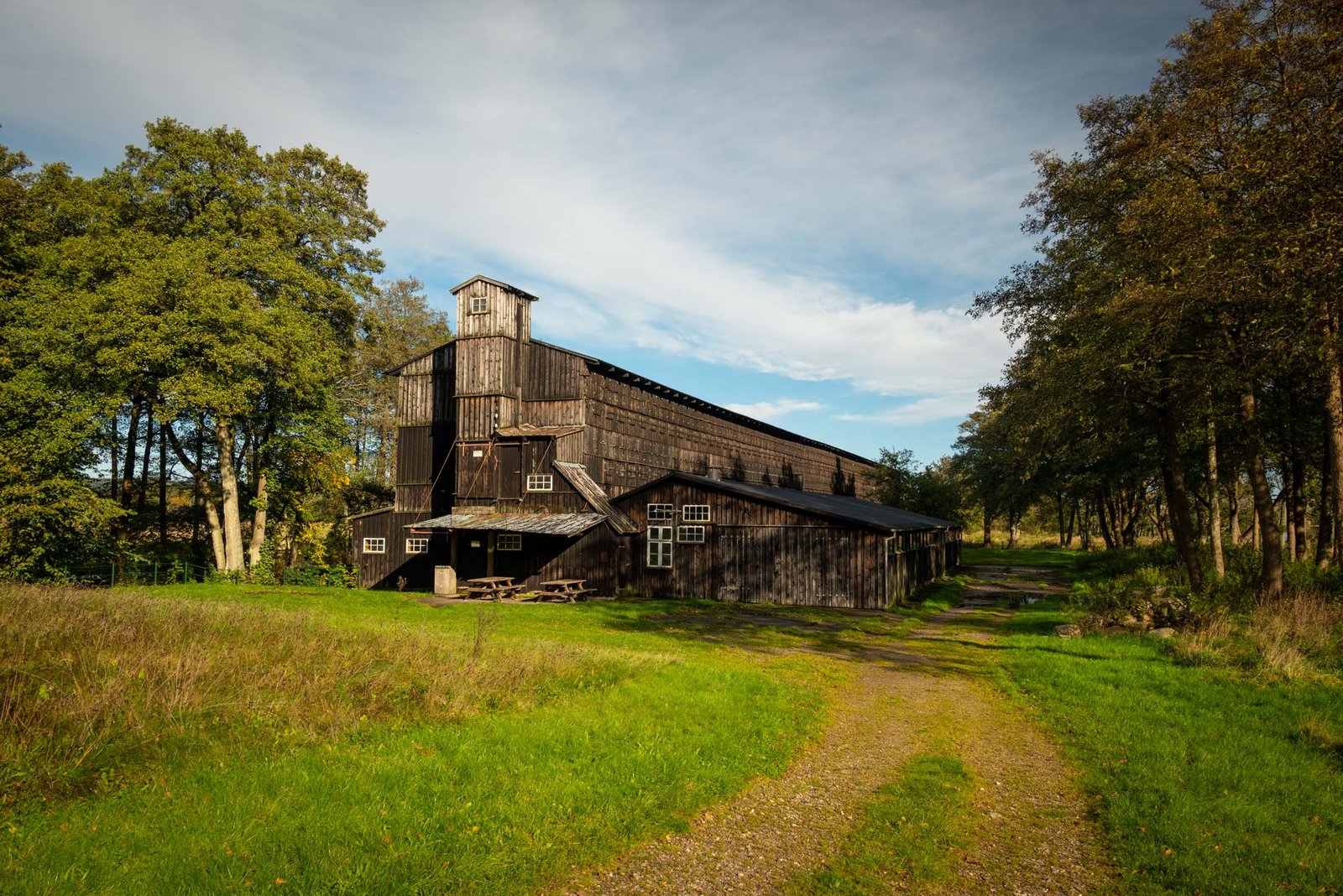
Hidden at the quiet western end of Lake Mossø, near Skanderborg, lies Klostermølle — a place where history, water, and nature flow seamlessly together. Once a Benedictine monastery and later a paper mill, this peaceful site now forms part of a protected nature area at the edge of Søhøjlandet, Denmark’s lake highlands. The name literally means “the Monastery Mill,” and the setting still carries the calm, timeless atmosphere of both its monastic and industrial past. Wooden buildings, slow-moving water, and surrounding forests create a landscape of deep stillness — a perfect example of the gentle beauty that defines inland Denmark.
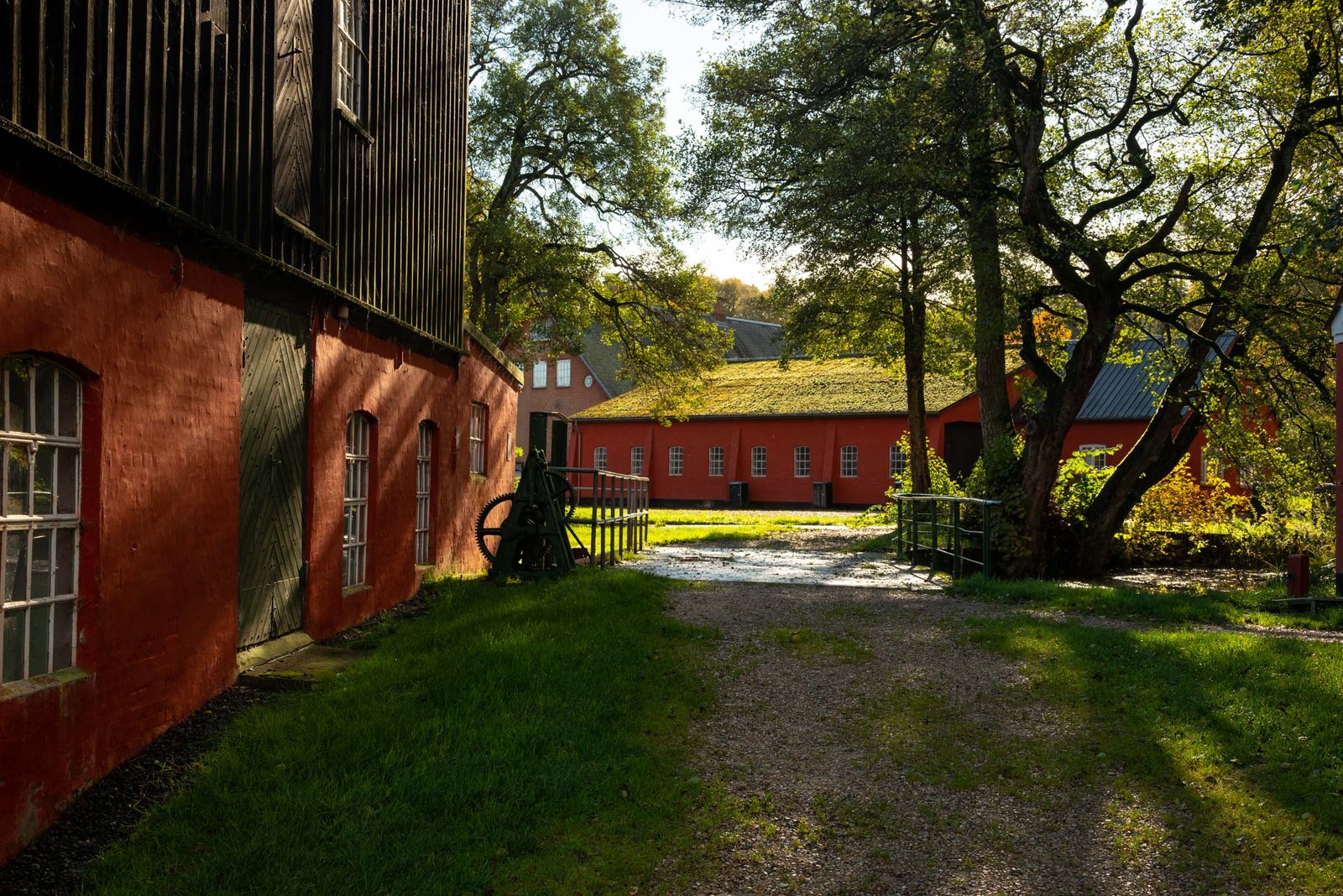
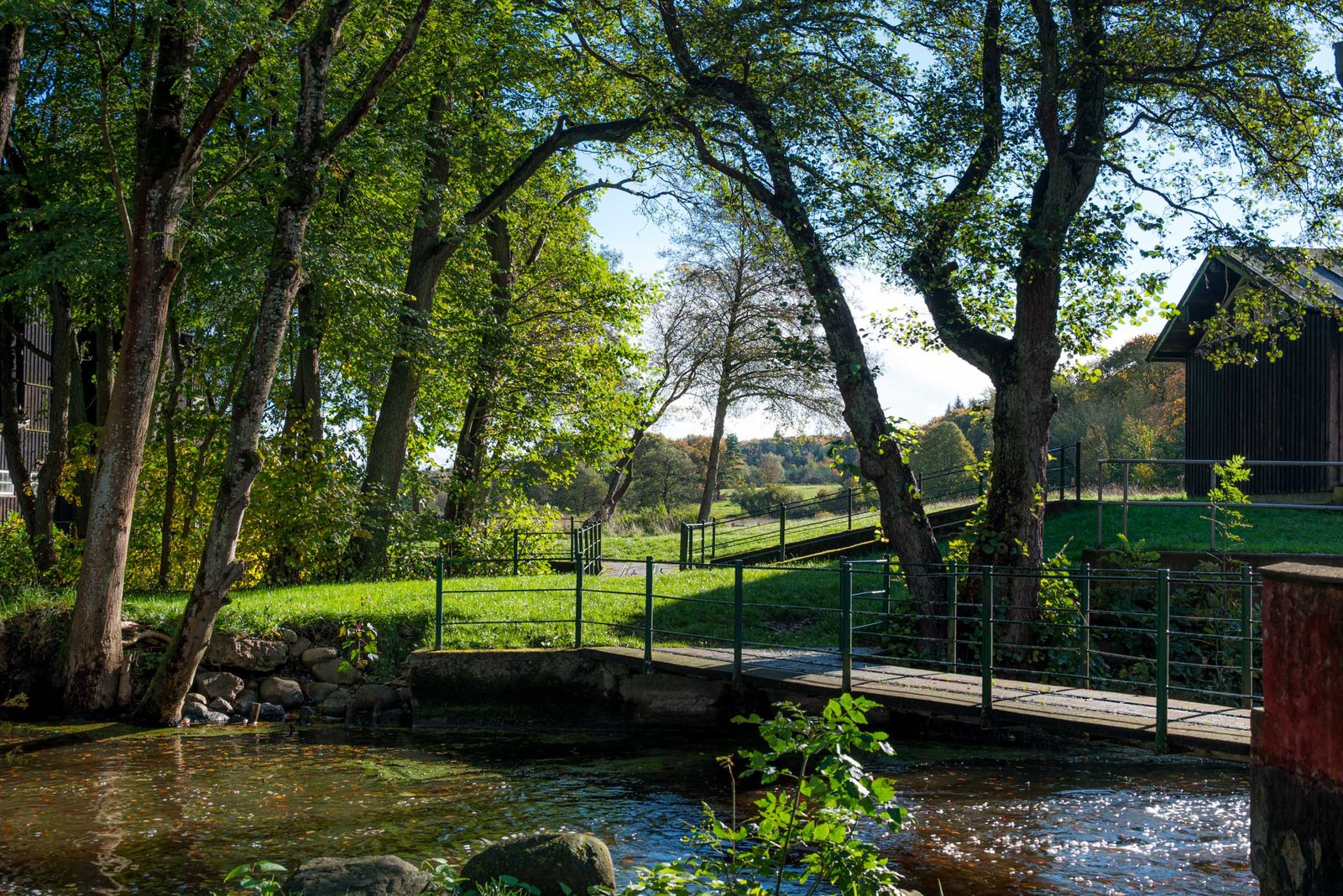
The old mill buildings, preserved in warm brown timber and red brick, stand beside the river Gudenå, Denmark’s longest waterway. A wooden viewing tower nearby offers panoramic views over the lake, reed beds, and distant hills — a landscape alive with birdsong and the soft shimmer of water. It’s easy to imagine monks walking the same paths centuries ago, or mill workers listening to the same river that still flows quietly through the valley today.
At sunset, the entire area glows in golden light: reeds turn copper, reflections ripple across the water, and the air fills with the scent of pine and lake grass. Klostermølle is not grand or dramatic, but deeply peaceful — a place that embodies the Danish sense of hygge in nature: quiet, modest, and full of soul. For photographers, it offers textures of wood, water, and light that seem to invite contemplation.
From Wikipedia:
Klostermølle was originally a watermill, serving the now demolished Voer Abbey once situated nearby. The mill is located at the western end of lake Mossø.
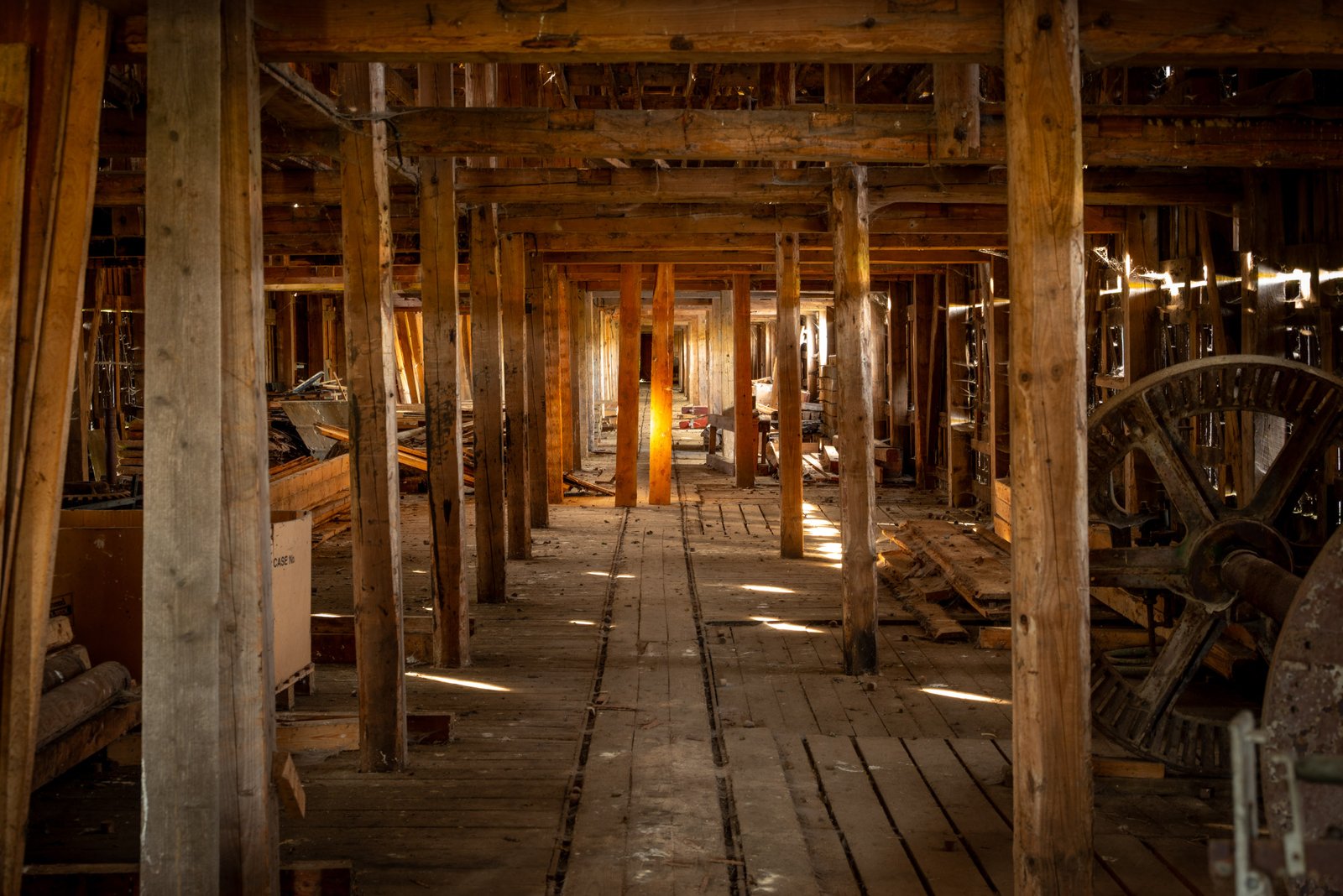
In 1872, the monks' old mill — operated as a grain mill since the time of the Protestant Reformation — was converted to a sawmill. The wood waste also served as feedstock for a cardboard factory, driven by water power. The finished cardboard was shipped by steamboat across the lake to the railway station in Alken. Production continued until 1974, when some of the buildings were destroyed by fire; the long lumber drying shed was spared. The Danish Forest and Nature Agency has purchased the site as part of a program of nature conservation of the area surrounding Mossø and Vissing Abbey. Today, it is both a nature center and the headquarters for the Danish youth organization Nature and Youth (Natur & Ungdom).
Best time to visit
- Sunrise or sunset for the best light and calm atmosphere.
- Spring and summer for vibrant greens and bird activity.
- Autumn for golden colors and reflections.
Practical tips
- Parking area near the mill; well-marked walking paths through the reserve.
- Small picnic areas and benches along the water.
- Combine with Himmelbjerget or Gudenå canoe route for a full day in the Lake District.
- Bring binoculars for birdwatching; the area is rich in wildlife.
Where is it?
Gallery

Photography tips
- The historic mill buildings reflected in the river.
- Reeds and reflections along the edge of Lake Mossø.
- The viewing tower overlooking the lake and surrounding forest.
- Early-morning mist or golden evening light.
- Textures of weathered wood and slow-moving water.
Hiking tips
- Klostermølle circular trail: 3–4 km through forest, reeds, and along the river.
- Klostermølle–Himmelbjerget route: 8–9 km following the Gudenå Valley.
- Terrain: easy and mostly flat; good paths suitable for all seasons.
- Excellent for slow photography walks and nature observation.