



Mønsted Kalkgruber

Beneath the rolling hills west of Viborg lies a hidden world — the Mønsted Kalkgruber, the largest limestone mine in the world. Stretching for more than 60 kilometers of tunnels and chambers, it’s a labyrinth of echoing passages, underground lakes, and softly glowing light. The air is cool and still, and water drips steadily from the vaulted ceilings, forming a rhythm as ancient as the rock itself. Entering the mines feels like stepping into another dimension — one shaped by both nature and centuries of human labor.
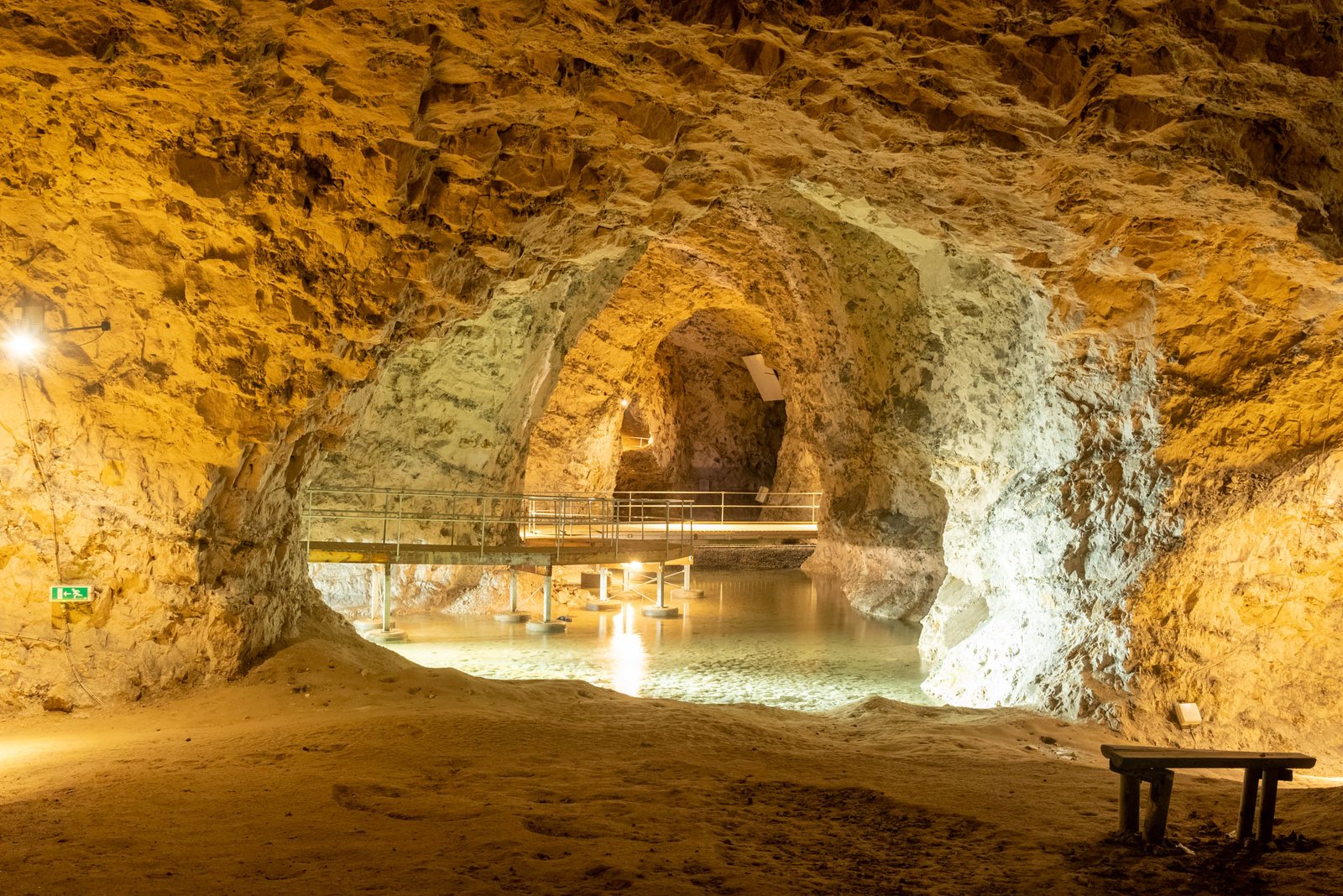
Mining began here in the Middle Ages and continued for hundreds of years. Limestone from Mønsted built Danish churches, castles, and towns, and traces of that history remain carved into the walls. Today, the mines are part of a vast nature reserve and open to visitors who can wander along illuminated paths deep underground. Pools reflect the lights like mirrors, creating surreal compositions of stone, water, and shadow. In some chambers, subtle projections and sound installations tell the story of the miners who once worked here, bringing the silence to life.
Above ground, green meadows and grazing cattle now cover the old mine entrances. The contrast between the peaceful landscape and the mysterious world below is striking — a perfect example of how Denmark’s landscapes hold layers of history just beneath the surface. In winter, more than 10,000 bats take shelter in the caves, making Mønsted Kalkgruber one of Northern Europe’s most important hibernation sites. It’s a place that feels both alive and timeless, a natural cathedral of stone and light.
Best time to visit
- Spring to autumn when the mines are open to the public.
- Morning or late afternoon for quieter visits.
- Winter (closed to visitors) for atmospheric exterior photography and snow-covered landscapes.
Practical tips
- Located near Viborg; free parking and visitor center with café and exhibitions.
- The main route underground is about 2 km; temperature remains around 8°C year-round — bring warm clothing.
- Flashlight recommended for exploring side passages (where permitted).
- Bats are protected — avoid noise and bright light during hibernation season (November–March).
Where is it?
Gallery

Photography tips
- Reflections of light on underground lakes and limestone walls.
- Textures of rock, water, and shadow in soft illumination.
- Minimalist compositions emphasizing shape and symmetry.
- The contrast between dark tunnels and green hills above ground.
- Long exposures capturing the stillness of the subterranean world.