



Rubjerg Knude Fyr
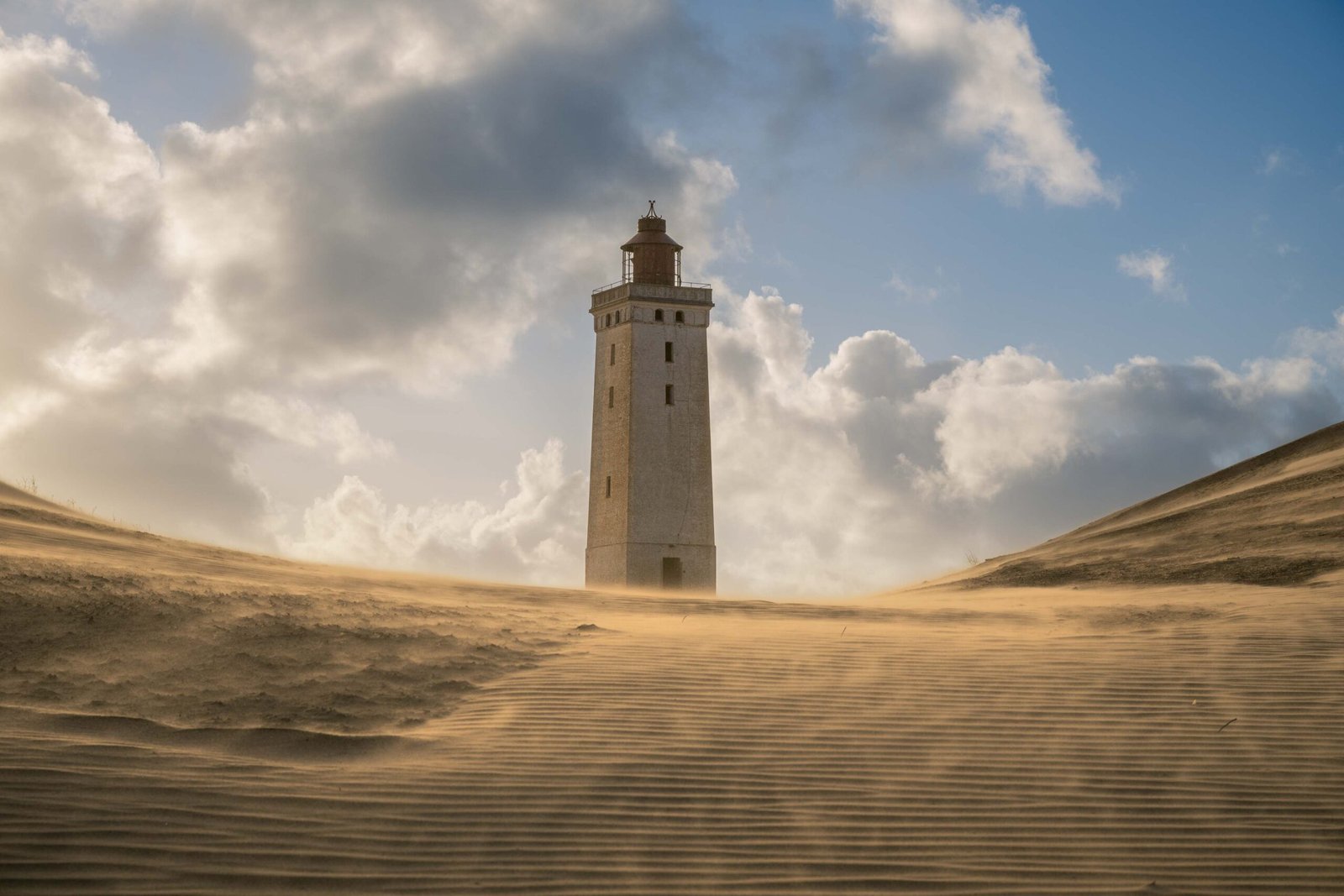
Rubjerg Knude Fyr is one of Denmark’s most striking and symbolic landmarks — a lighthouse perched high on the shifting sands of the North Sea coast. Built in 1900, it once stood proudly on the edge of a steep cliff guiding ships through the treacherous waters of the Skagerrak. Over time, wind and sea relentlessly reshaped the landscape: dunes advanced, cliffs eroded, and the lighthouse came dangerously close to the edge. In 2019, in an extraordinary feat of engineering, the entire structure was moved 70 meters inland to save it from collapsing into the sea.
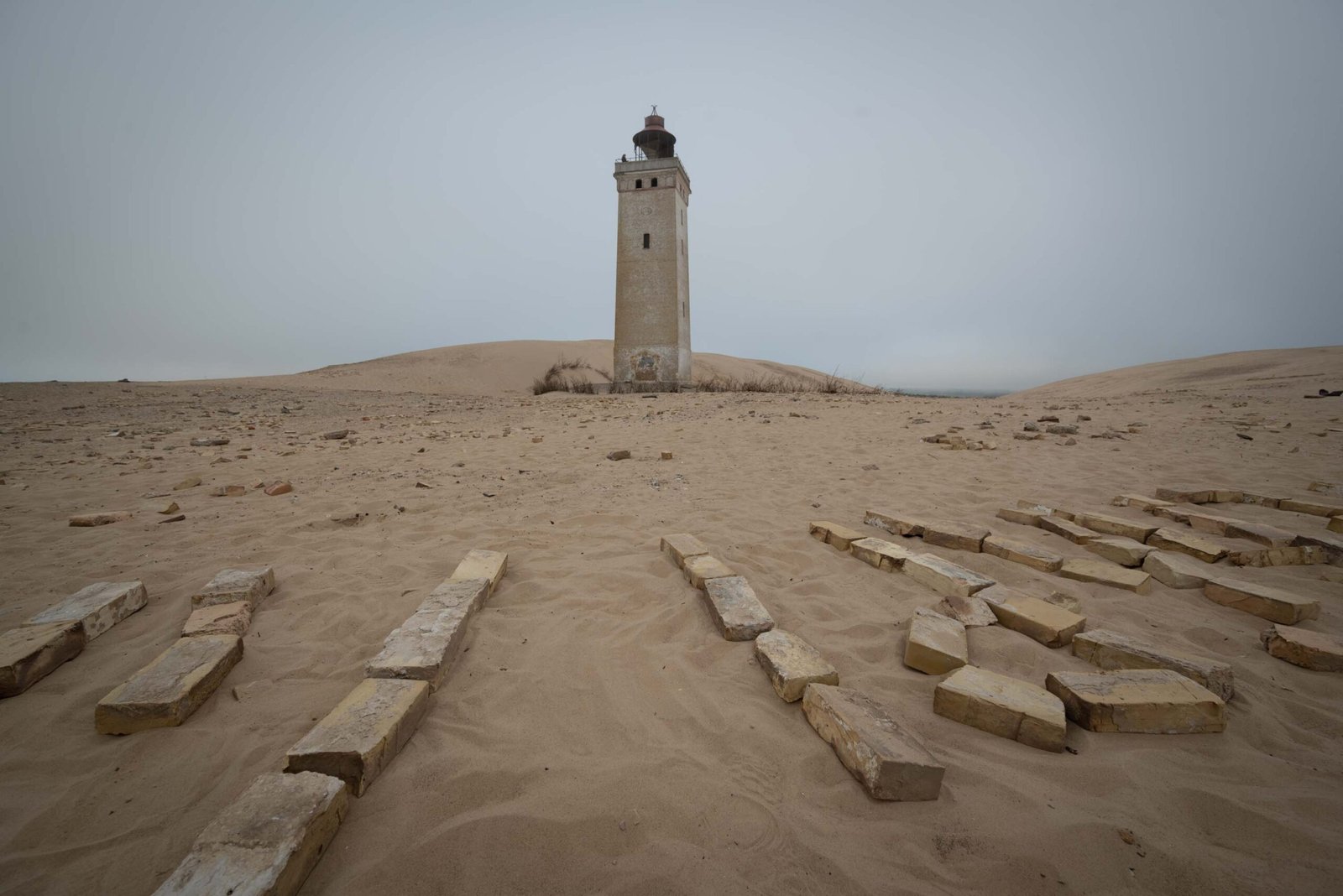
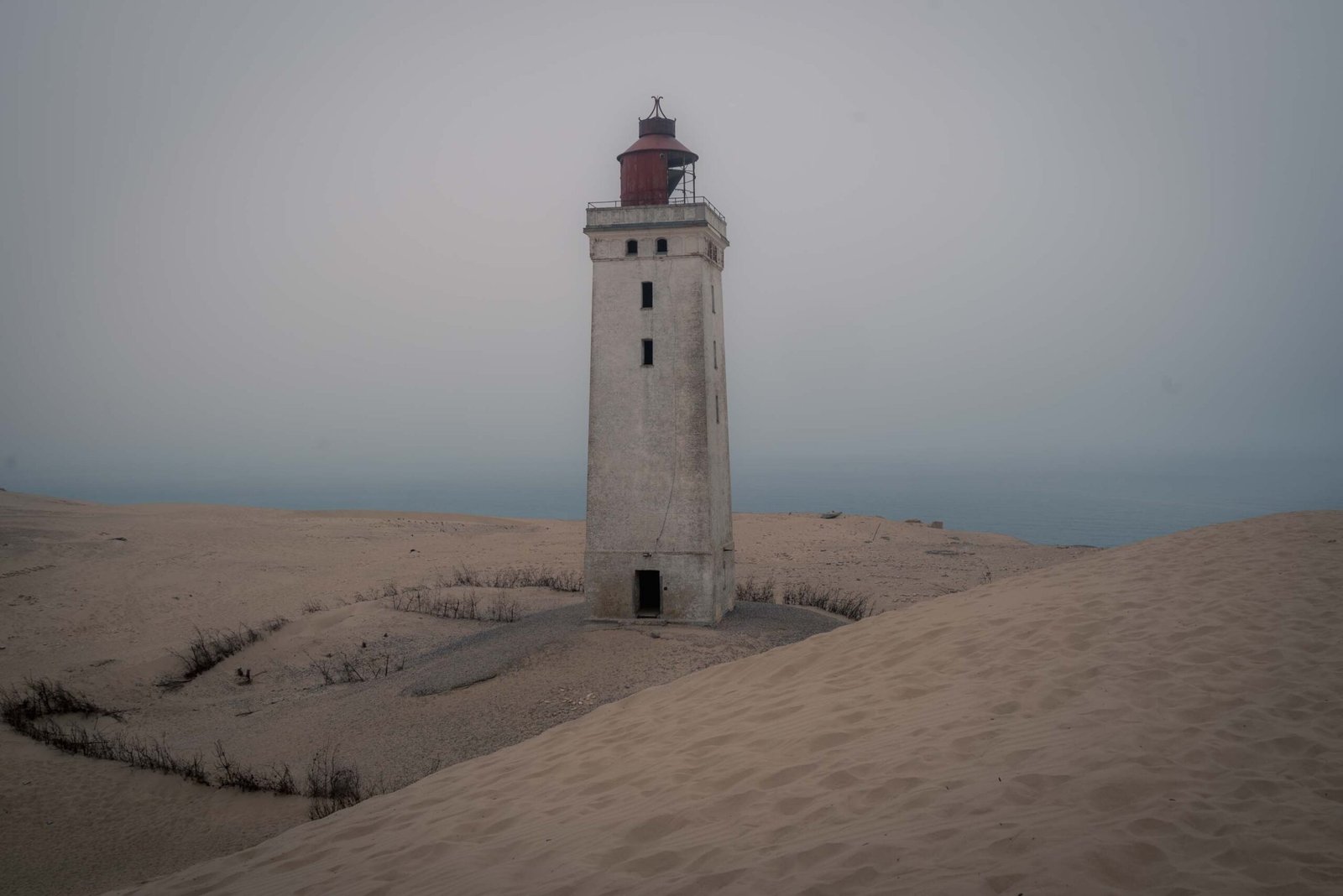
Today, Rubjerg Knude Fyr stands surrounded by towering sand dunes, a surreal scene of beauty and impermanence. The lighthouse rises like a monument from a sea of sand — half-buried, windswept, and constantly shifting. From the top, visitors are rewarded with breathtaking panoramic views over the North Sea, the cliffs, and the rolling inland dunes. Standing there, it’s impossible not to feel the power of nature and time, the endless cycle of erosion and renewal that defines Denmark’s west coast.
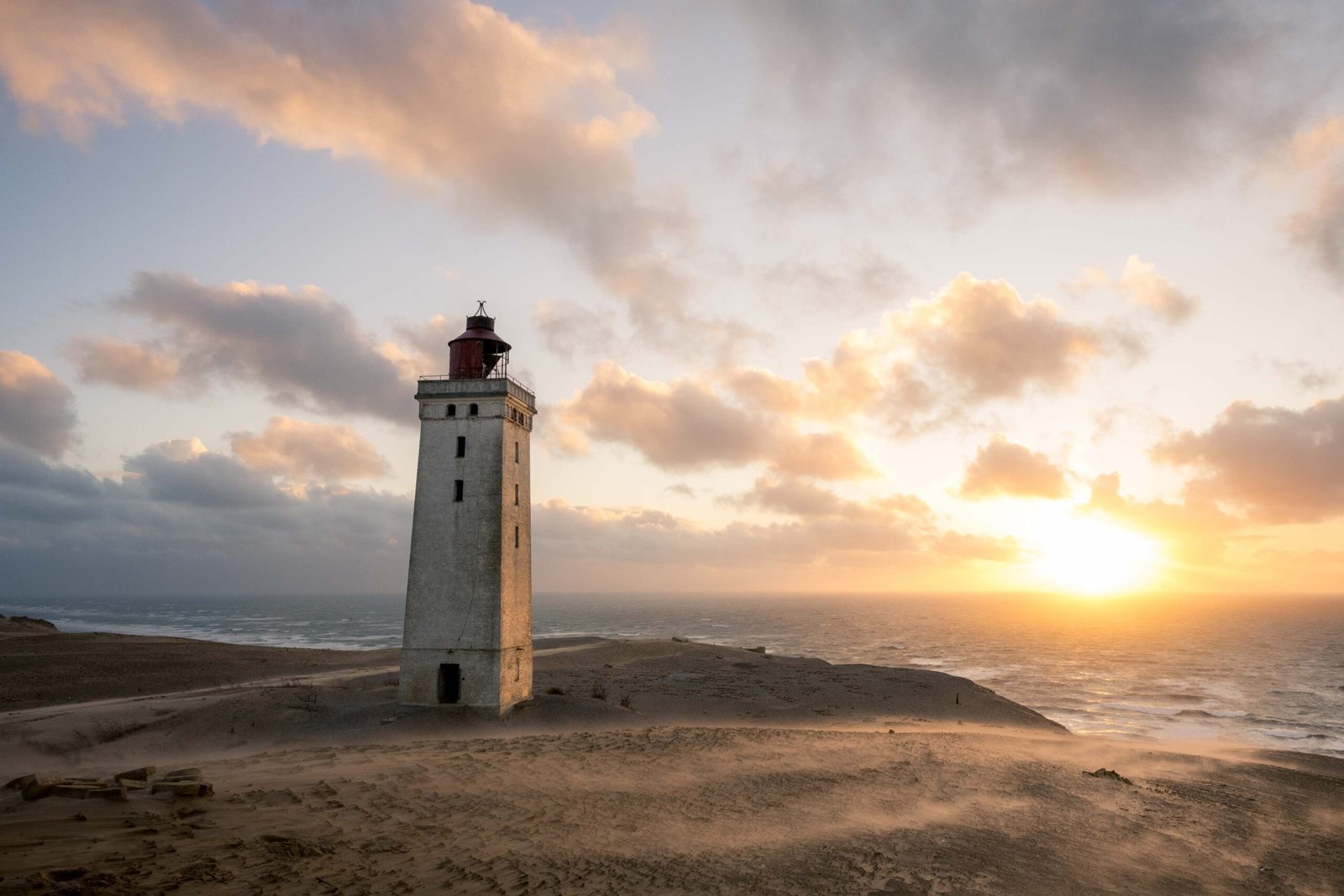
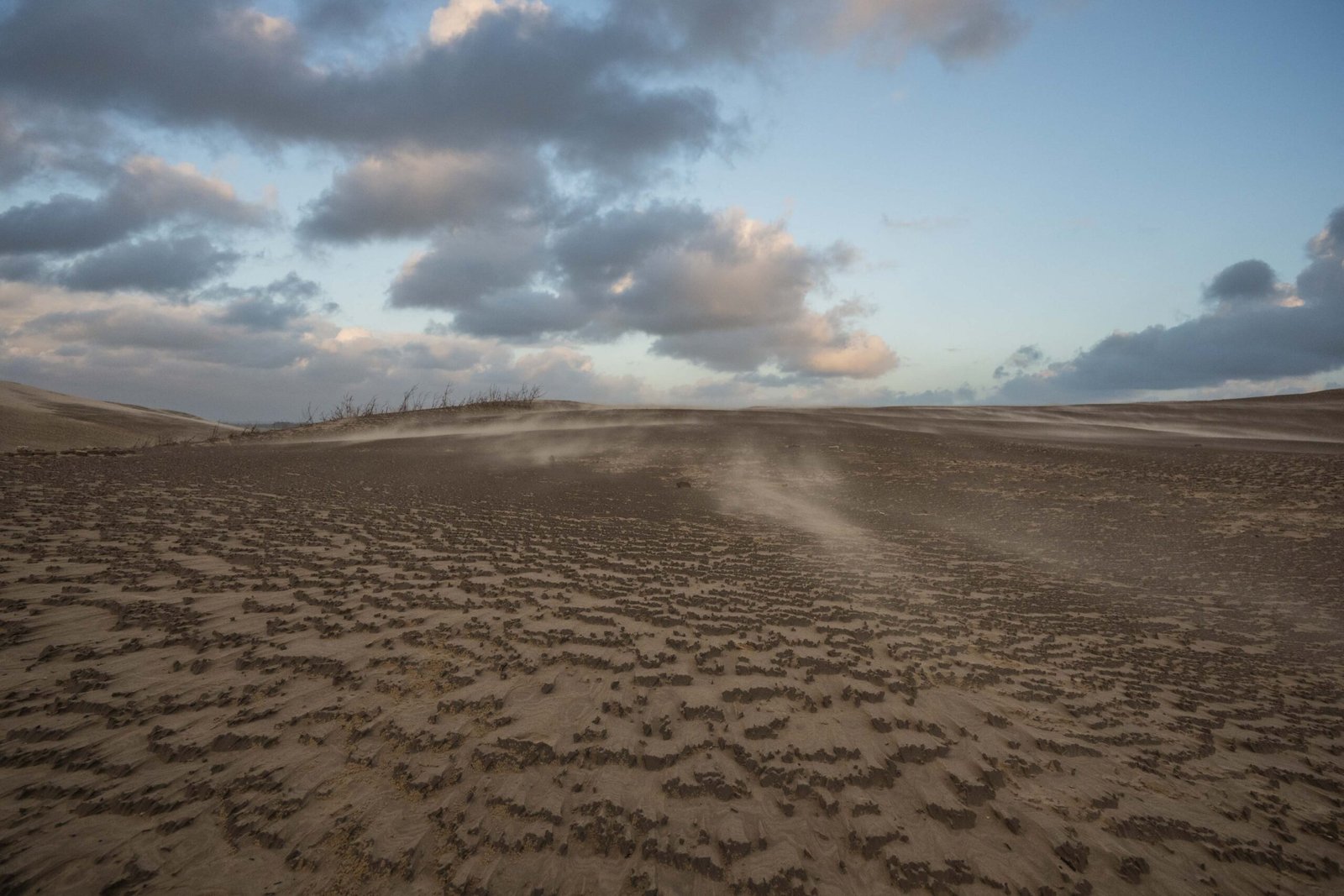
The area around Rubjerg Knude is a landscape in motion: soft dunes shaped by the wind, patches of grass clinging to sandy ridges, and the open horizon of the ocean below. At sunset, the light turns golden, and long shadows stretch across the dunes, giving the entire scene a timeless, almost cinematic quality. Whether blanketed in mist or glowing under a late-summer sun, Rubjerg Knude Fyr remains one of the most poetic places in Denmark — a testament to both human ingenuity and the unstoppable forces of nature.
Best time to visit
- Late afternoon to sunset for warm, directional light and long shadows.
- Morning for soft colors and fewer visitors.
- Spectacular in autumn and winter storms for atmosphere and texture.
Practical tips
- Parking area on Rubjergvej; 1.5 km walk through dunes to reach the lighthouse.
- The path is sandy and exposed — wear sturdy shoes and bring wind protection.
- No facilities at the lighthouse itself; bring water.
- Avoid the cliff edge — the ground is unstable due to erosion.
Where is it?
Gallery
Photography tips
- The lighthouse surrounded by sand dunes — especially beautiful in evening light.
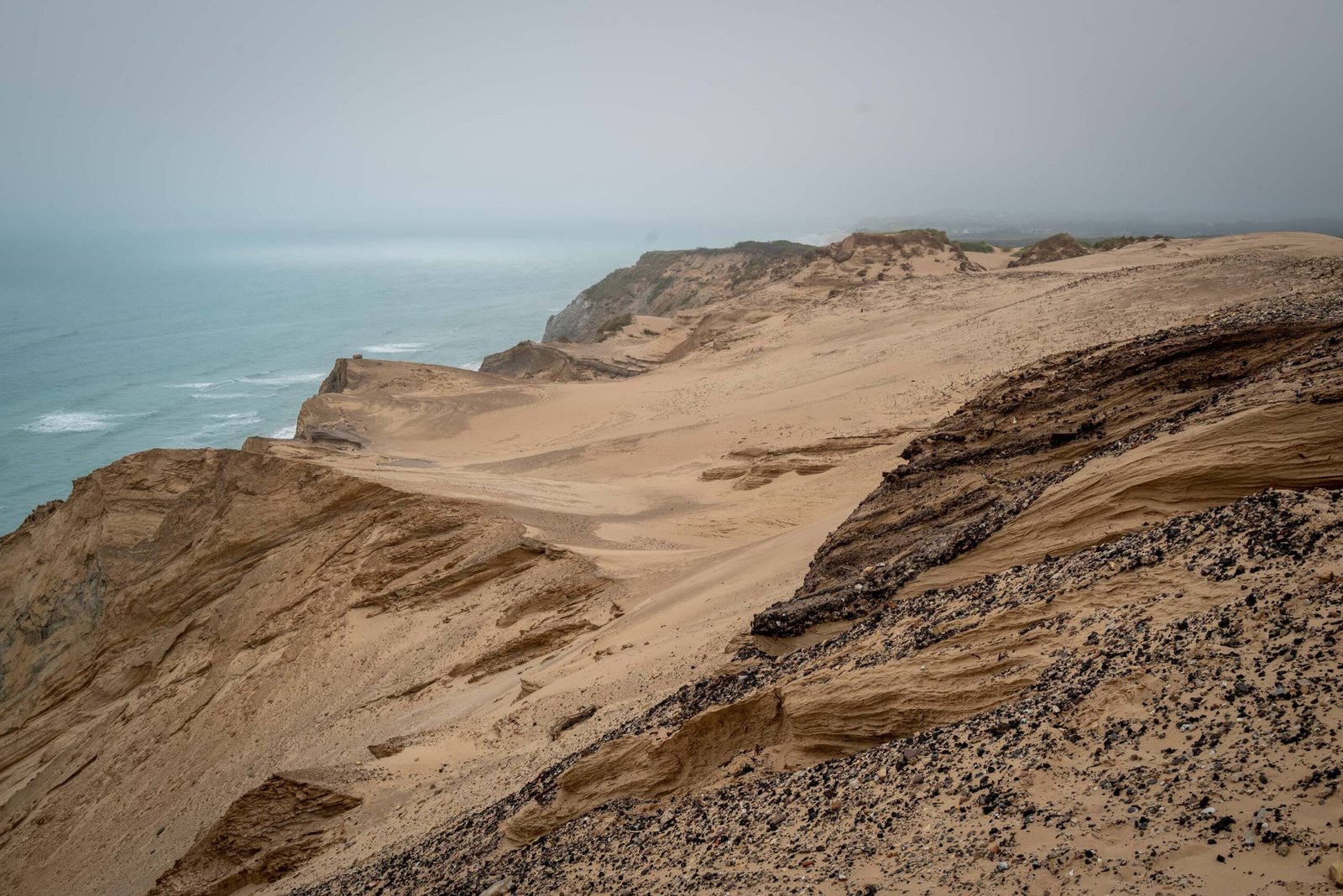
- Panoramic views over the sea and eroded cliffs.
- Patterns of wind-blown sand and footsteps leading toward the tower.
- Dramatic skies and shifting light typical of the North Sea coast.
- Sunset silhouettes against the glowing horizon.
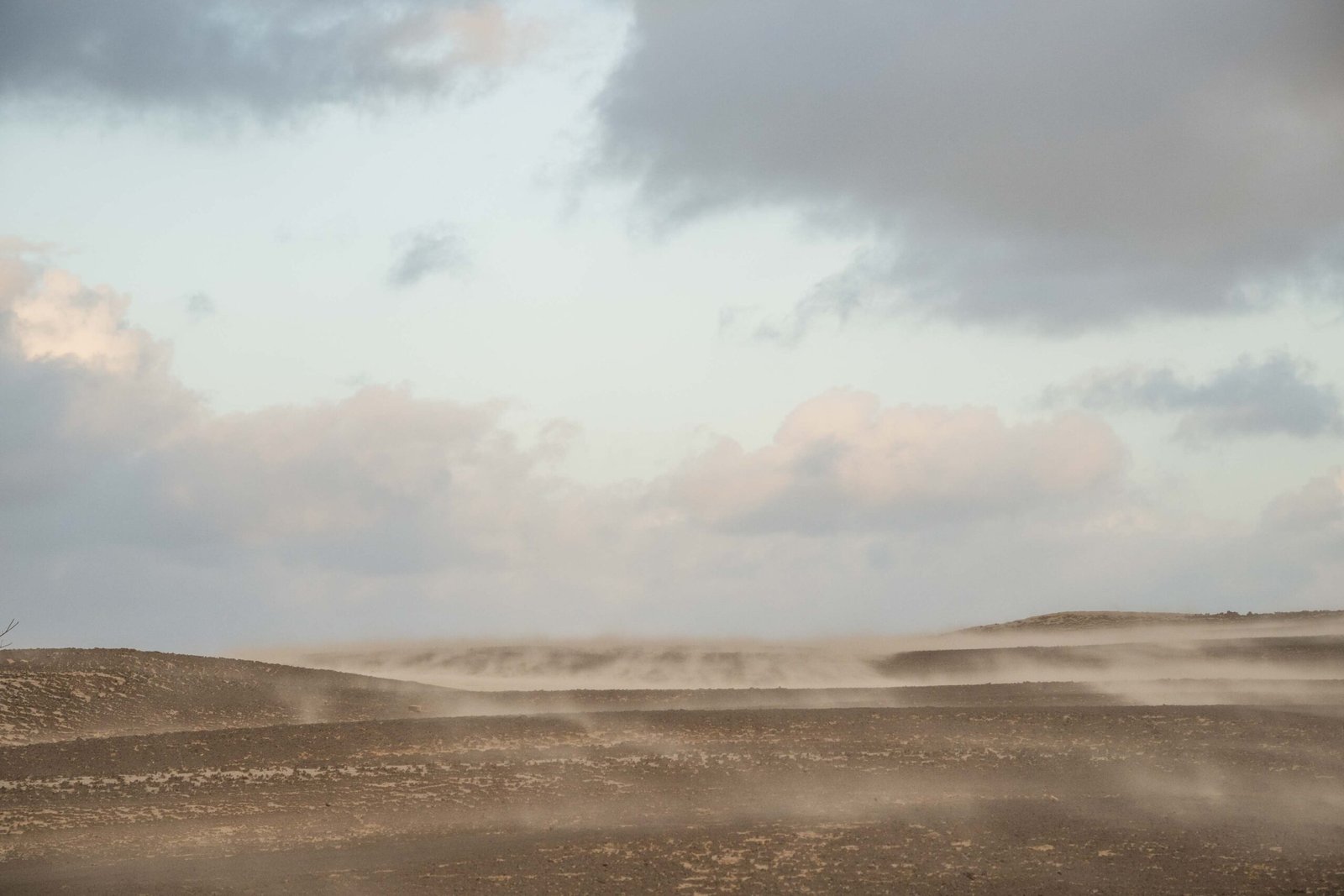
Read how I photographed the lighthouse when the wind was blowing fiercely and I had to battle with the sand:
Rubjerg Knude Lighthouse: Photography on the Danish Coast - Spothunter
Hiking tips
- Lønstrup ↔ Rubjerg Knude Fyr: 3–3.5 km one way; can return along the beach (check tides).
- Rubjerg Knude loop: short 2–3 km dune circuit with panoramic viewpoints.
- Extended coastal route: continue south along the cliffs toward Løkken (approx. 15 km).
- Terrain: soft sand and rolling dunes; moderate effort.