

AUSTRIA
Alpine landscapes, clear lakes, and valleys full of quiet and space. Austria is a destination where mountains, nature, and light come together. Ideal for hikers, photographers, and travelers who love the silence of high-mountain terrain.


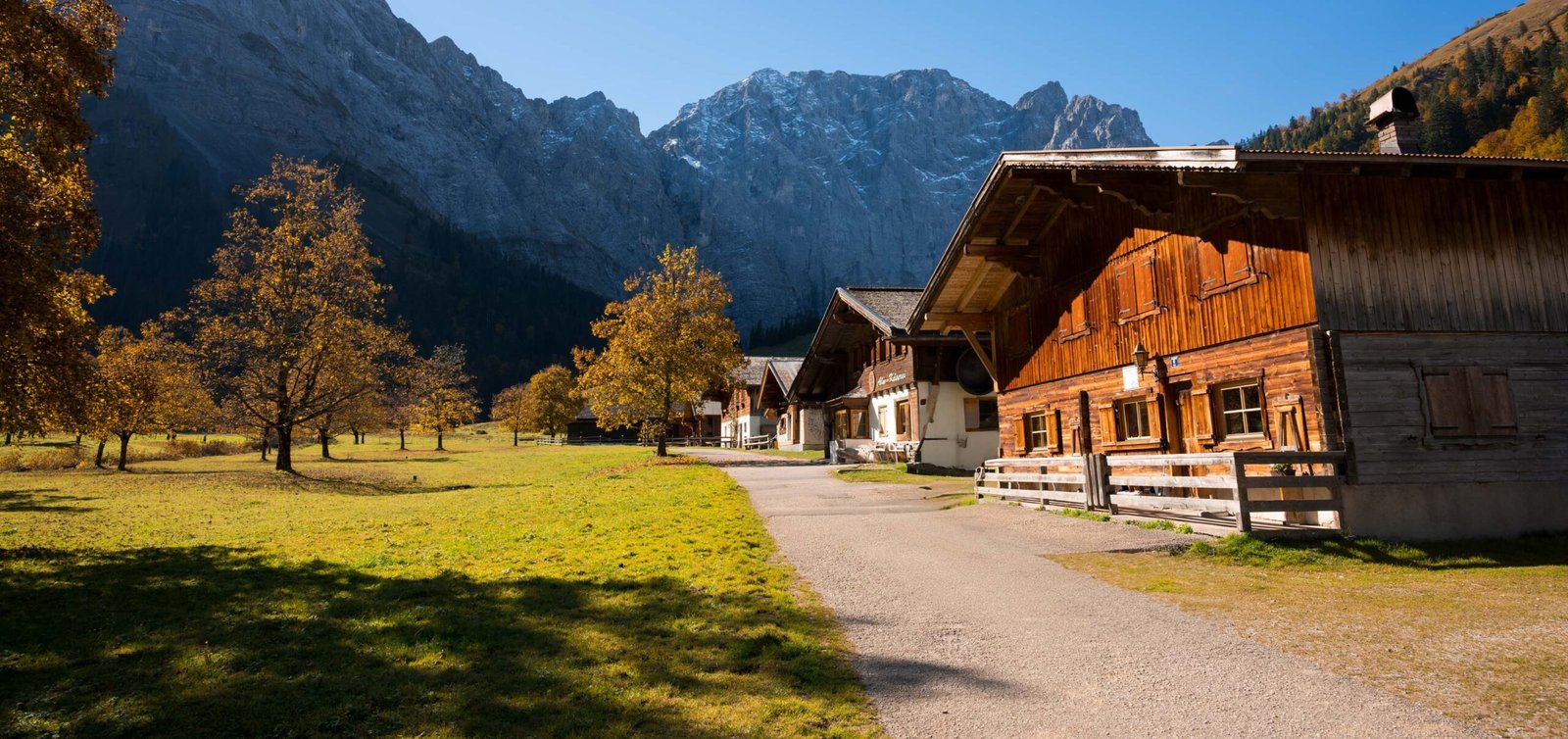
Alpine landscapes, clear lakes, and valleys full of quiet and space. Austria is a destination where mountains, nature, and light come together. Ideal for hikers, photographers, and travelers who love the silence of high-mountain terrain.
Austria is a dream destination for mountain lovers, hikers, and photographers. This compact Alpine country offers an unparalleled combination of majestic peaks, green valleys, crystal-clear lakes, and charming villages. With the Austrian Alps covering 62% of the country and the highest peak – the Großglockner (3,798 m) – as its crown jewel, Austria is a paradise for outdoor enthusiasts.
The Hohe Tauern National Park, the largest national park in the Alps, is the beating heart of Austrian wilderness. Here you’ll find the spectacular Krimml Waterfalls (Europe’s highest at 380 meters), the Pasterze Glacier, and endless hiking opportunities. The Alpe-Adria-Trail (750 km, 43 stages) leads from glaciers to the Adriatic Sea, while the Glocknerrunde circles Austria’s highest mountain in 7 days. The Karwendel Mountains in Tyrol, the Wilder Kaiser, and the Dachstein region also offer world-class hiking.
But Austria is more than just mountains. The Wachau Valley along the Danube, with its vineyards, castles, and the impressive Melk Abbey, is a UNESCO World Heritage Site. Picturesque Hallstatt on its namesake lake is one of the most photographed villages in the world. And cities like Salzburg (Mozart’s birthplace), Innsbruck (surrounded by mountains), and of course Vienna combine culture with access to nature.
For hikers, Austria offers an excellent network of marked trails, mountain huts, and cable cars that quickly transport you to high altitude. The Alpine Club (ÖAV) manages hundreds of huts. Whether you choose a day hike to an alpine meadow, a multi-day hut-to-hut trek, or a summit of a 3,000-meter peak – Austria delivers. And after hiking, Austrian hospitality awaits: Wiener Schnitzel, Apfelstrudel, and a cold beer on the terrace of an Almhütte.
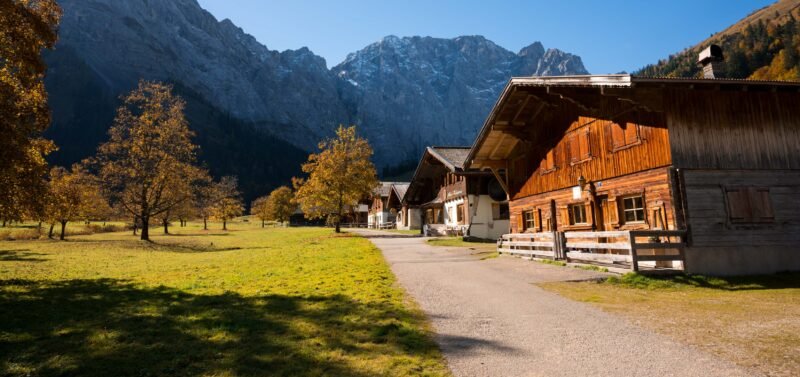
Ancient Maples and Autumn Light in the Karwendel Mountains In the heart of the Karwendel [...]

Großer Ahornboden is a picturesque alpine valley located in the Karwendel Mountains of Tyrol, Austria. This natural reserve is renowned for its expansive meadows adorned with approximately 2,300 sycamore maple...
View location
Naturpark Karwendel is Austria's largest nature park, encompassing nearly the entire Karwendel mountain range in Tyrol. Established in 1928, it spans approximately 739 square kilometers, featuring rugged peaks, extensive forests,...
View locationAustria has a continental climate with cold winters and warm summers. The Alps create significant regional differences: mountain areas are colder and wetter than the eastern lowlands around Vienna. In summer, thunderstorms can develop in the mountains – especially in the afternoon. The temperatures below are averages for lower elevations; in the mountains, it’s 5-10°C colder.
| Month | Temp (°C) | Rainy Days | Sun Hours | Suitable For |
|---|---|---|---|---|
| January | -5 to 2 | 8-10 | 2-3 | Skiing, winter sports, Christmas markets |
| February | -4 to 4 | 7-9 | 3-4 | Skiing, carnival (Fasching) |
| March | 0 to 10 | 8-10 | 4-5 | Late winter sports, spring in valleys |
| April | 4 to 15 | 9-11 | 5-6 | Spring hikes, blossoms, cities |
| May | 9 to 20 | 10-12 | 6-7 | Hiking, cities, fewer crowds |
| June | 12 to 24 | 12-14 | 7-8 | Mountain hikes, festivals |
| July | 14 to 26 | 12-14 | 8-9 | Peak season, all trails open |
| August | 14 to 26 | 11-13 | 7-8 | Mountain hikes, lakes, festivals |
| September | 10 to 21 | 8-10 | 6-7 | Autumn colors, wine harvest, fewer crowds |
| October | 5 to 14 | 7-9 | 4-5 | Autumn, cities, wine festivals |
| November | 0 to 7 | 8-10 | 2-3 | Start of ski season, quiet |
| December | -3 to 3 | 8-10 | 1-2 | Christmas markets, skiing |
Tip for photographers: May and September offer the best combination of good weather and fewer crowds. Autumn colors in September are spectacular, especially in the Wachau Valley. In summer, watch for afternoon thunderstorms in the mountains – start early! The Großglockner High Alpine Road is open from May to October and offers iconic photo opportunities.
A collection of helpful websites for planning your trip to Austria.