


Wicklow Mountains – The Garden of Ireland
During our road trip along the west and south coast of Ireland, we concluded this journey with a final stop in the Wicklow Mountains. We stayed at Forest View Woodland Lodge, an excellent base for excursions in this beautiful area. The very friendly owners are extremely helpful with tips. An excellent breakfast gives you a great start to each day.
We only had one day, which is really too short for a visit to this magnificent area. There is so much to see and there are beautiful hiking trails. On weekends and during peak season it can get quite busy – after all, the area is only 50 kilometres from Dublin.
About Wicklow Mountains National Park
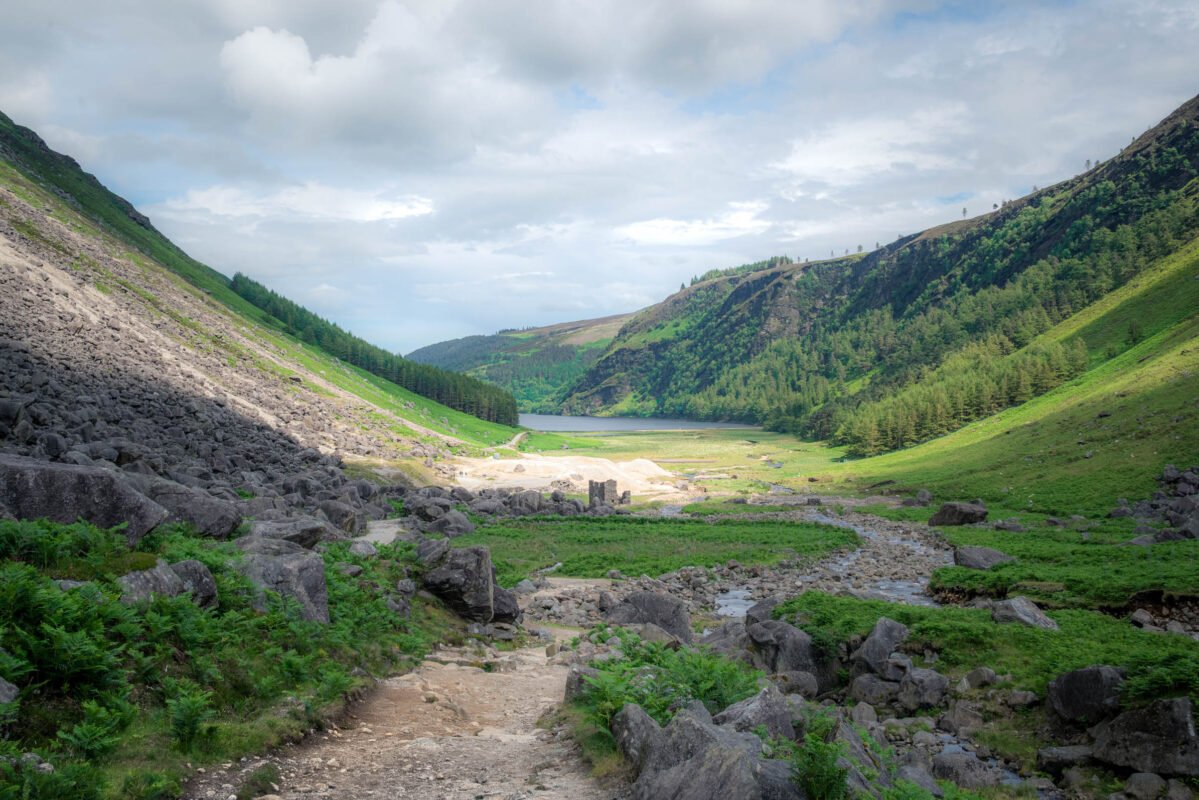
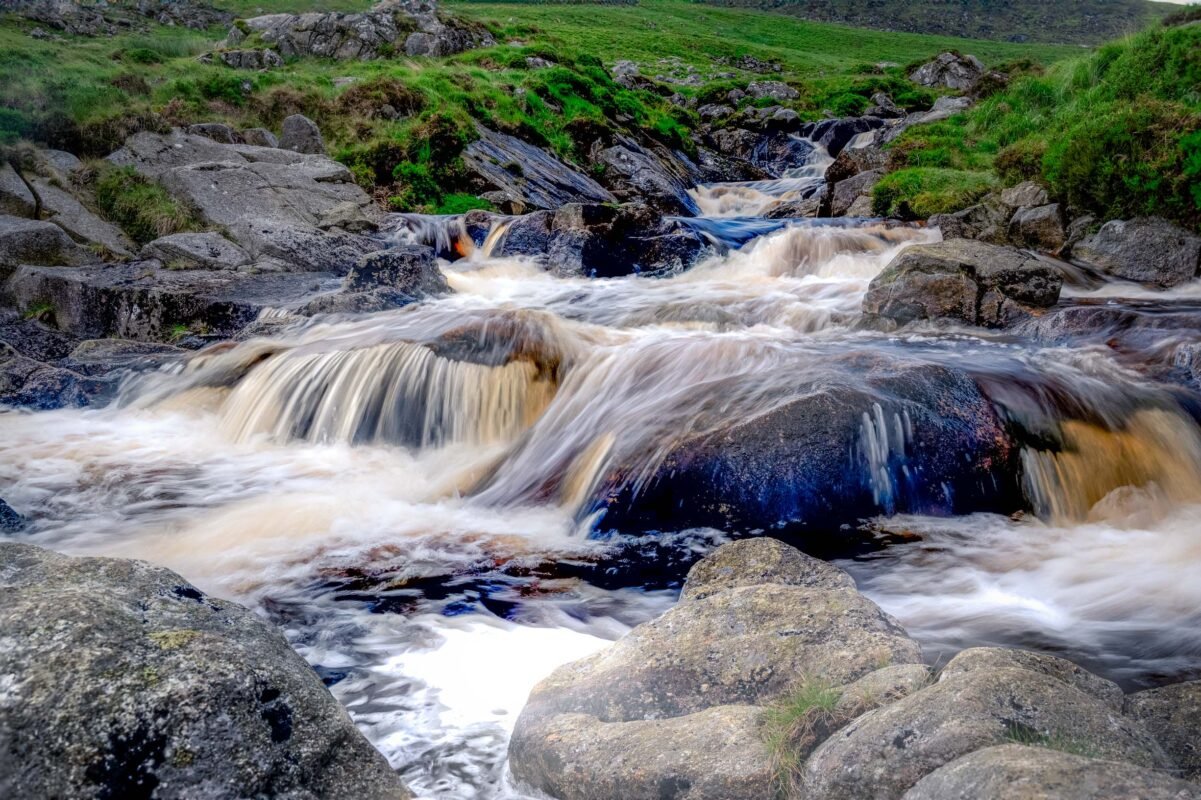
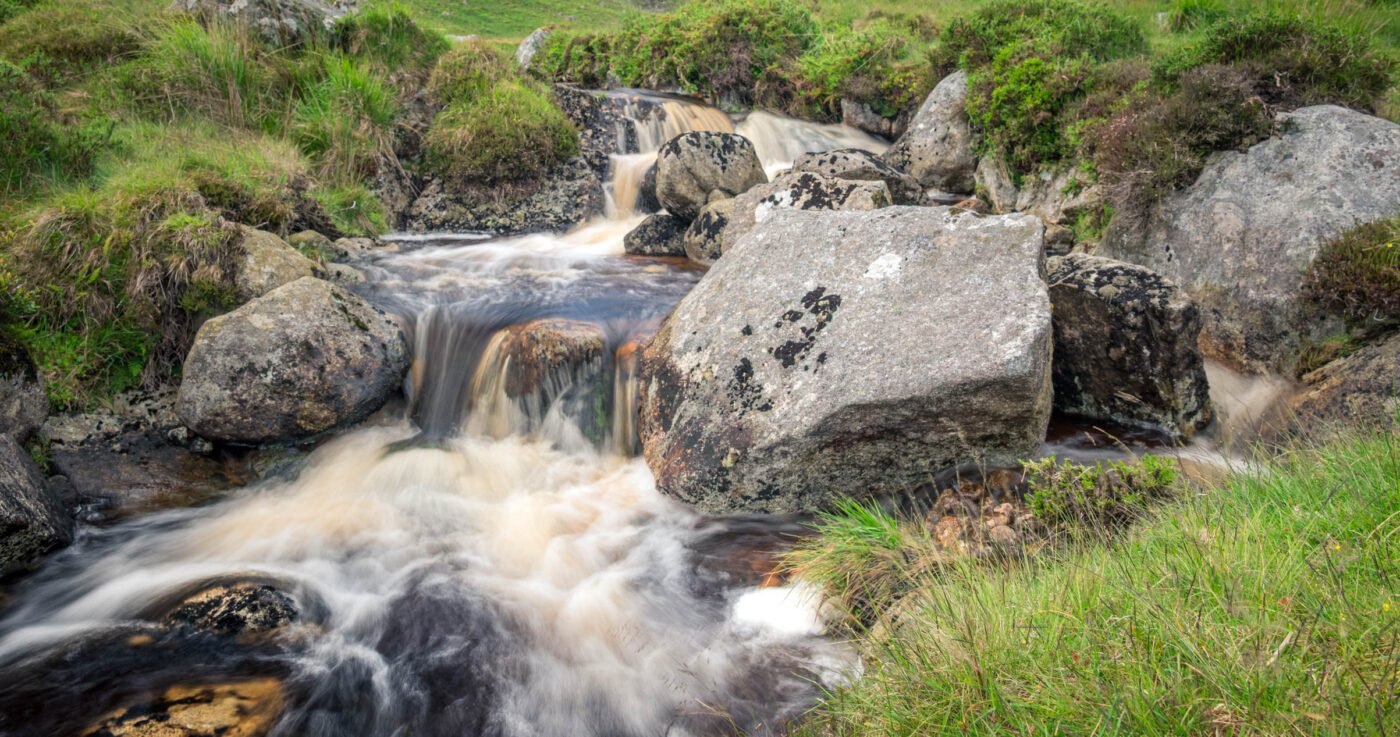
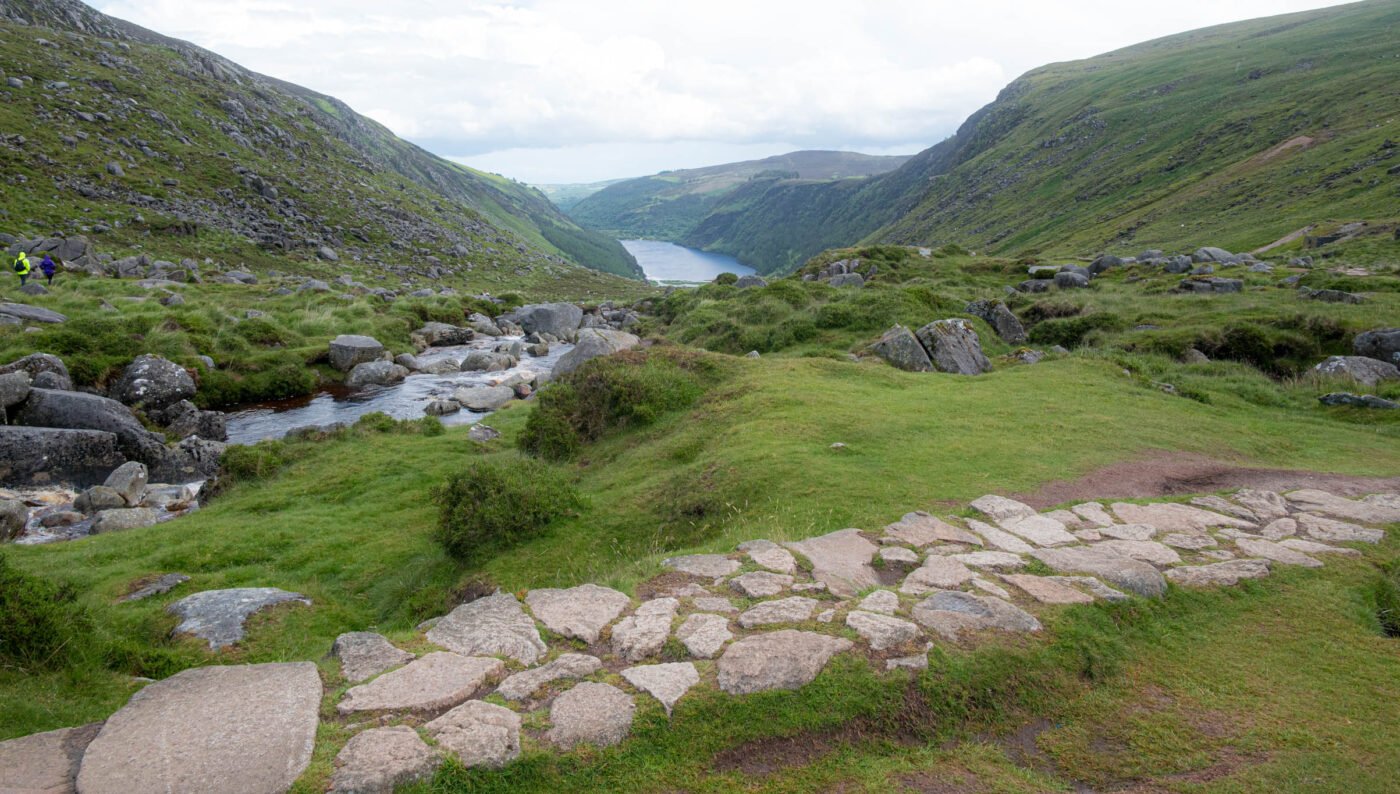
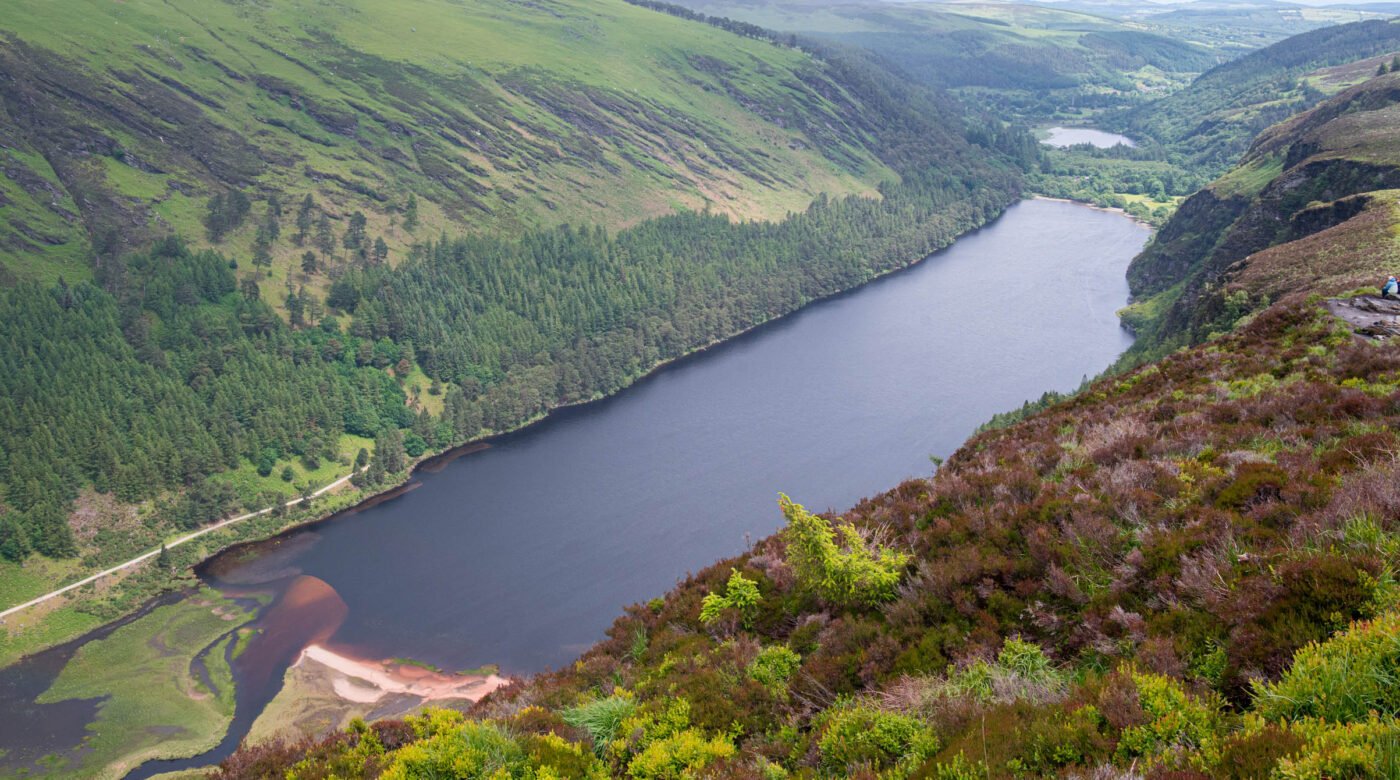
At nearly 23,000 hectares, Wicklow Mountains National Park is Ireland’s largest national park and the only one on the east coast. The park extends across the central part of County Wicklow, offering an impressive landscape of vast hills, peatlands, fast-flowing mountain streams and deep glacial valleys with crystal-clear lakes.
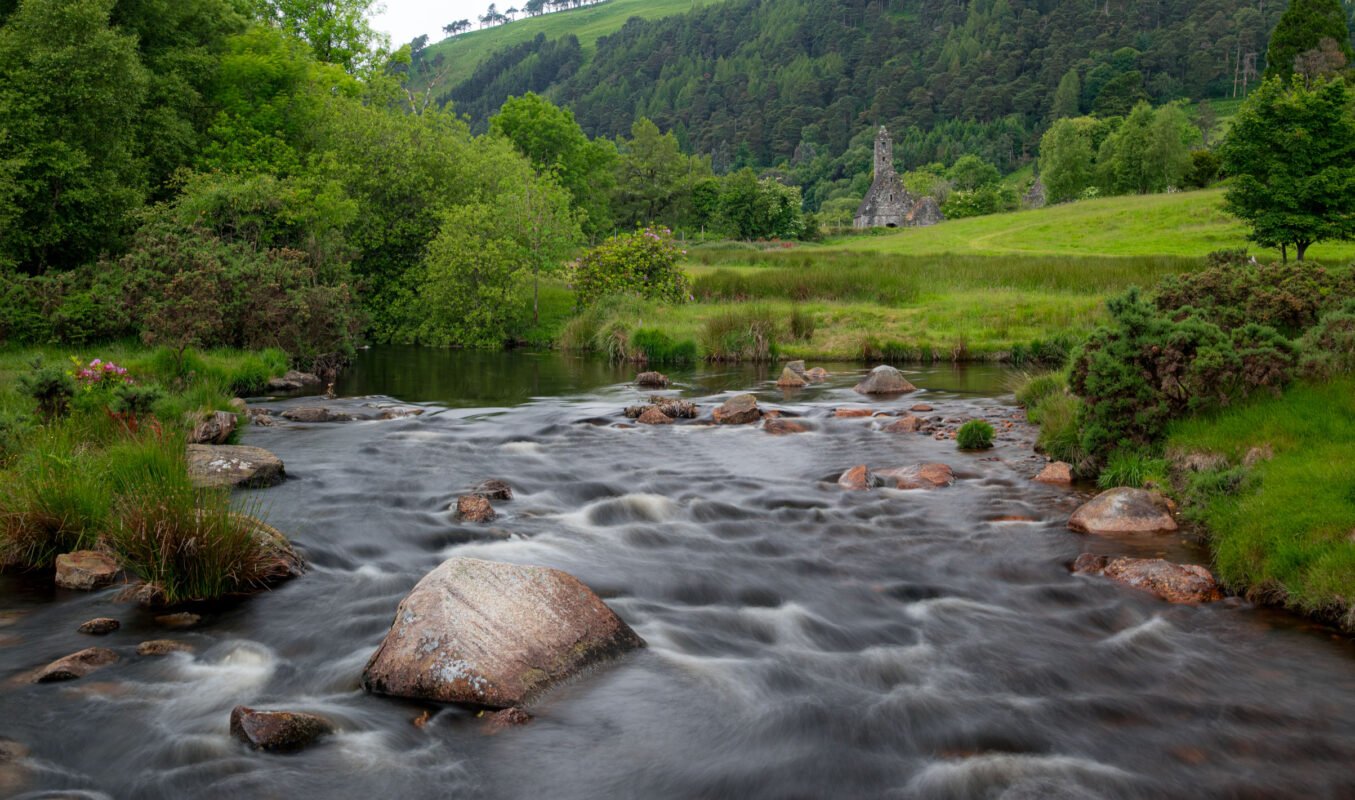
The heart of the park is Glendalough – Irish for “valley of the two lakes”. This spectacular glacial valley is home not only to breathtaking nature but also one of Europe’s most important early medieval monastic sites. In the 6th century, Saint Kevin settled here as a hermit, after which a flourishing monastery emerged that would remain a centre of religious and intellectual life for six centuries.
| Location | County Wicklow, south of Dublin |
| Area | ~23,000 hectares (227 km²) |
| Established | 1991 |
| Management | National Parks and Wildlife Service |
| Access | Free, open 24/7 |
| GPS Visitor Centre | 53.0087° N, -6.3285° W |
The Monastic City of Glendalough
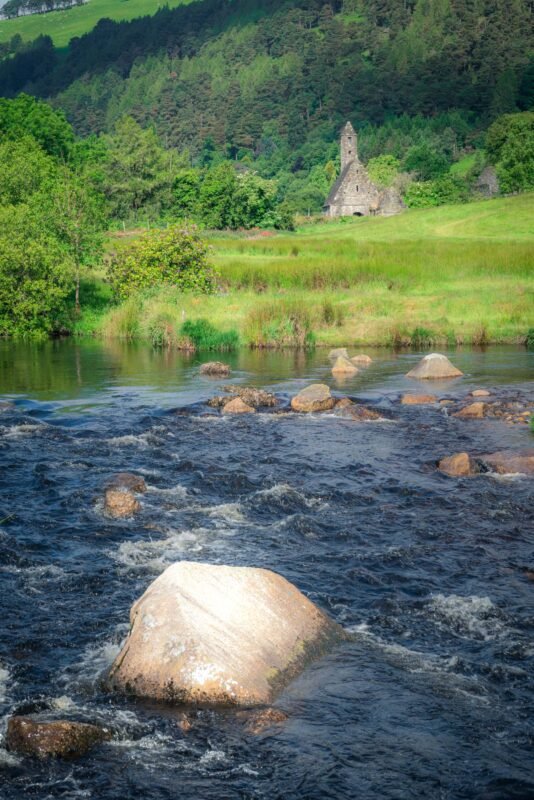
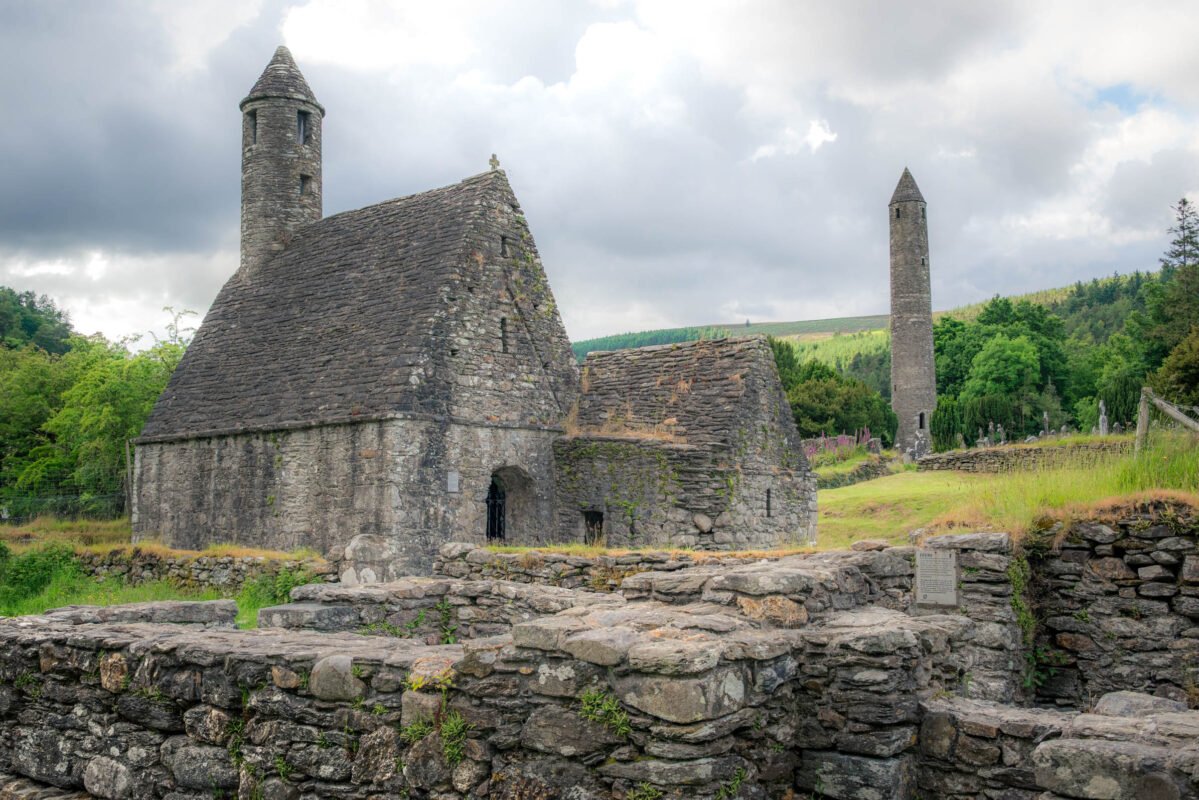
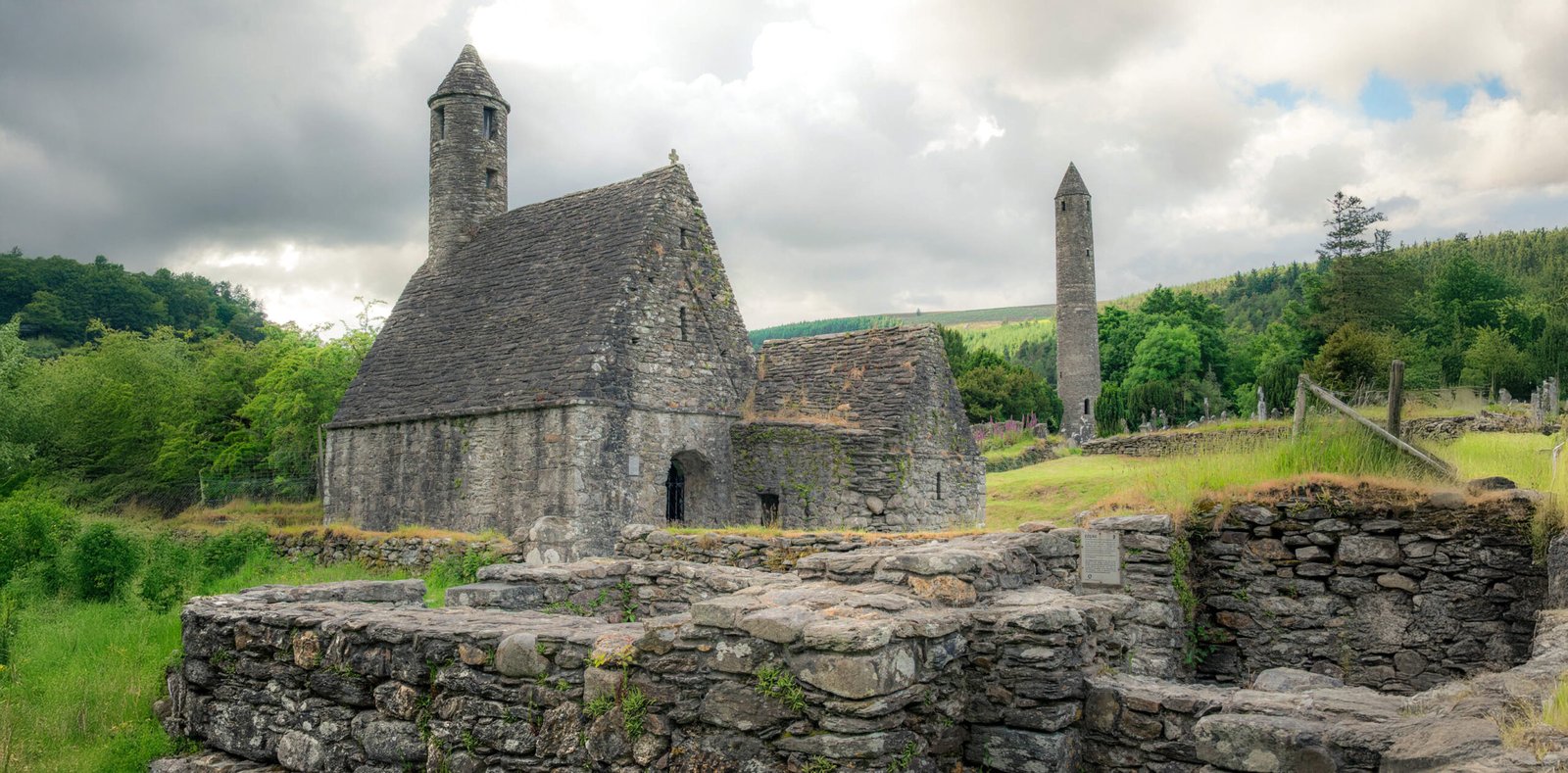
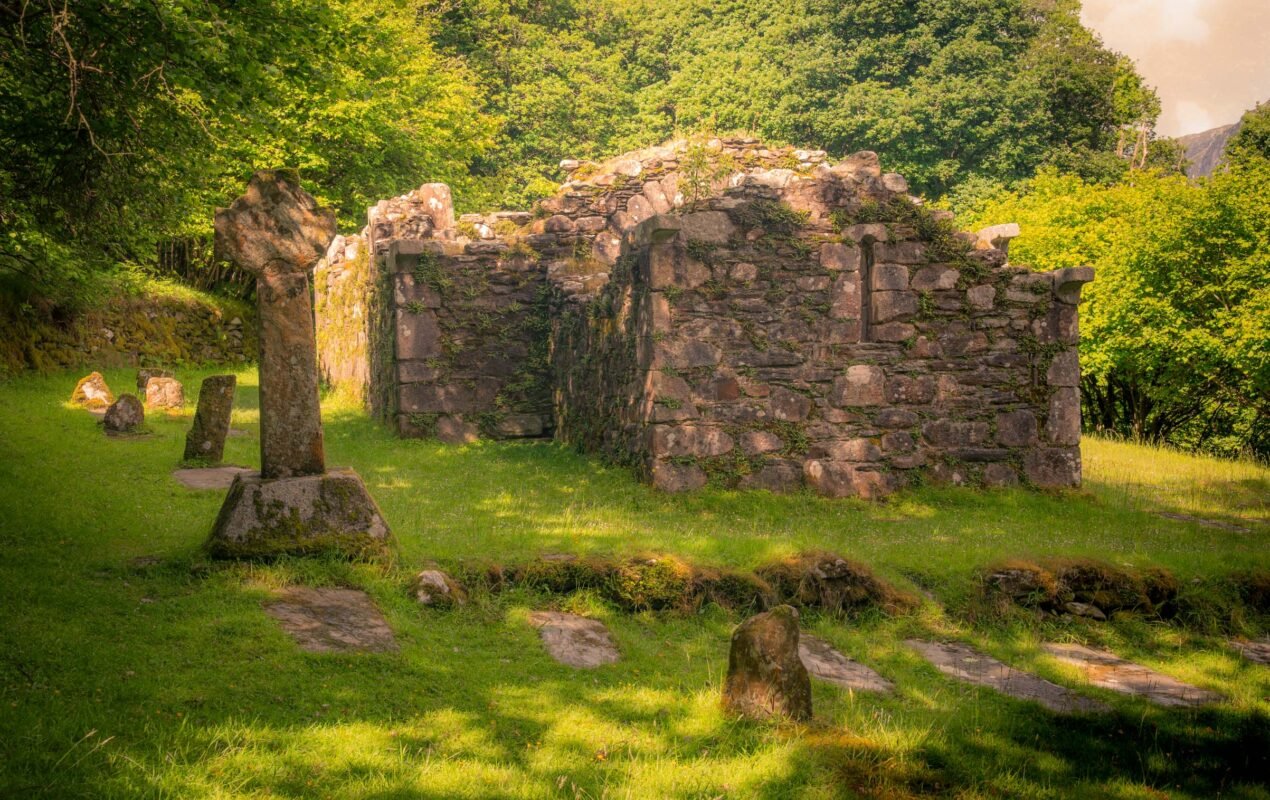
The Monastic City of Glendalough is one of the best-preserved early Christian settlements in Ireland. Most buildings you see today date from the 10th to 12th centuries, although the original wooden structures from the 6th century have naturally not survived.
The most iconic structure is the Round Tower, which stands virtually intact at 30 metres high. Note the entrance positioned 3.5 metres above ground – this was a defensive mechanism allowing the monks to pull up the ladder during Viking raids. Other highlights include St. Kevin’s Kitchen (so named because of its chimney-like bell tower), the cathedral, and numerous gravestones and Celtic crosses.
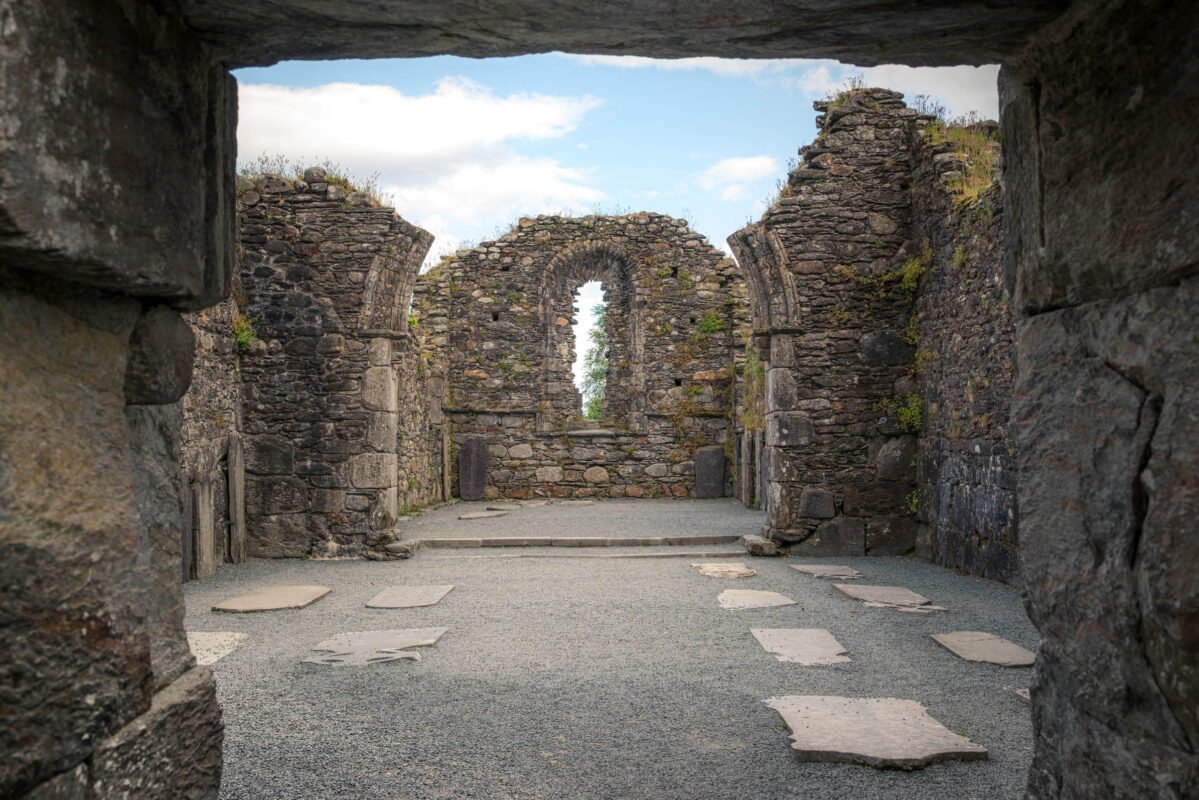
The monastic site is free to access and open year-round. The Visitor Centre offers an informative audiovisual presentation about the history (admission €5, 2025). With paid parking, one free admission to the Visitor Centre is included.
Location and Getting There
Wicklow Mountains National Park is surprisingly close to Dublin and perfectly accessible for a day trip from the capital. The main entrance at Glendalough is the starting point for most hikes.
| From Dublin city centre | ~50 km (~50-60 min) |
| From Dublin Airport | ~65 km (~1 hour) |
| From Wicklow Town | ~30 km (~30 min) |
| From Bray | ~35 km (~40 min) |
By Car
From Dublin, take the M50 southbound, then the M11/N11 towards Wexford. After the petrol station at Kilmacanogue, take the R755 exit towards Roundwood/Glendalough. This scenic route takes you past the Great and Little Sugar Loaf Mountains, through Roundwood (Ireland’s highest village) to Laragh and Glendalough.
Public Transport
St. Kevin’s Bus Service runs daily from Dublin to Glendalough – a family business that has maintained this route since 1927. The bus departs from St. Stephen’s Green North (opposite Stephen Court) at 11:00 every day. The journey takes approximately 80 minutes and offers beautiful views along the way.
| Return Dublin – Glendalough | €23 |
| Single | €14 |
| Departure from Dublin | 11:00 (daily) |
| Payment methods | Cash, debit card, Leap Card (no Visitor Leap) |
Tip: If you come by bus, you’ll have approximately 3.5 hours in Glendalough before the return bus departs. That’s enough for a short walk and visiting the monastic site, but too little for the full Spinc route.
The Surroundings
The Wicklow Mountains offer much more than just Glendalough. The area is known as “the Garden of Ireland” because of its lush green landscapes, and has even served as a filming location for productions such as Braveheart, Excalibur and The Green Knight.
Highlights in the Park
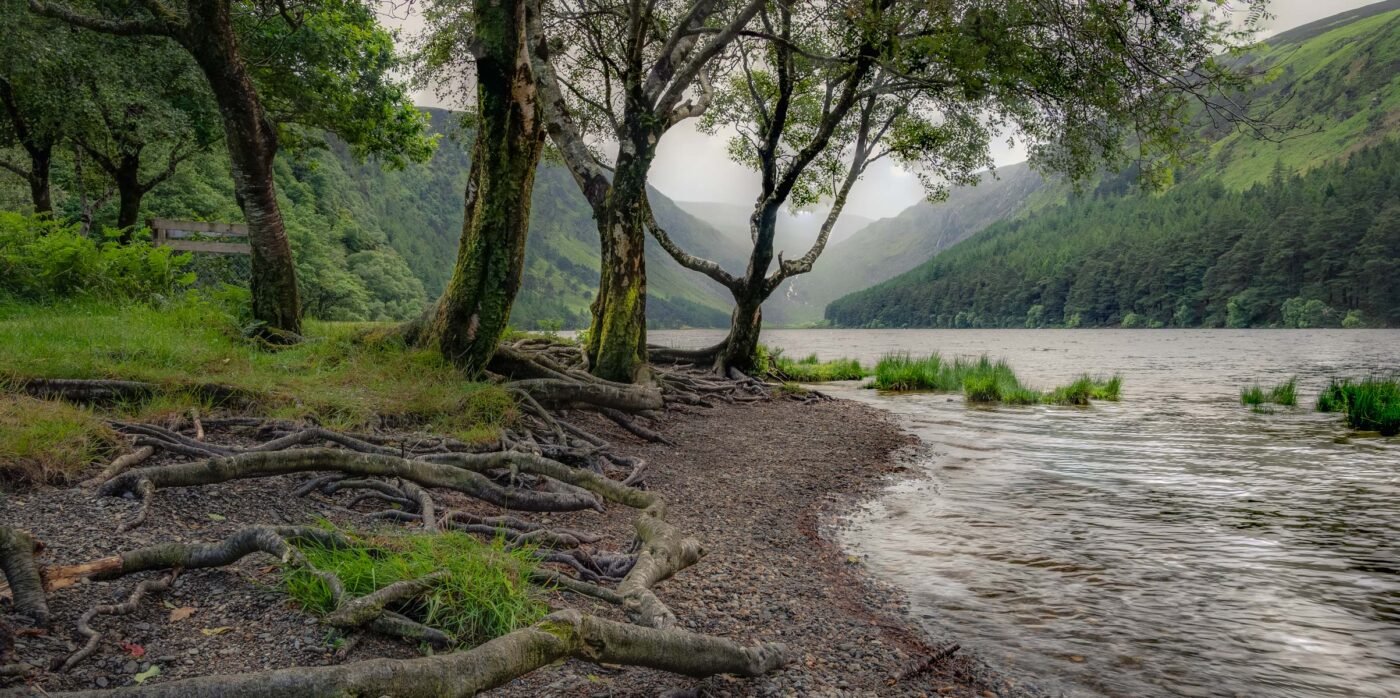
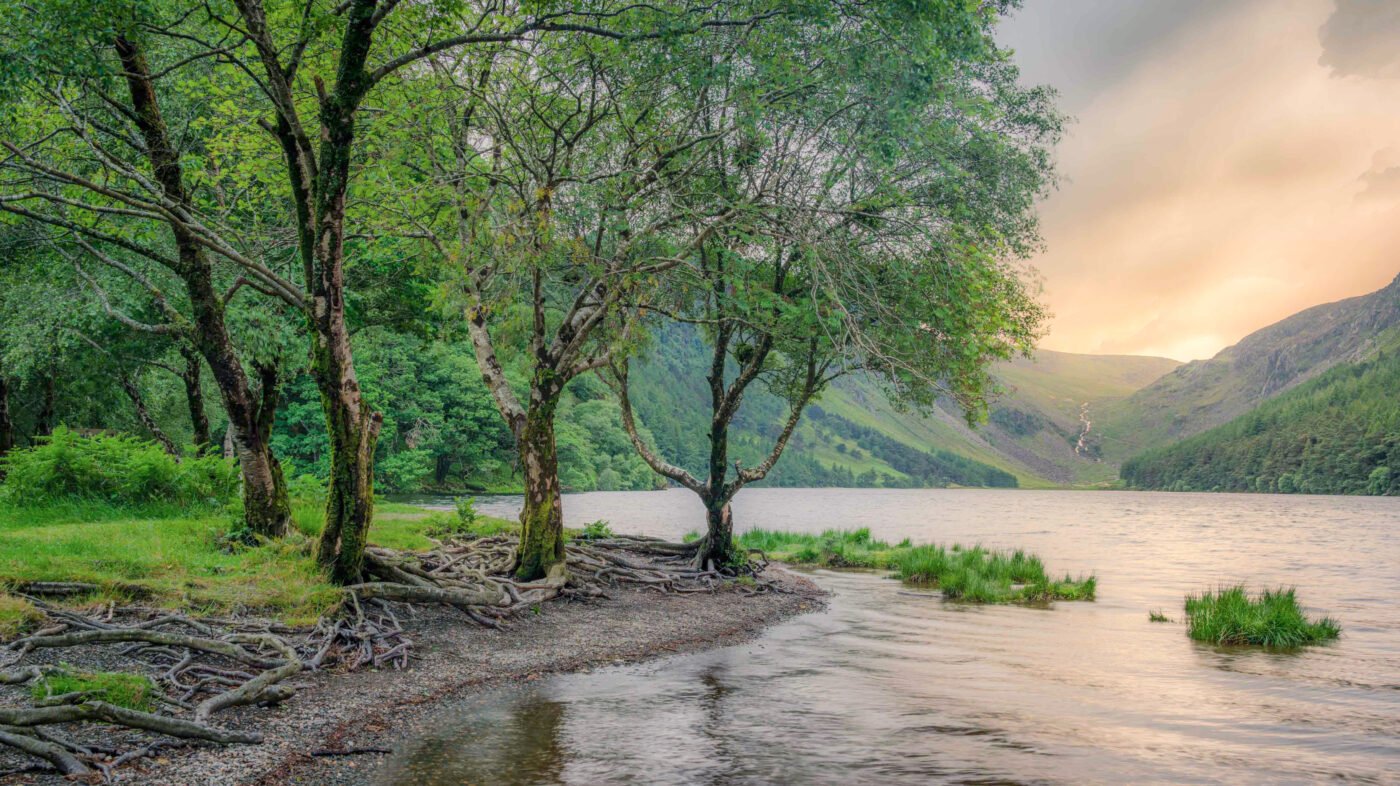
- Upper Lake and Lower Lake: The two glacial lakes that give Glendalough its name, surrounded by steep forested slopes
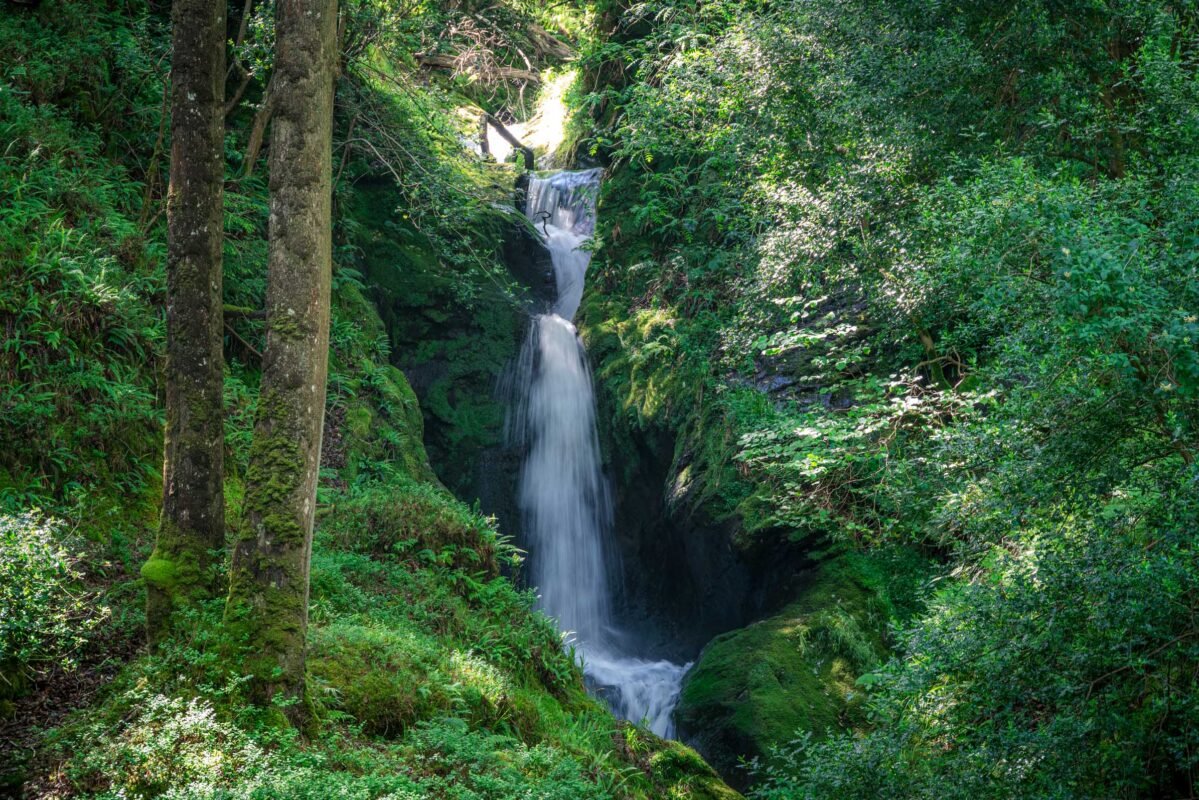
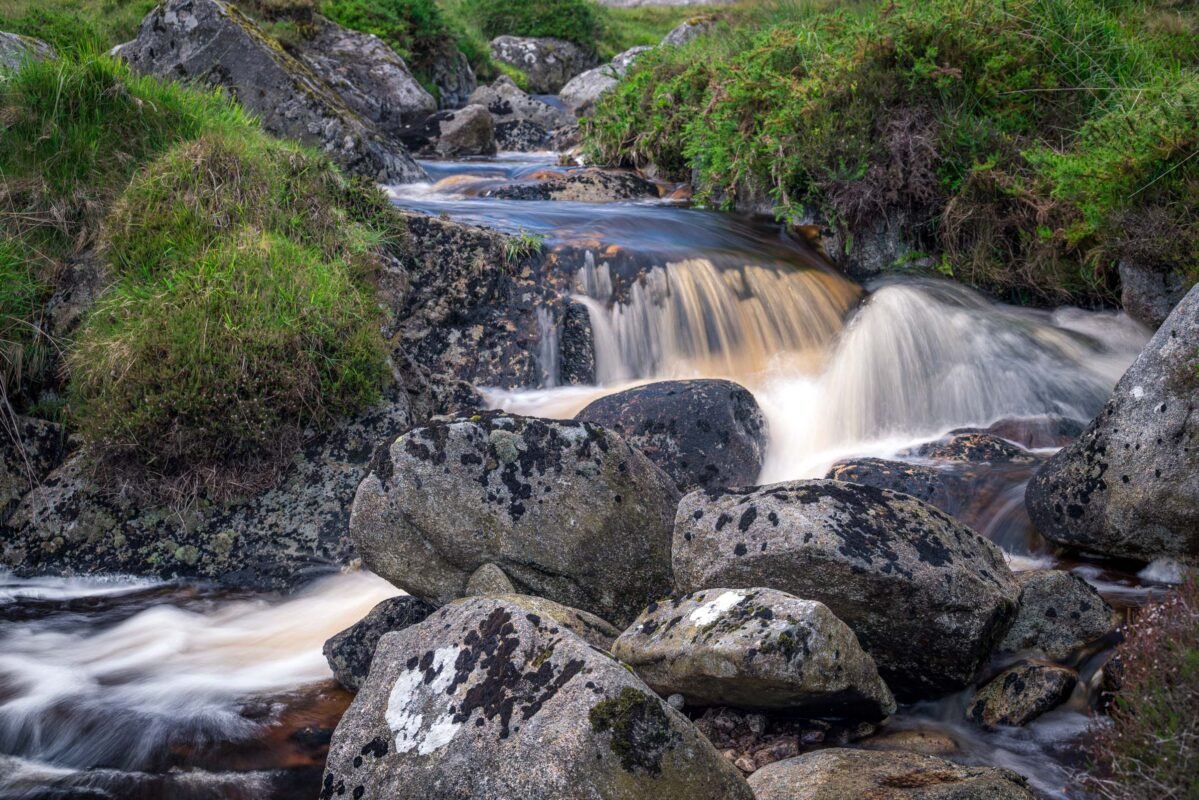
- Poulanass Waterfall: Atmospheric waterfall in the oak forest, near the starting point of the Spinc route
- Miners’ Village: Ruins of a 19th-century mining settlement at the end of the valley
- St. Kevin’s Bed: A cave high in the cliff face above Upper Lake, where Saint Kevin allegedly lived as a hermit
Nearby
- Sally Gap: Spectacular mountain pass with panoramic views over the peatland
- Lough Tay (Guinness Lake): Picturesque mountain lake, named after the Guinness family
- Powerscourt Waterfall: At 121 metres, Ireland’s highest waterfall
- Glenmacnass Waterfall: 80-metre cascade along the Military Road
Photography in the Wicklow Mountains
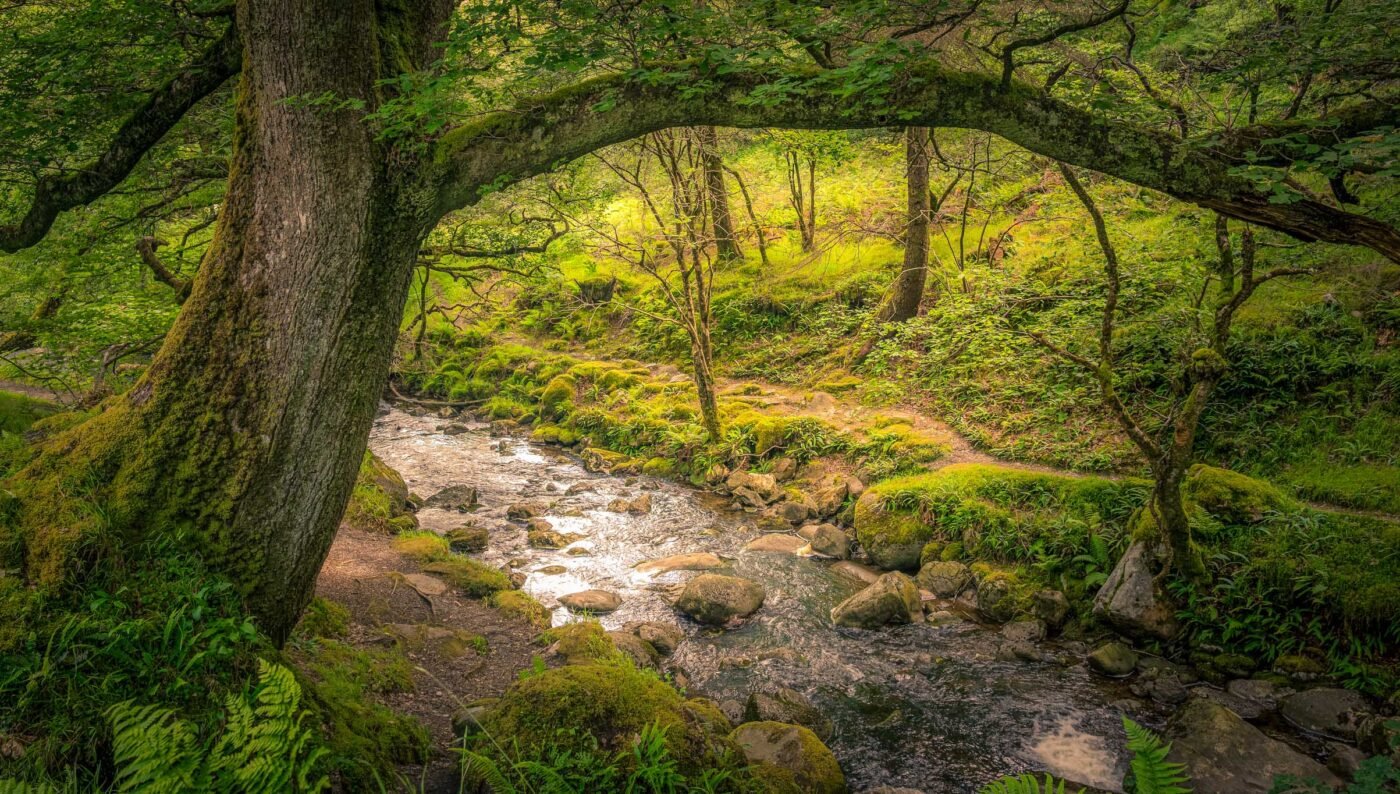
The Wicklow Mountains are a paradise for landscape photographers. The combination of lakes, forests, ruins and mountains offers endless possibilities, in any weather and any season.
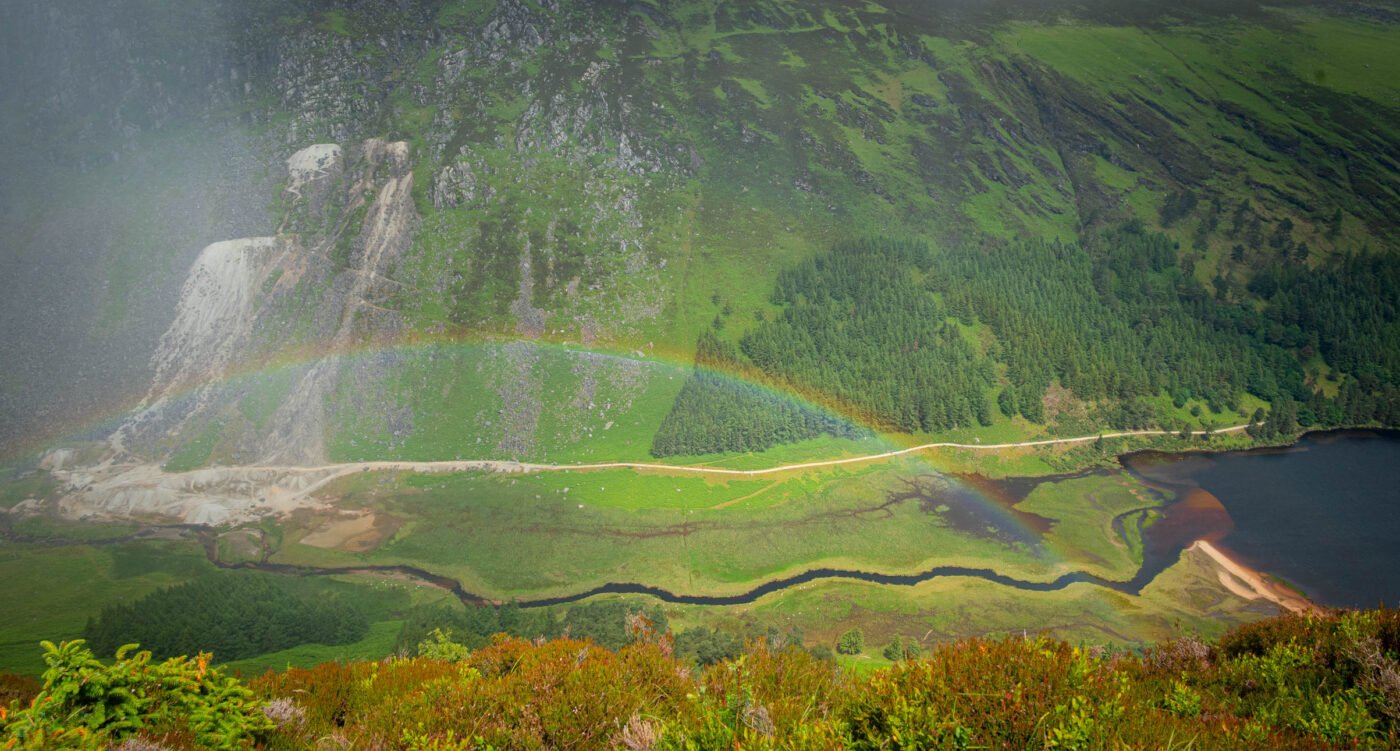
Photography tip – Weather: The changeable Irish weather can actually work in your favour. Dramatic skies, mist drifting through the valley and rainbows are not uncommon here. A rain shower can give way to sunbeams within minutes – be patient and always ready.
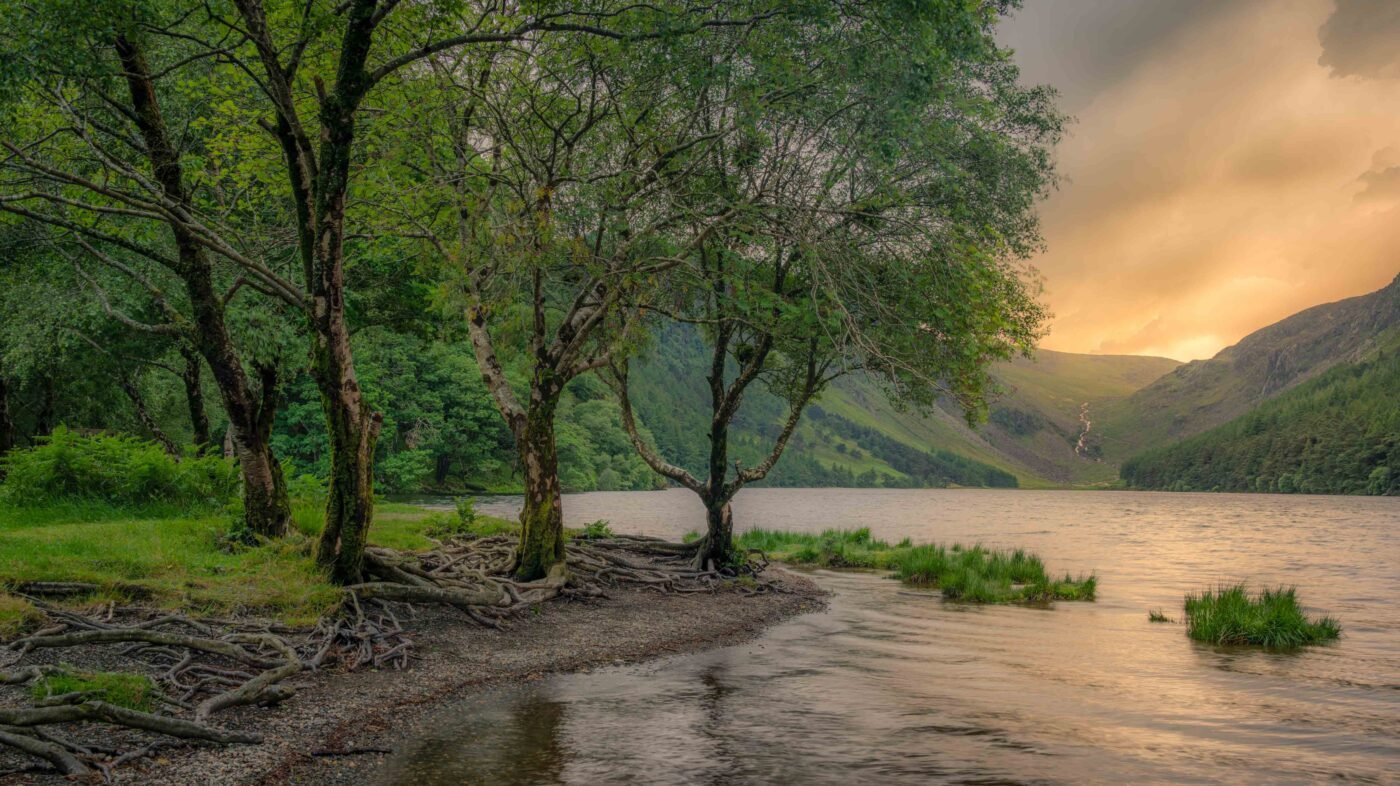
Photography tip – Best Moments: The morning light on the Round Tower is magical, and sunset over Lower Lake creates beautiful reflections. Autumn (October-November) brings spectacular colours in the deciduous forests around the lakes.
Equipment: A polarising filter is essential for reducing reflections on the water and saturating the green tones. Also bring an ND filter for long exposures at the waterfalls. Don’t forget your rain cover!
Hiking Routes at Glendalough
Glendalough offers nine waymarked walking trails, from short walks to challenging mountain hikes. We chose the classic: the route that takes you along Upper and Lower Lake with spectacular views from the Spinc ridge.
Route 1: Spinc and Glenealo Valley (White Route)
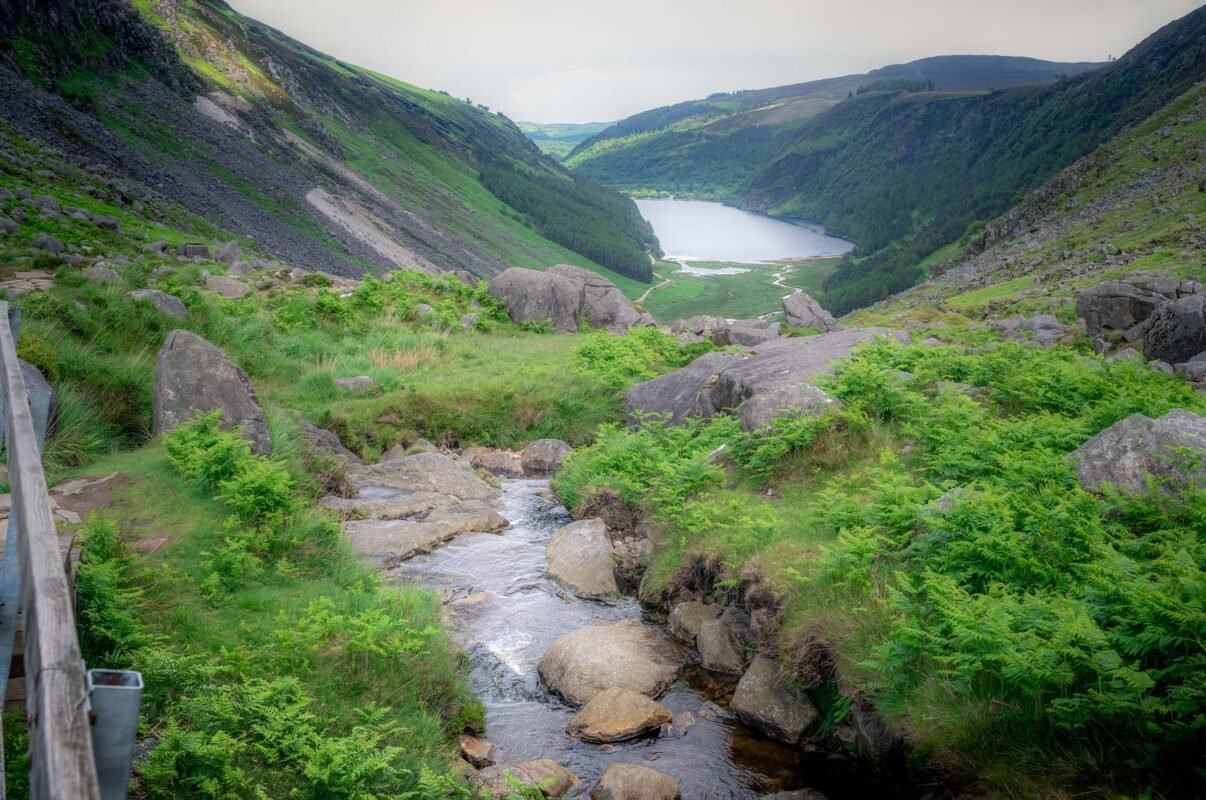
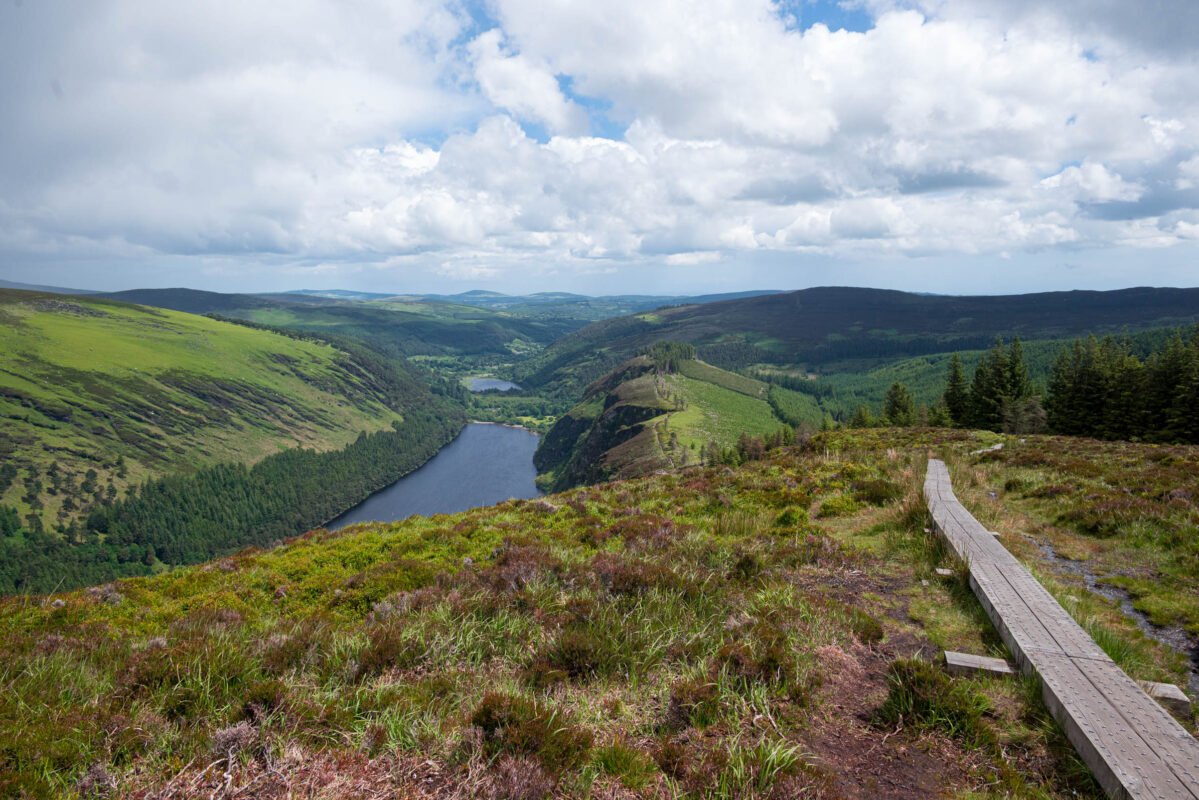
This is the absolute classic and according to many the most beautiful walk in all of Ireland. The route takes you along the shore of Upper Lake, through the abandoned mining village, up along the Glenealo stream to the spectacular Spinc boardwalk – a wooden path along the cliff edge with breathtaking views over the valley and both lakes.
| Distance | ~14 km |
| Duration | 4-5 hours |
| Elevation gain | ~380 m |
| Difficulty | Moderate to Strenuous, can be slippery when wet |
| Start/Finish | Upper Lake Car Park or Visitor Centre |
| Markings | White arrows |
Route Description
From the Upper Lake car park, you first follow the Miner’s Road along the northern shore of the lake. This quiet, flat path leads through pine forest with beautiful views over the water. After about 2 km you reach the ruins of the Miners’ Village, where lead, zinc and silver were mined until 1963.
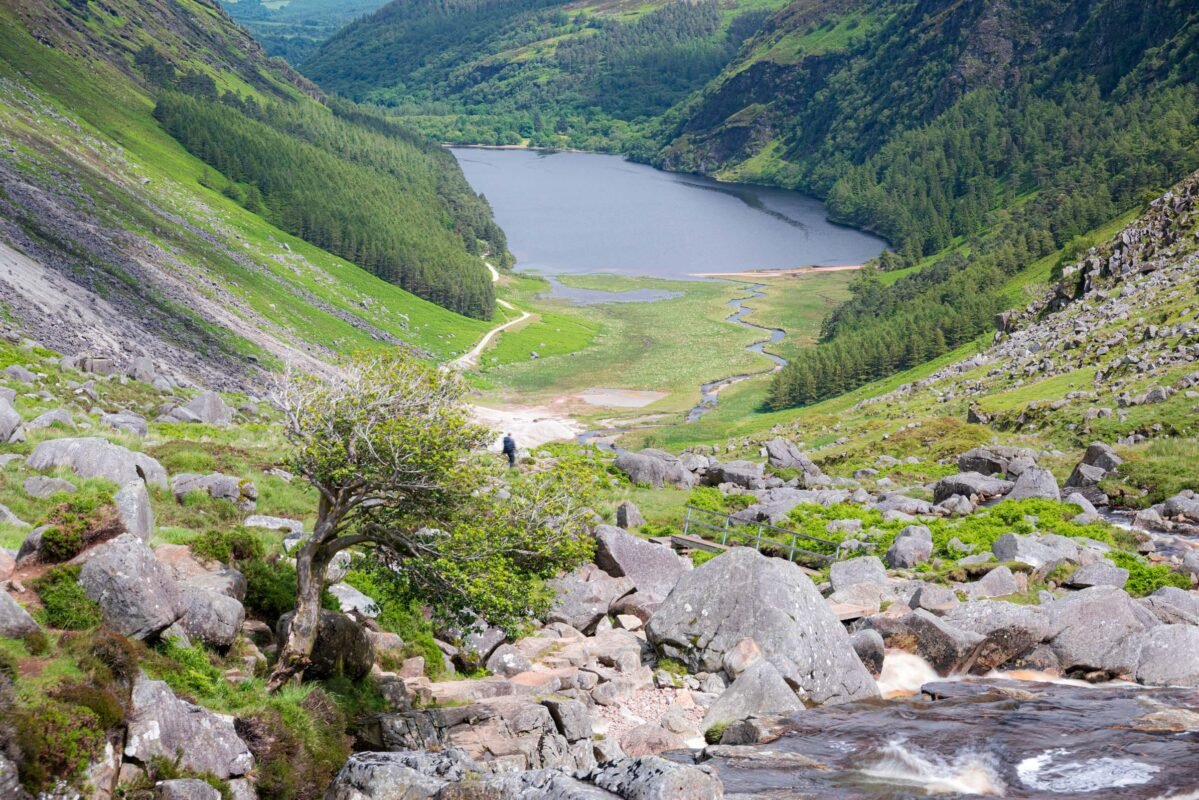
Here the climb begins. The path follows the Glenealo stream upward over rocky terrain. Note: this section requires some scrambling experience over large boulders. Once at the top, you reach the Spinc boardwalk – a wooden path along the cliff edge with the most spectacular views of the entire walk.
The descent goes via wooden steps through the forest, passing Poulanass Waterfall. This waterfall is a perfect final stop before returning to the car park.
Route 2: Mullacor, Lugduff and the Spinc
Want a different route with more challenge? This route leads further into the mountains and offers even more expansive views over the Wicklow Mountains. You can combine this route with Route 1 and finish with a loop around Upper Lake.
| Distance | ~15 km |
| Duration | 5-6 hours |
| Difficulty | Strenuous |
| Elevation gain | 650m |
| Markings | Red arrows |
Other Routes
For those with less time or looking for an easier walk:
- Green Road (Green Route): 2 km flat walk from Visitor Centre to Upper Lake – ideal for families
- Poulanass Waterfall (Brown Route): 1 km short but steep climb to the waterfall with views over Upper Lake
- Derrybawn Loop (Orange Route): 7 km through forests and over hills on the south side of the valley
Best Time to Visit
Wicklow Mountains National Park is accessible year-round, but each season has its own character. The weather is notoriously changeable – always expect the possibility of rain, even on sunny days.
| March-May | Spring, wildflowers, longer days, quieter than summer |
| June-August | Peak season, best weather, longest days, but busy |
| September-October | Autumn colours, less crowded, still pleasant weather |
| November-February | Quiet, short daylight, chance of snow, mystical atmosphere |
Tip: For photography and fewer crowds, May, June, September and October are the best months. On weekends, arrive early (before 10:00) to find parking spaces and beat the crowds.
Accommodation in the Area
The village of Laragh, just 2 km from Glendalough, is the ideal base with various accommodation options and eateries.
Accommodation Options
- Laragh: Various B&Bs and lodges, such as Forest View Woodland Lodge where we stayed
- Glendalough Hotel: Historic hotel directly at the monastic site
- Glendalough Glamping: Glamping pods for a unique experience in nature
- Roundwood: “Ireland’s highest village”, 10 minutes by car
Eating and Drinking
- Glendalough Green: Popular café in Laragh with excellent coffee and cakes
- Lynham’s of Laragh: Pub with carvery, soup and stews, plus riverside terrace
- Wicklow Heather Restaurant: Gastropub in Laragh with excellent Irish cuisine
Practical Information
Costs (2025)
| National Park admission | Free |
| Upper Lake Car Park | €5 per day |
| Visitor Centre Car Park | €4 per day (free on weekdays outside peak season) |
| Laragh Car Park | Free (8:00-20:00, 3 km walk to Upper Lake) |
| Visitor Centre admission | €5 adults, €3 children, €13 family |
| Trail Guide | €0.50 (at Visitor Centre) |
Tip: Car parks fill up quickly on sunny weekends. Arrive early or park for free in Laragh and walk via the Green Road (20 min) to Glendalough.
Facilities
- Visitor Centre: Audiovisual presentation, exhibitions, free maps, toilets
- National Park Information Office: At Upper Lake, information about hiking routes and nature
- Toilets: At Visitor Centre and Upper Lake Car Park (may close early in winter)
- Picnic areas: At Upper Lake with tables and benches
What to Bring
- Waterproof hiking boots: Essential – paths can be muddy and rocky
- Rain jacket: Irish weather is unpredictable, even in summer
- Layered clothing: Temperature can change quickly in the mountains
- Picnic and water: No eateries in the valley itself
- Hiking map: Available at the Visitor Centre for €0.50
- Insect repellent: Midges (small gnats) can be annoying on warm, humid days
National Park Rules
- Dogs on lead: Mandatory to protect wildlife
- No campfires: Campfires and BBQs with solid fuel are prohibited
- No drones: Prohibited without a permit
- No camping in Glendalough: Wild camping only permitted outside the valley (500m from roads/buildings)
- Leave No Trace: Take all your rubbish back with you
- Groups 50+: Permit required
Frequently Asked Questions
How much time do you need for a visit to Glendalough?
For a visit to the monastic site and a walk around the lakes, you need a minimum of 3-4 hours. For the full Spinc walk, allow 4-5 hours. Ideally, plan a full day to really explore the area.
Is the Spinc walk suitable for beginners?
The Spinc route is classified as “strenuous” and contains steep scrambling sections over rocks. You need reasonable fitness and sturdy hiking boots. For beginners, the Green Road or Brown Route are better options.
Can you get to Glendalough without a car?
Yes, St. Kevin’s Bus Service runs daily from Dublin (St. Stephen’s Green North) at 11:00. The journey takes ~80 minutes and costs €23 return. You’ll then have approximately 3.5 hours in Glendalough before the return bus departs.
How much does parking cost at Glendalough?
Upper Lake Car Park costs €5 per day, Visitor Centre Car Park €4 per day (free on weekdays outside peak season). In Laragh there’s a free car park, but then you’ll walk an extra 20 minutes to Glendalough.
What is the best time to visit Glendalough?
For the best weather, May to September is ideal. For fewer crowds, May, June or September-October are recommended. On weekends, arrive early (before 10:00) to find parking spaces. Autumn offers beautiful colours in the forests.
Are there ticks in the Wicklow Mountains?
Yes, hikers who venture off-trail can be bitten by ticks which in rare cases can transmit Lyme disease. Check yourself after the walk and wear long clothing if you’re walking through tall grass.
In Conclusion
The Wicklow Mountains form a surprisingly green oasis so close to Dublin. In Glendalough you’ll find the perfect combination of natural beauty and cultural heritage: spectacular glacial lakes surrounded by forested mountains, with the mystical ruins of a 1,400-year-old monastery nestled between them.
Whether you come for a challenging mountain hike, to follow in the footsteps of Saint Kevin, or simply to enjoy the peace and expanse – Glendalough will not disappoint you. The changeable Irish weather is part of the experience and makes every day different. Bring a rain jacket, be prepared for anything, and let yourself be surprised by the rugged beauty of this special corner of Ireland.
In my photo book Ireland – Land of Stories and Rugged Coasts you can get a great impression of this beautiful country through many stunning photographs. Most locations are also provided with QR codes so you have direct access to additional location information.
Useful Links
- Wicklow Mountains National Park – nationalparks.ie
- Glendalough Official – glendalough.ie
- Heritage Ireland (Visitor Centre) – heritageireland.ie
- St. Kevin’s Bus Service – glendaloughbus.com
- Visit Wicklow – visitwicklow.ie
Location on the Map
Related Articles
- Glanteenassig Forest Park – Hidden gem on the Dingle Peninsula
- Abbey Island – Tidal island on the Ring of Kerry
- Fanore Beach – Wild beach on the west coast
- Cliffs of Moher – Ireland’s most famous cliffs
- Inisheer – The smallest Aran island
Gallery
Pictures say more than words: