



Fanore Beach – Peace, Space and Patterns in the Sand
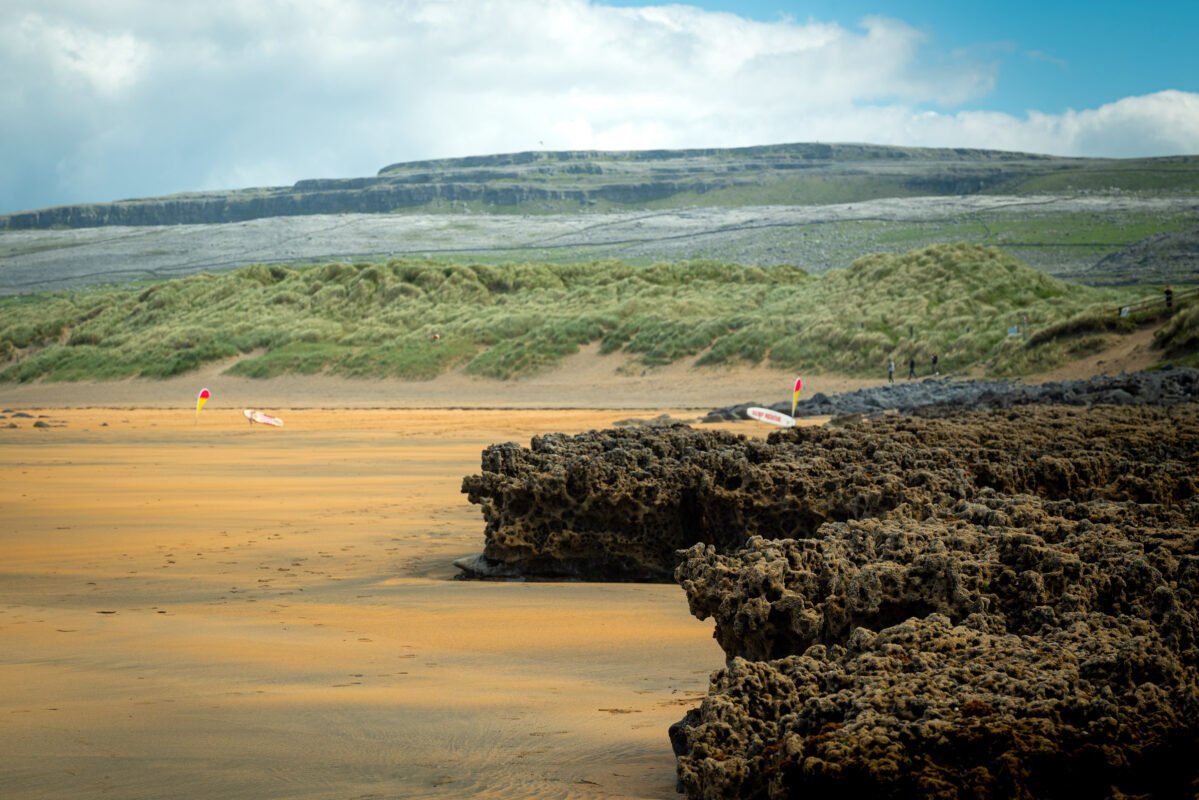
Between the rugged limestone hills of The Burren and the Atlantic Ocean lies one of the most special beaches on the Irish west coast: Fanore Beach. While most travellers drive straight to the Cliffs of Moher (read more about that here), here you’ll find peace and space instead. A wide stretch of golden sand, surrounded by rolling dunes and rugged rock formations – a place where nature sets its own rhythm.
Perfect for a relaxing day that we really needed at that moment. Such a road trip is beautiful but also intense. A lovely casual day strolling along this beautiful beach seemed perfect to us.

About Fanore Beach
Fanore Beach is one of nine Blue Flag beaches in County Clare and is part of the Burren and Cliffs of Moher UNESCO Global Geopark. The expansive sandy beach lies where the Caher River – the only river in the Burren that flows entirely above ground – empties into the Atlantic Ocean.
| Location | Fanore, County Clare, west coast of Ireland |
| Part of | Burren and Cliffs of Moher UNESCO Global Geopark |
| Award | Blue Flag Beach |
| Wild Atlantic Way | Discovery Point |
| GPS | 53.1175° N, 9.2868° W |
The beach is bordered by an extensive dune system that is more than 5,000 years old and is protected by the European Habitats Directive. Archaeologists have found traces of human habitation here dating back to the Stone Age – the oldest archaeological finds in the entire Burren region!
Location and Route
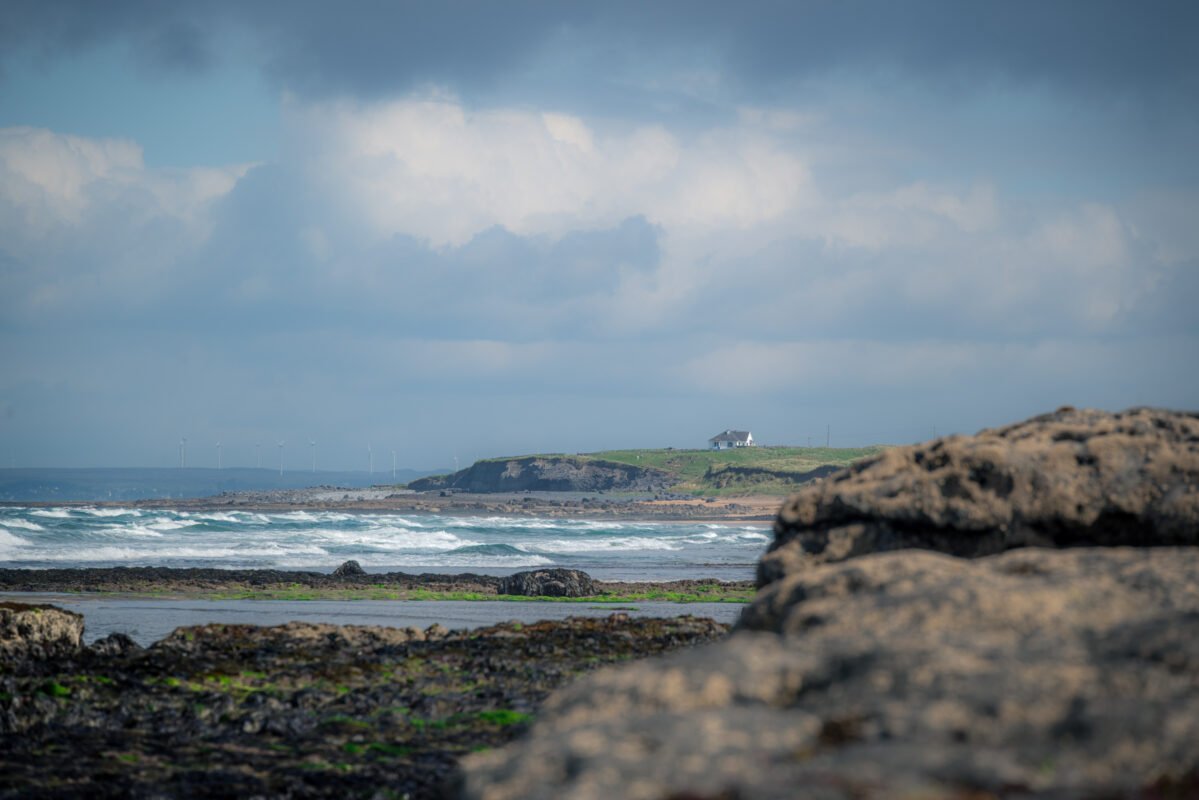
Fanore is located on the Wild Atlantic Way, between Doolin and Ballyvaughan in County Clare. From our accommodation at Aiteall Accommodation in Liscannor, it was a three-quarter hour drive along the coast. But the journey there is already an experience: on one side the ocean, on the other the limestone landscape of the Burren. Along the way you constantly encounter viewpoints that ask you to stop for a moment.
| From Doolin | 12 km (15 min) |
| From Ballyvaughan | 10 km (12 min) |
| From Galway | 55 km (1 hour) |
| From Shannon Airport | 75 km (1 hour 15 min) |
| From Dublin | 280 km (3 hours 30 min) |
About The Burren
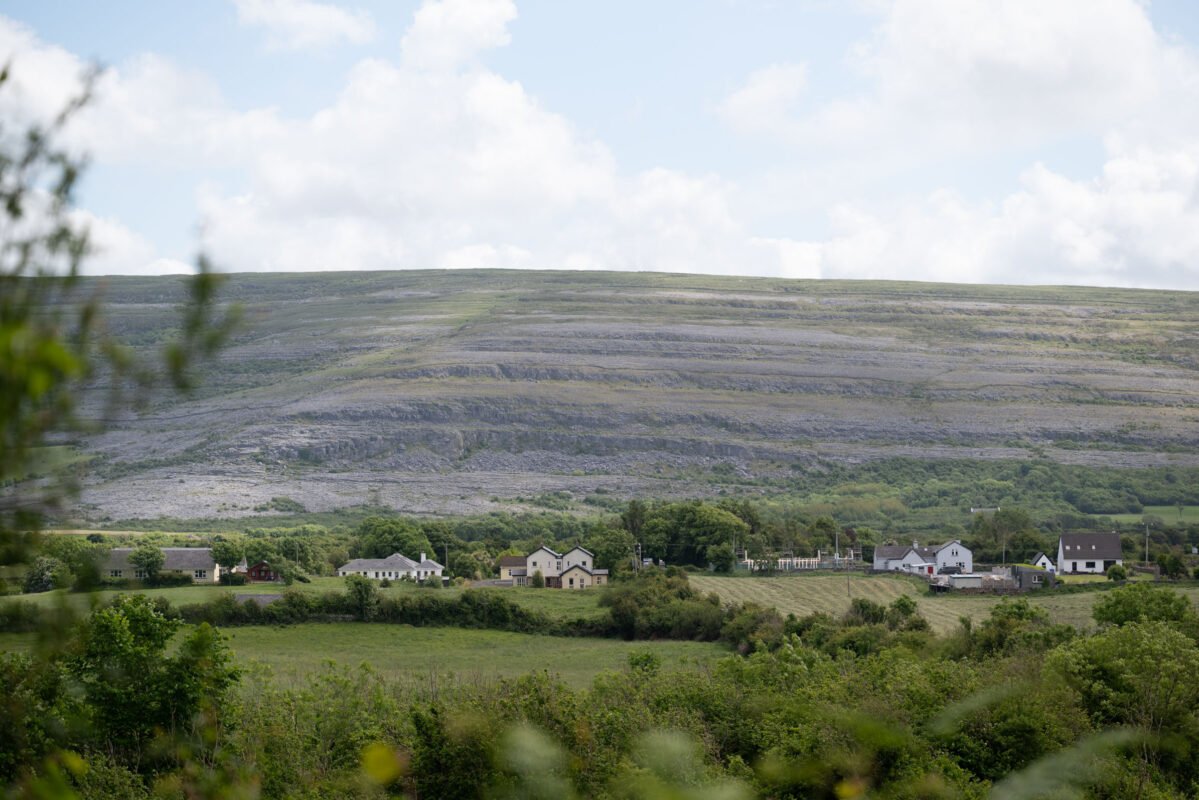
Fanore lies on the edge of The Burren, one of the most unique landscapes in Ireland. Contrary to what you might think, this is not a volcanic area, but an extensive plateau of limestone that formed 330 million years ago on the bottom of a tropical sea – close to the equator! The rocks here consist of compressed fossils of shells and coral, later eroded by glaciers and rain into the characteristic pattern of fissures (grykes) and plateaus (clints) that you see everywhere in the area.
The Burren and Cliffs of Moher UNESCO Global Geopark covers 530 km² and was recognised as a UNESCO Global Geopark in 2011. Here, Arctic and Mediterranean flowers grow side by side – a unique phenomenon found nowhere else in the world. The region has more than 2,700 recorded monuments, some of which are over 6,000 years old.
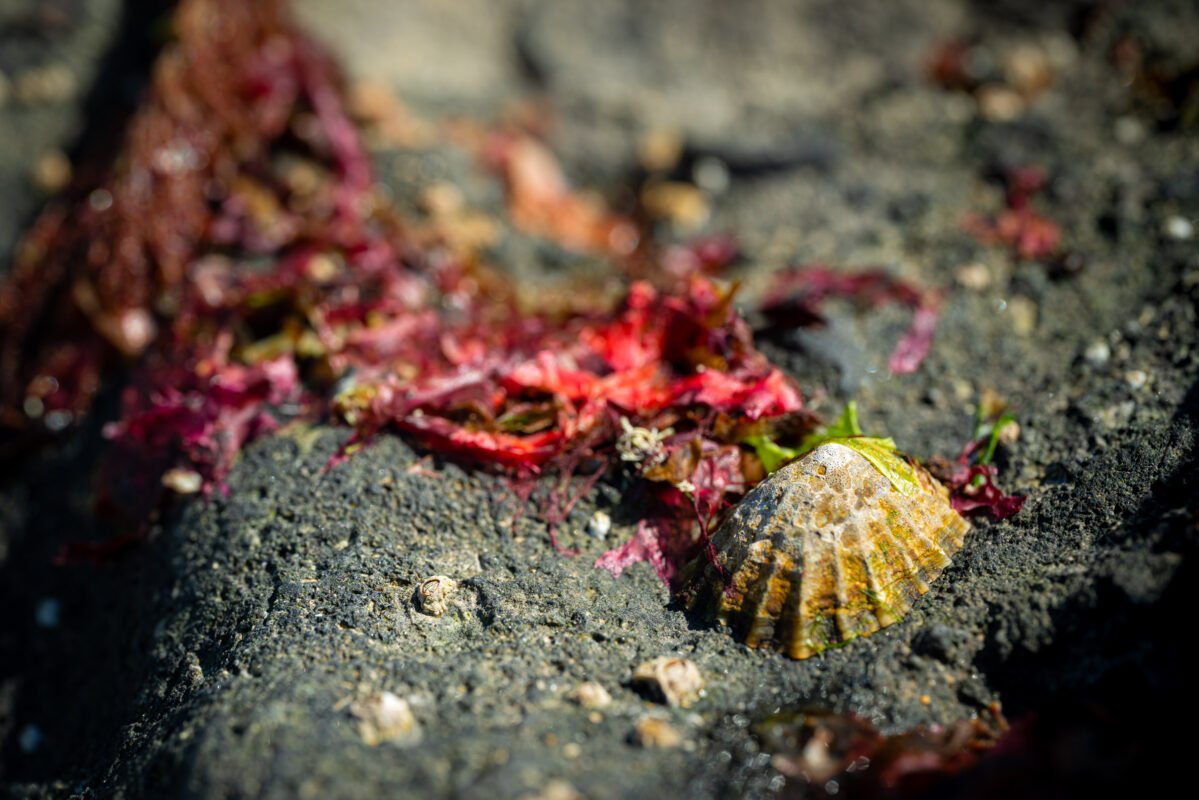
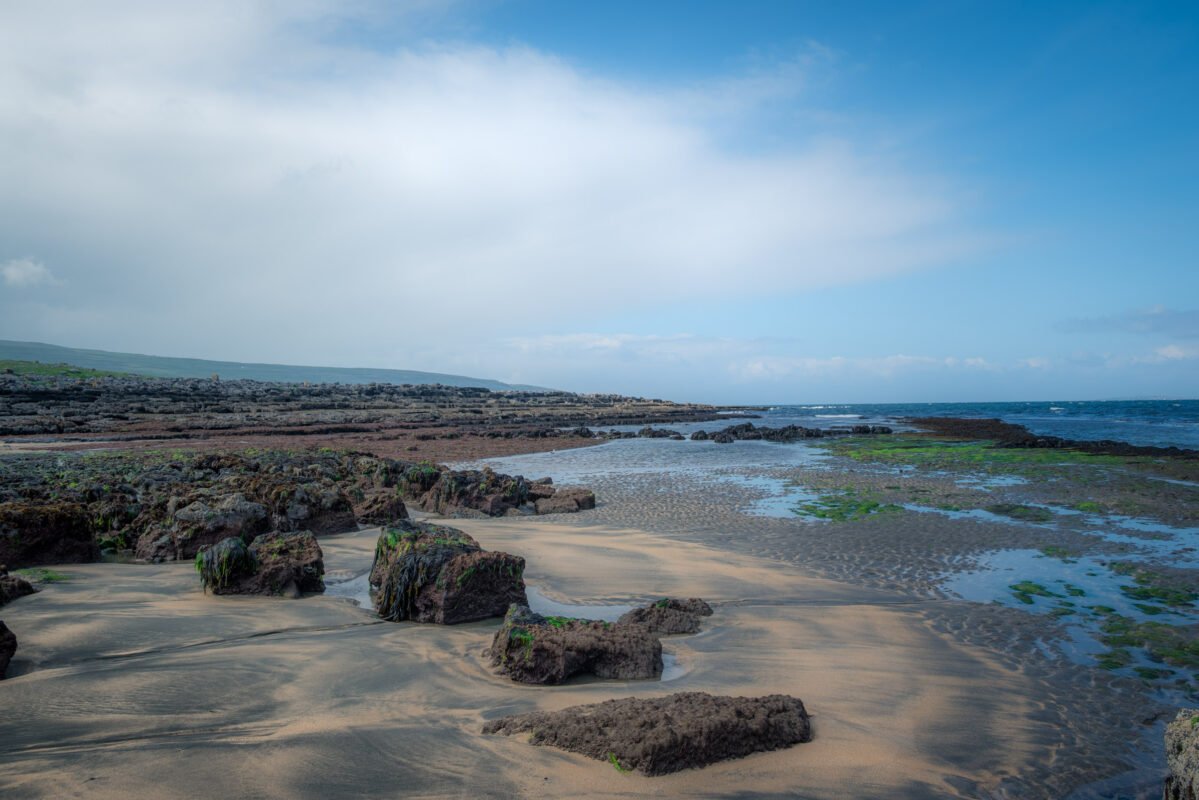
Geology tip: At low tide, look at the limestone that pokes through the sand here and there. You can discover fossils of shells and coral that are 330 million years old!
Nature and Atmosphere
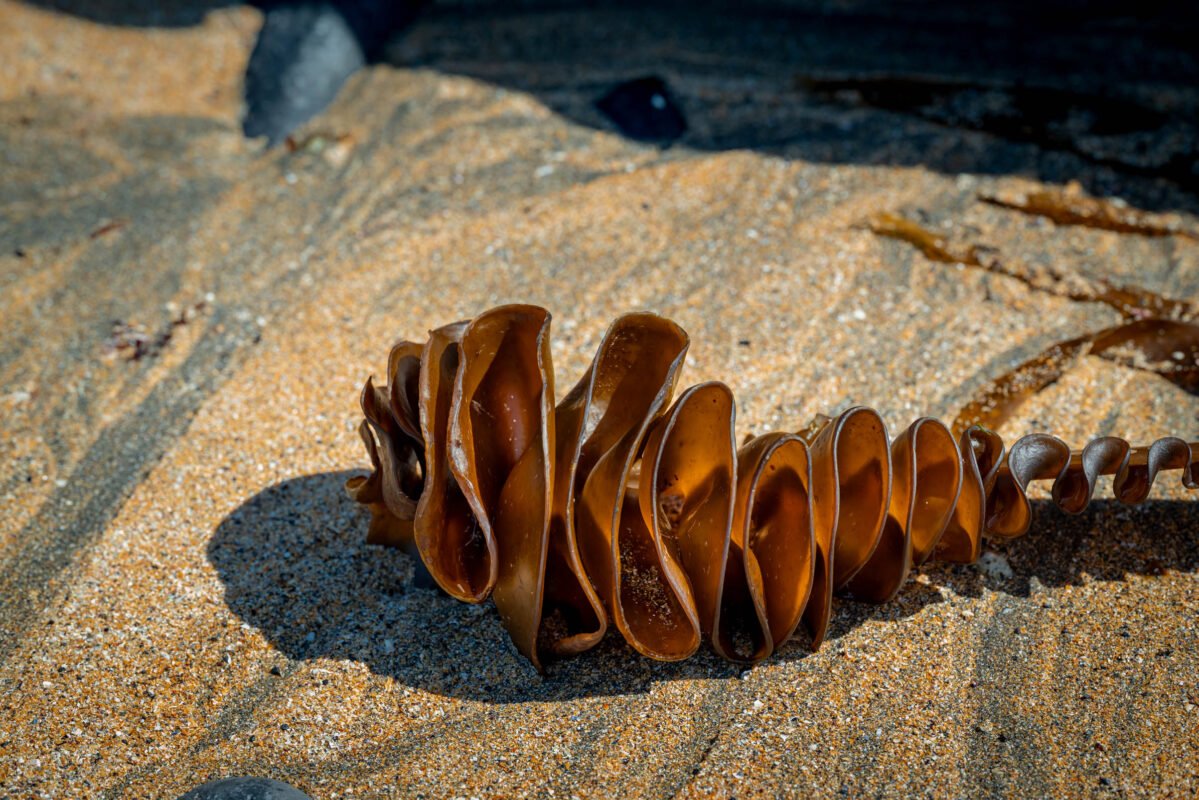
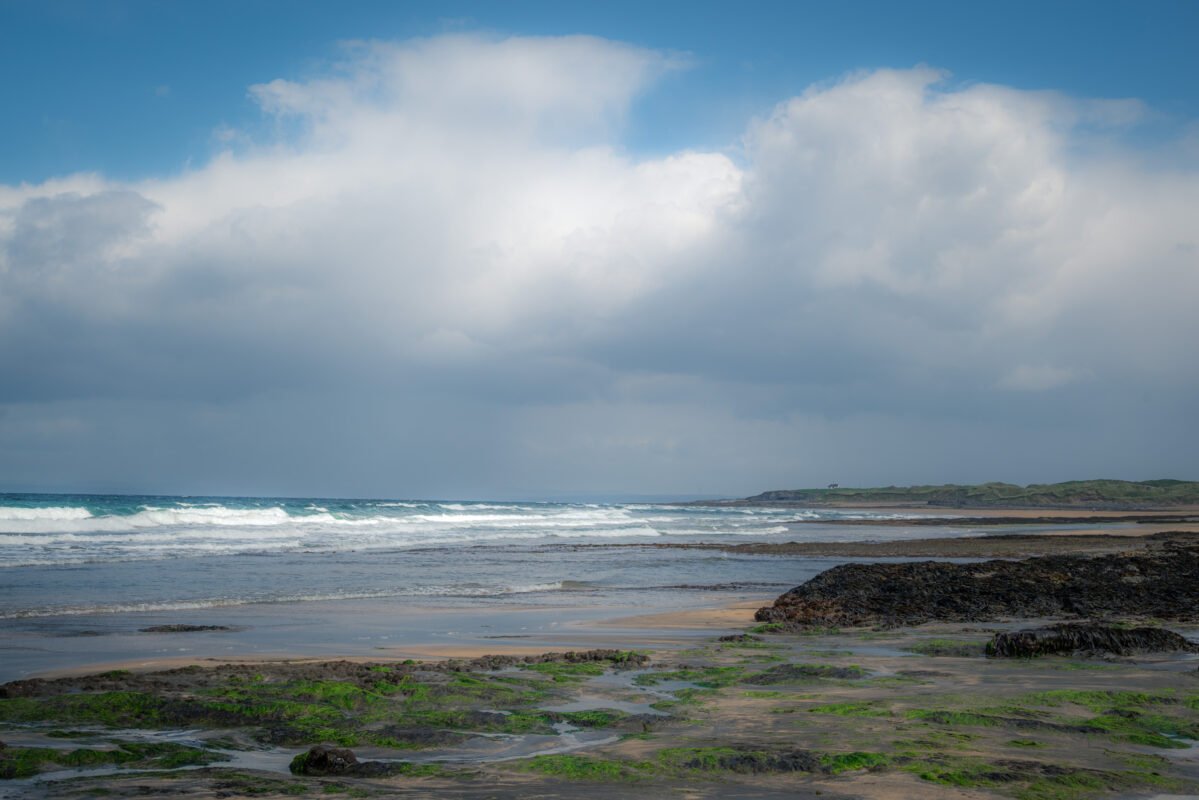
What makes Fanore so special is the combination of beach and rock. The colour of the sand, the play of water and the textures in the dunes make it a true paradise for nature lovers and photographers. As the Atlantic wind sweeps across the beach, new patterns constantly form in the sand – lines, curls and structures that appear almost graphic. The silence is only broken by the sound of the sea and the call of birds.
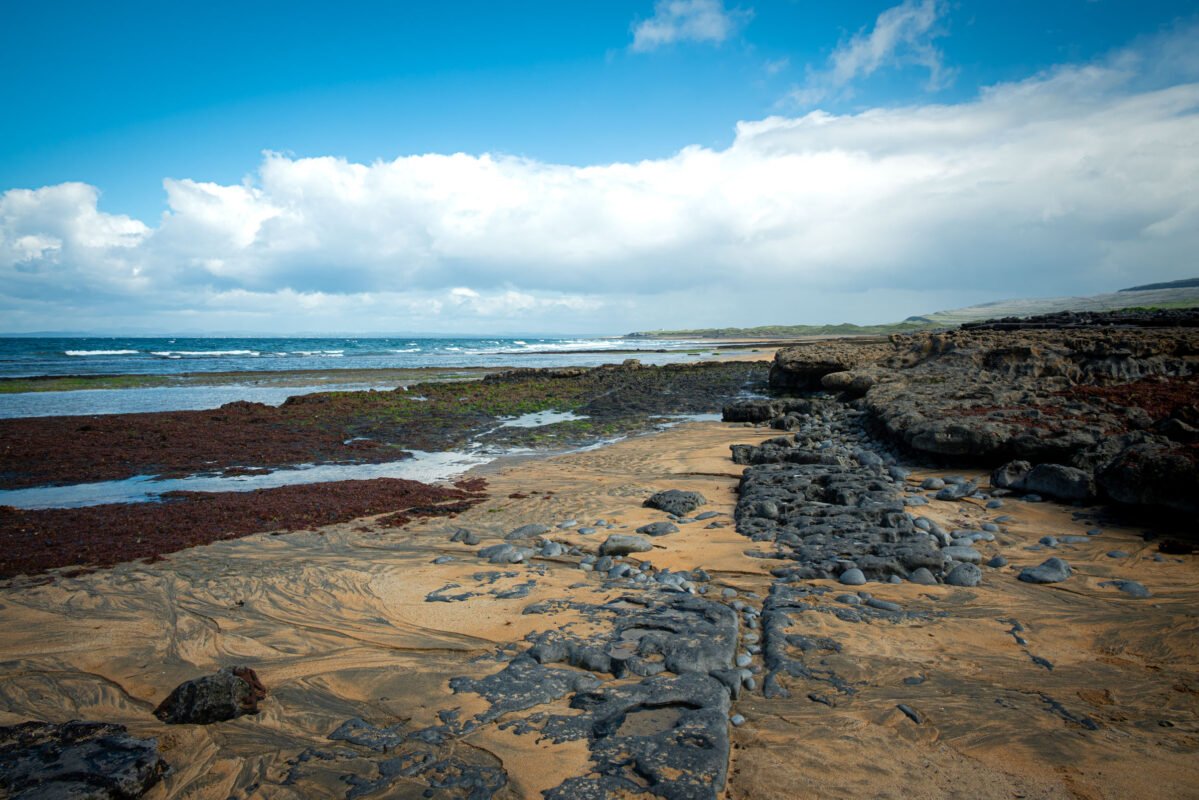
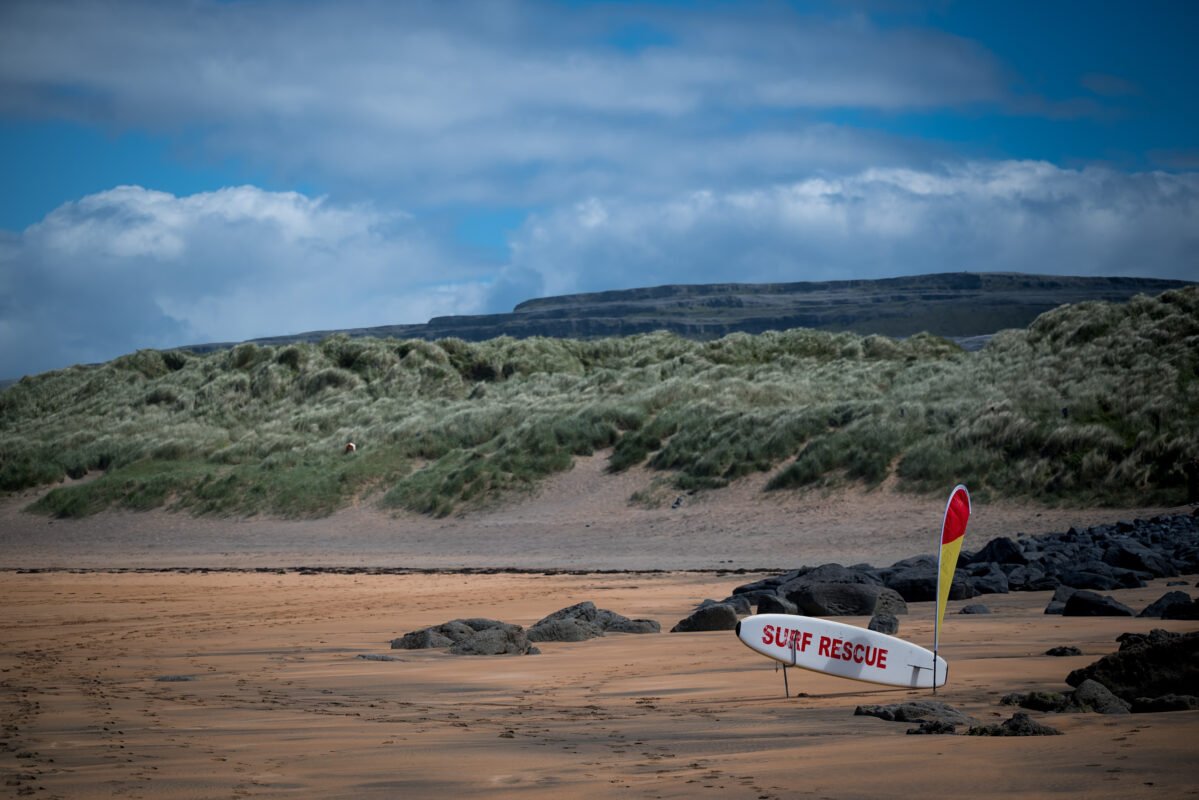
The combination of sand, sea and limestone gives Fanore its characteristic, almost otherworldly appearance. The beach is popular with swimmers and surfers – there’s even a surf school (Aloha Surf School) based here. Lifeguards are present during the summer months.
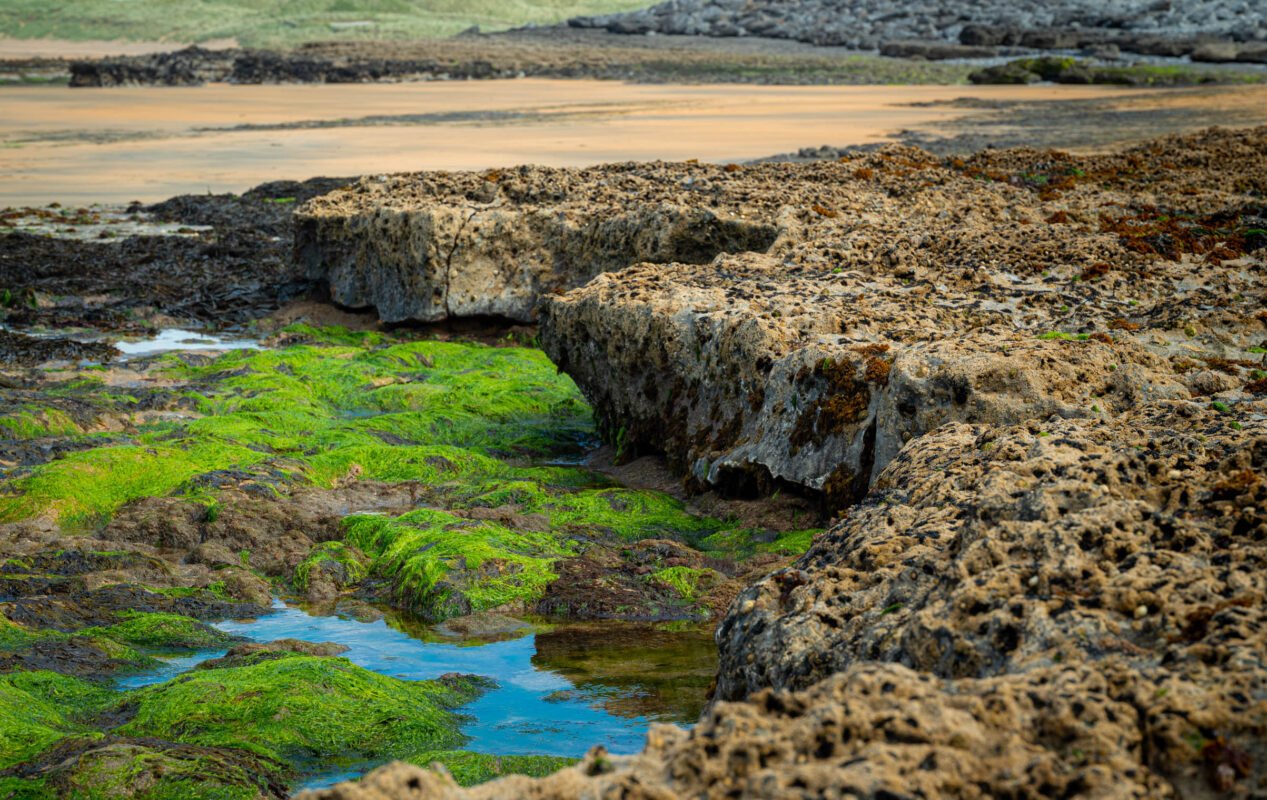
Photography tip: The patterns in the sand are at their best after a windy day or at low tide. Walk towards the dunes for graphic compositions of sand, grass and sky.
Hiking from Ballyvaughan
That day we combined Fanore with a hike from Ballyvaughan, a charming coastal village a bit further north. The route takes you through the rolling landscape of the Burren and past attractions such as Newtown Castle – a remarkable cylindrical tower house from the 16th century that is unique in all of Ireland – and the ruins of Gleninagh Castle.
Hiking Route Ballyvaughan – Newtown Castle
| Distance | 14 km |
| Duration | 4 hours |
| Difficulty | Moderate |
| Elevation gain | ~350 metres |
| Highlights | Newtown Castle, Gleninagh Castle, Burren landscape |
The walk is not difficult, but varied. Perfect to combine with a relaxing afternoon on the beach at Fanore, where you can end the day with the sound of the sea and a sunset that bathes the dunes in gold.
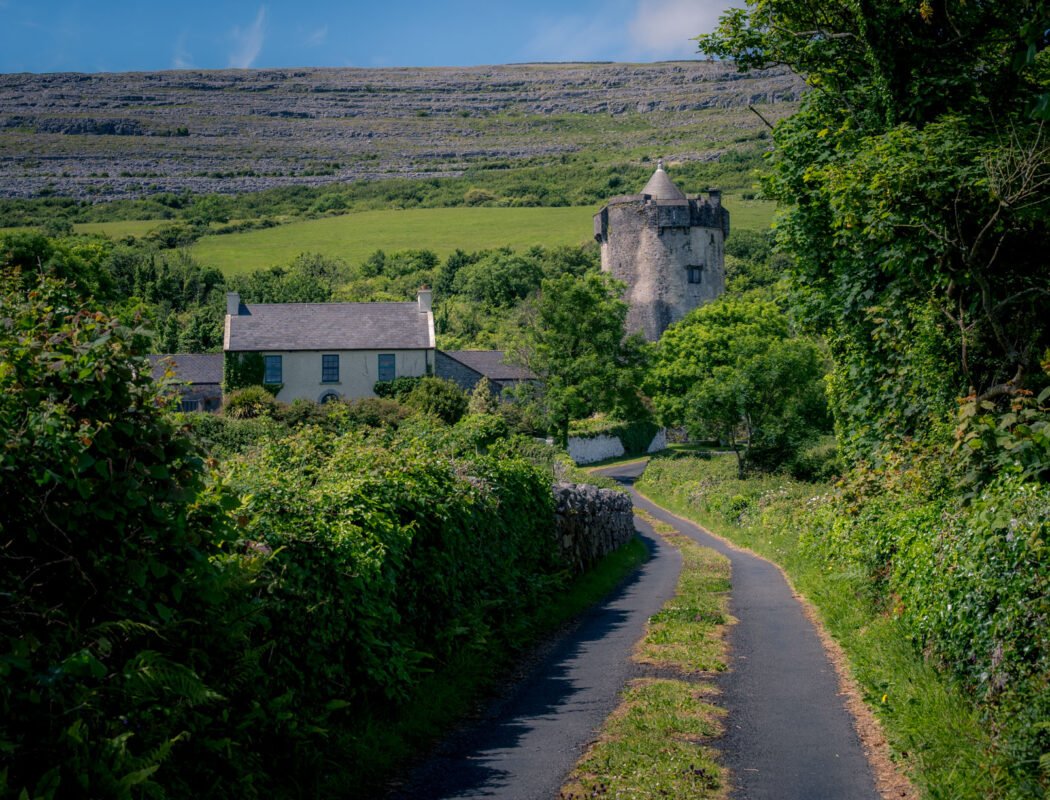
Hiking tip: Newtown Castle is free to visit on weekdays (May-September, 10:00-17:30). It’s one of the few round tower houses in Ireland – of the approximately 3,000 towers, only 30 are round!
Attractions in the Area
The Burren region offers numerous possibilities for day trips:
- Poulnabrone Dolmen – A 5,800-year-old megalithic monument, the most visited in the Burren after the Cliffs of Moher
- Aillwee Cave – Caves with 300 million year old fossils
- Doolin Cave – Home to Europe’s longest free-hanging stalactite (7.3 metres)
- Black Head Lighthouse – Spectacular views over Galway Bay and the Aran Islands
- Caher Valley Walk – A 14 km hiking route, one of the most beautiful in the region
Accommodation
We stayed again at Aiteall Accommodation in Doolin – a small-scale B&B where you’re welcomed as if you’re coming home. The owner, who earlier gave us the tip to visit Inisheer (read more about that here), this time recommended Fanore Beach – and rightly so. He also recommended the walk from Ballyvaughan. As I wrote before, a special owner who is very helpful.
Best Time to Visit
Fanore Beach is photogenic all year round, but in the months of May to September the weather is mild and the chance of beautiful light is greatest. In June, when we were there, the beach turned gold in the evening light and was almost deserted. The sea was calm and the soft light provided beautiful images. Those who want to escape the crowds at the Cliffs of Moher will find a perfect balance between nature and peace here.
| Spring (Mar-May) | Wild flowers, quiet, sometimes still fresh |
| Summer (Jun-Aug) | Warmest period, lifeguards present, busier |
| Autumn (Sep-Nov) | Dramatic skies, golden light, quiet |
| Winter (Dec-Feb) | Stormy, impressive waves, very quiet |
Photography tip: The most beautiful light is in the early morning or late afternoon. The sunset over the Atlantic Ocean is spectacular – the dunes turn gold and orange.
In Conclusion
Fanore Beach is one of those places where you don’t need to wonder what to do – you just need to be there. The wind, the light and the endless space naturally provide inspiration. A day at Fanore is a day when everything slows down, where the simplicity of nature makes the difference. For us, this was one of the quietest days of our trip along the west coast of Ireland but definitely worth it.
More Ireland inspiration? Also read about my visit to Inisheer or the Cliffs of Moher. Or check out the Ireland book and the Ireland calendar 2026.
Practical Information
Facilities
Fanore Beach is excellently equipped for visitors:
- Parking: Large free car park right next to the beach
- Toilets: Free accessible toilets (also wheelchair accessible)
- Showers: Outdoor showers available
- Drinking water: Available
- Lifeguards: June to August daily 11:00-19:00, weekends May and September
- Surf zone: Designated area for surfers
- Surf school: Aloha Surf School
Rules
- Dogs: Allowed, but on a leash. No dogs between 11:00-18:00 during summer season
- Horse riding: Not allowed between 11:00-18:00 during summer season
- Overnight stays: Camping and overnight stays not permitted
What to Bring
- Windproof jacket
- Sunscreen
- Water shoes (for jellyfish)
- Camera
- Picnic
- Hiking boots (for the dunes)
Frequently Asked Questions
How do you get to Fanore Beach?
Fanore Beach is located on the N67 between Doolin and Ballyvaughan in County Clare. There’s a large free car park right next to the beach. By public transport you can take bus 350 from Galway to Ballyvaughan/Doolin, but having your own transport is recommended to explore the region properly.
Is Fanore Beach suitable for swimming?
Yes, Fanore Beach is a Blue Flag beach with excellent water quality. There’s a designated swimming zone and lifeguards are present in summer (June-August daily 11:00-19:00). Do watch out for currents and the cold water – this is the Atlantic Ocean!
Can you surf at Fanore Beach?
Absolutely! Fanore is popular with surfers because of the consistent Atlantic waves. Aloha Surf School offers surf lessons for all levels and also rents surfboards. There’s a designated surf zone separate from the swimming area.
Are dogs allowed on Fanore Beach?
Dogs are welcome but must be on a leash. Note: during the summer season, dogs are not allowed between 11:00 and 18:00. Outside these times and in low season you can take your dog on the beach.
What is there to see at The Burren?
The Burren is a unique limestone landscape and UNESCO Global Geopark. Highlights include the Poulnabrone Dolmen (5,800 years old), Aillwee Cave, Doolin Cave with Europe’s longest stalactite, and numerous walking routes through the moonscape. The region is also known for its unique flora: Arctic and Mediterranean flowers grow here side by side.
How do you combine Fanore Beach with the Cliffs of Moher?
Fanore Beach is only 20 km north of the Cliffs of Moher. You can easily visit both in one day. Tip: start at the Cliffs in the morning (less crowded) and end with a relaxing afternoon at Fanore Beach. The coastal road (R477) between the two is spectacularly beautiful.
Location on the Map
Gallery
Pictures speak louder than words:




Useful Links
- Fanore Beach information – visitclare.ie
- Discover Ireland – Fanore Beach
- The Burren National Park – burrennationalpark.ie
- Burren and Cliffs of Moher Geopark – burren.ie
- Aiteall Accommodation Doolin – aiteallaccommodation.com
- Wild Atlantic Way – wildatlanticway.com