


Skellig Islands – Where Heaven and Sea Meet
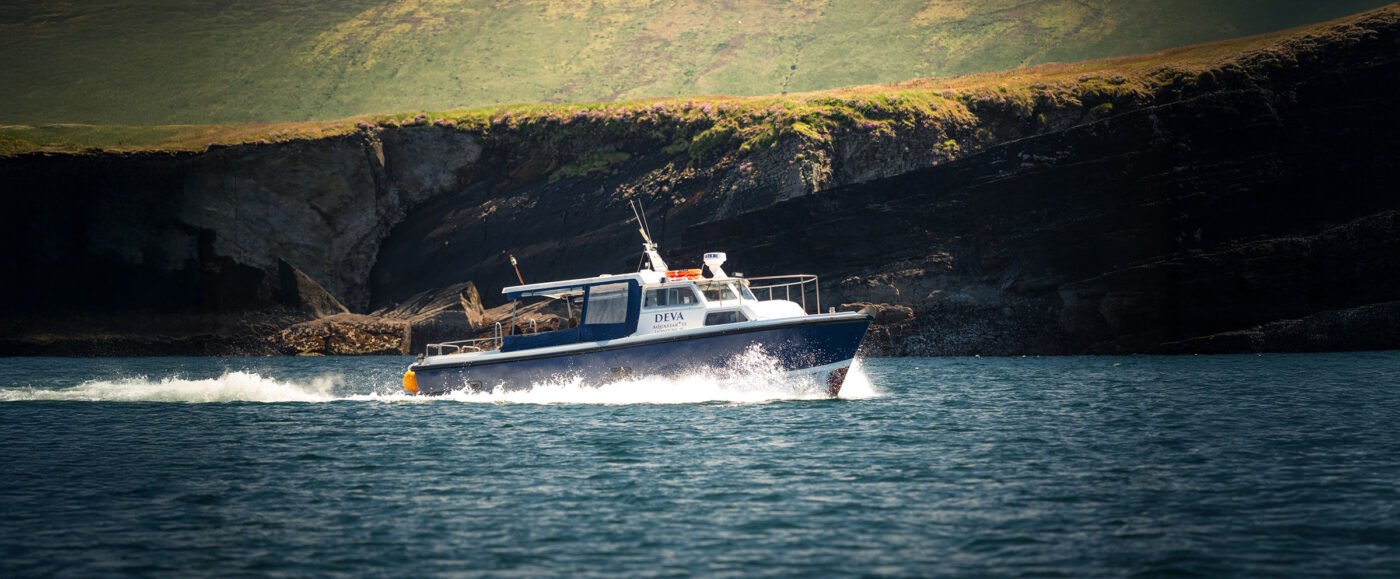
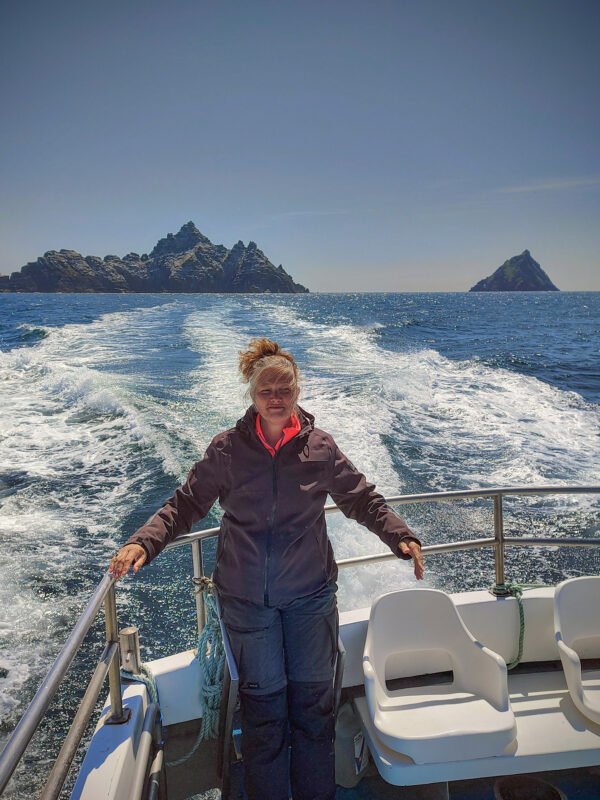
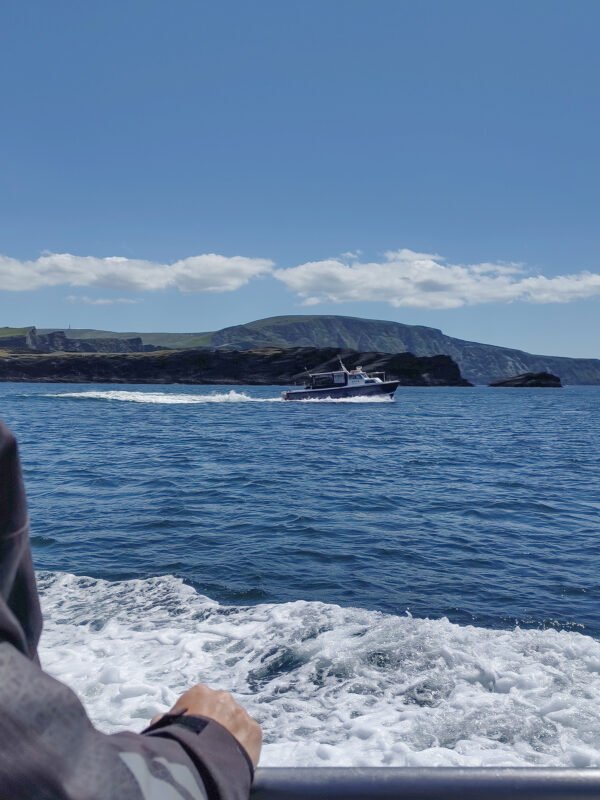
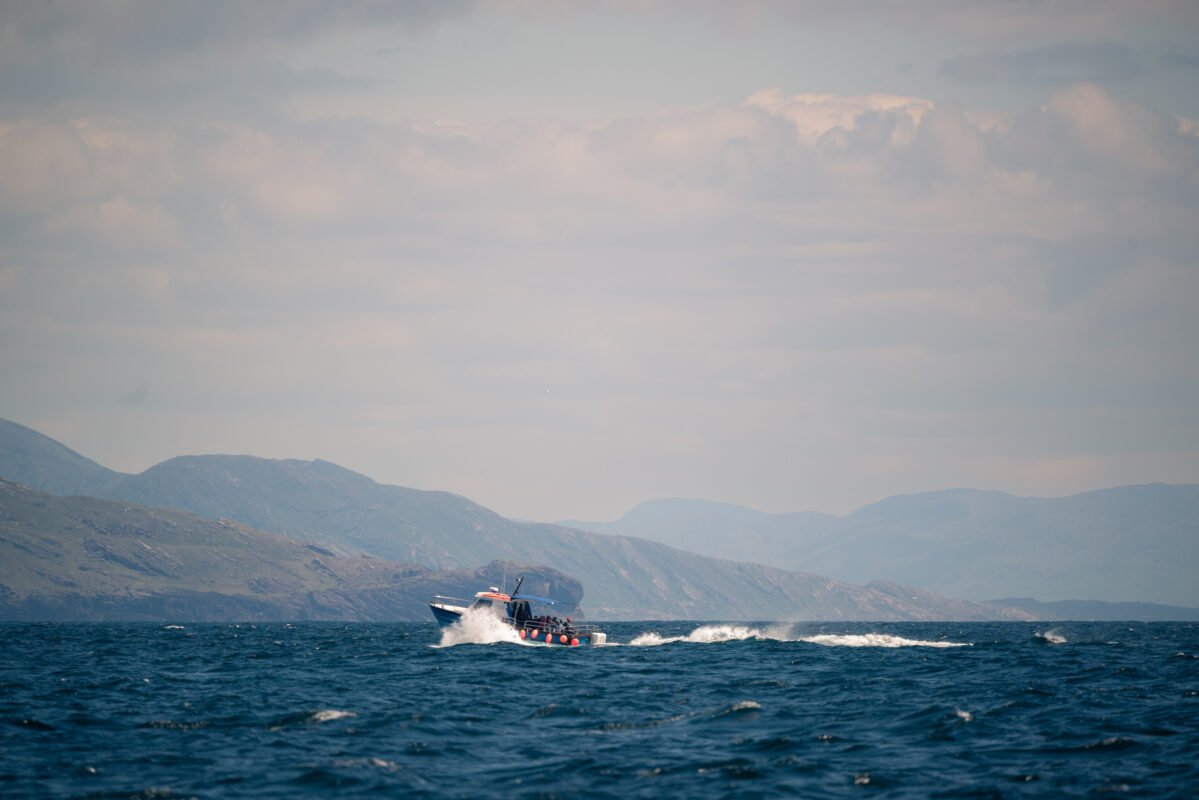
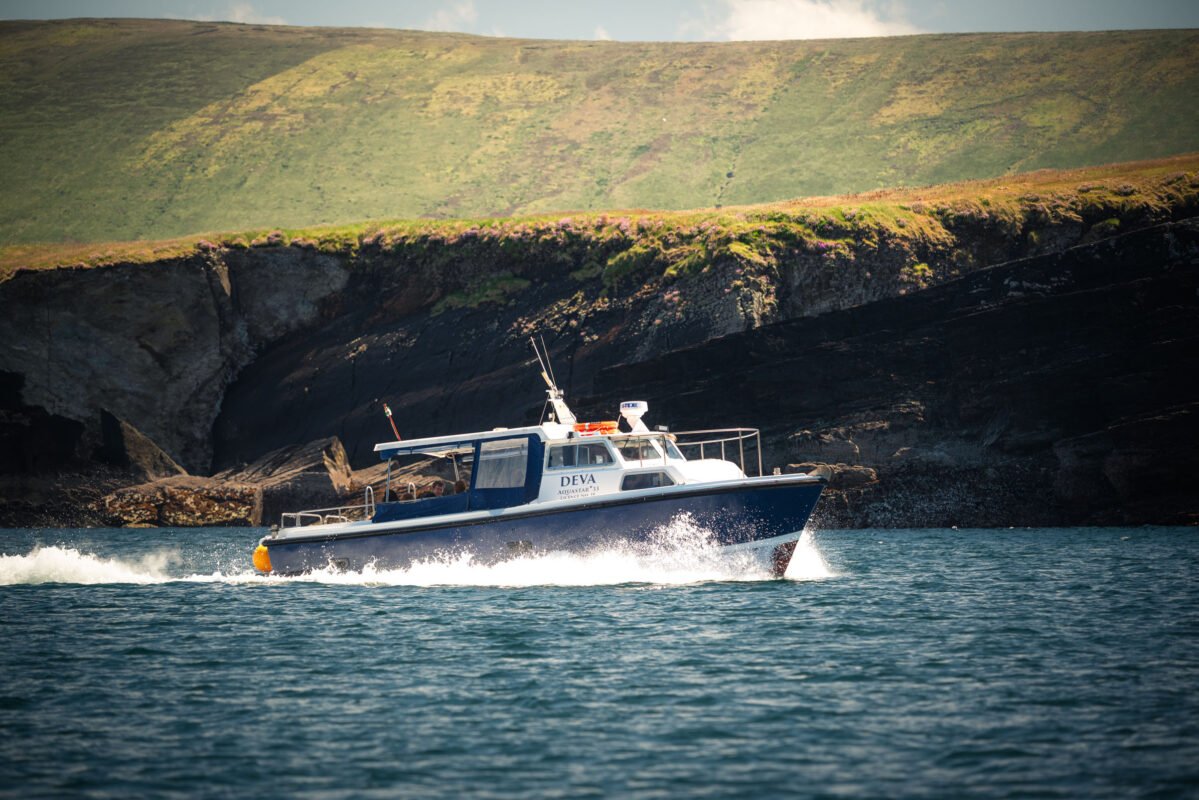
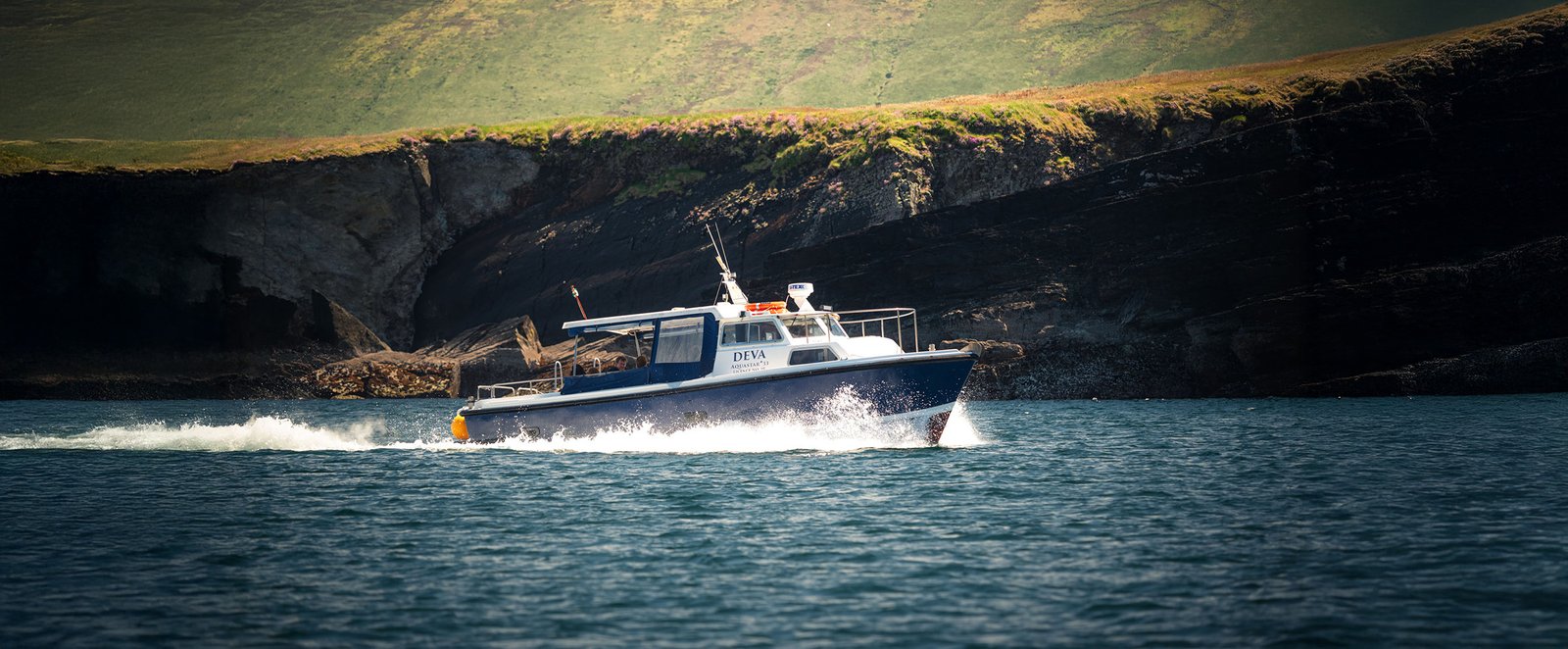
During our road trip along the west and south coast of Ireland, a visit to the Skellig Islands was also on the list. It was a day with beautiful weather, despite the strong winds. But that shouldn’t spoil the fun when you’re heading out to sea by boat – we rather enjoy some spectacle on the water.
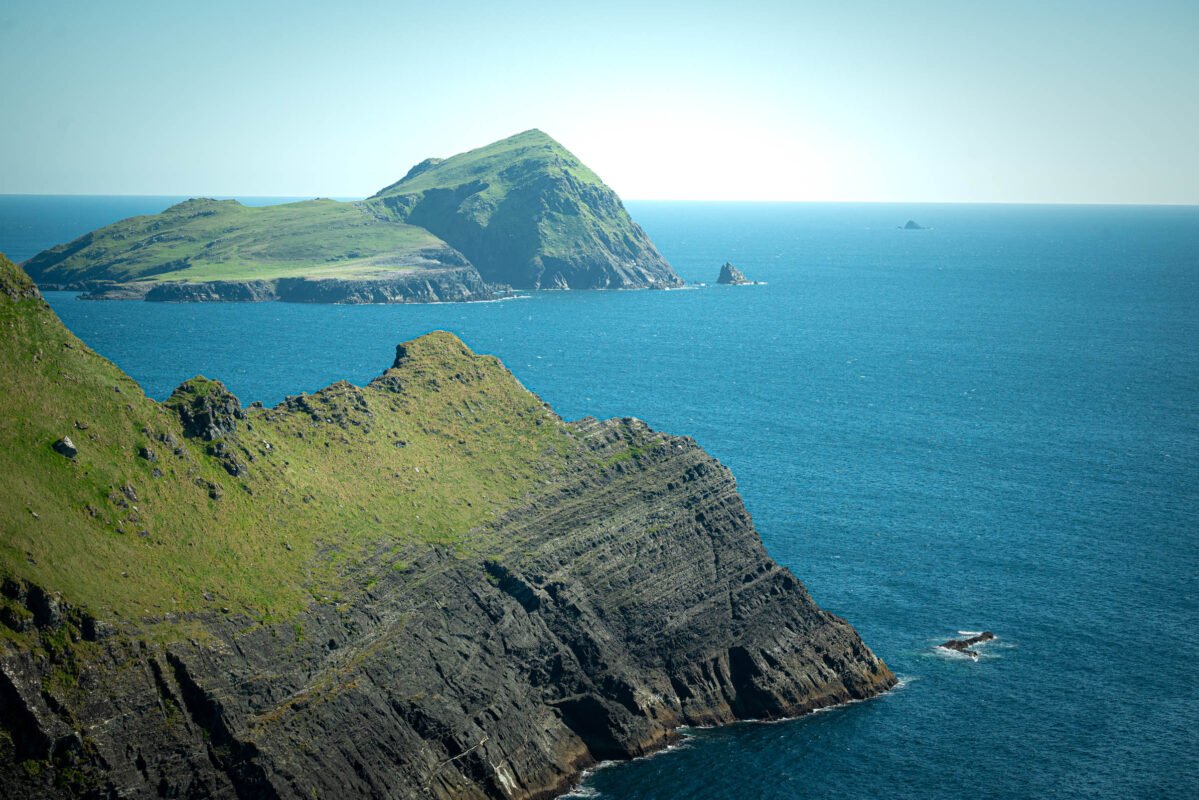
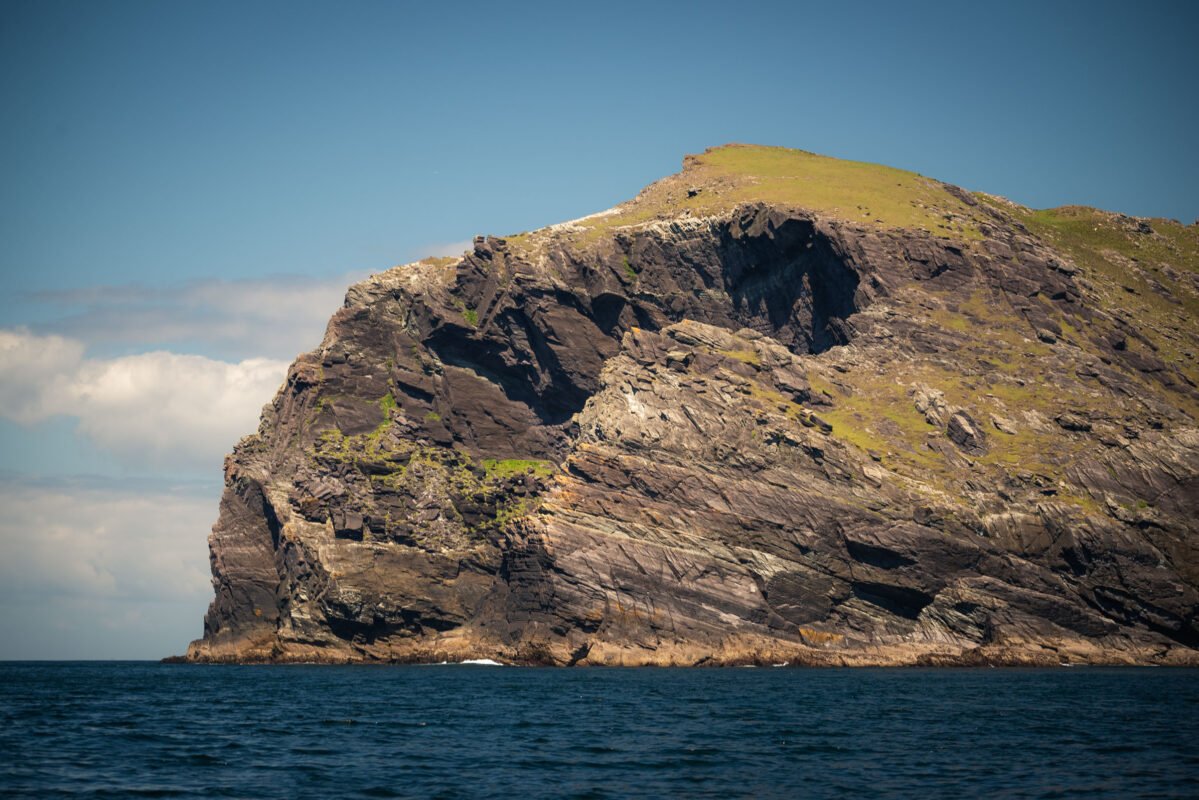
From Portmagee, the boats depart that take you to these magnificent rocky islands. The boat trip itself is already a breathtaking experience. Along the way you’ll see many bird species and with some luck also dolphins. Don’t forget to explore the area around Portmagee if you have the time. The coastline here is overwhelmingly beautiful as well – from the Kerry Cliffs to Bray Head on Valentia Island.
About the Skellig Islands
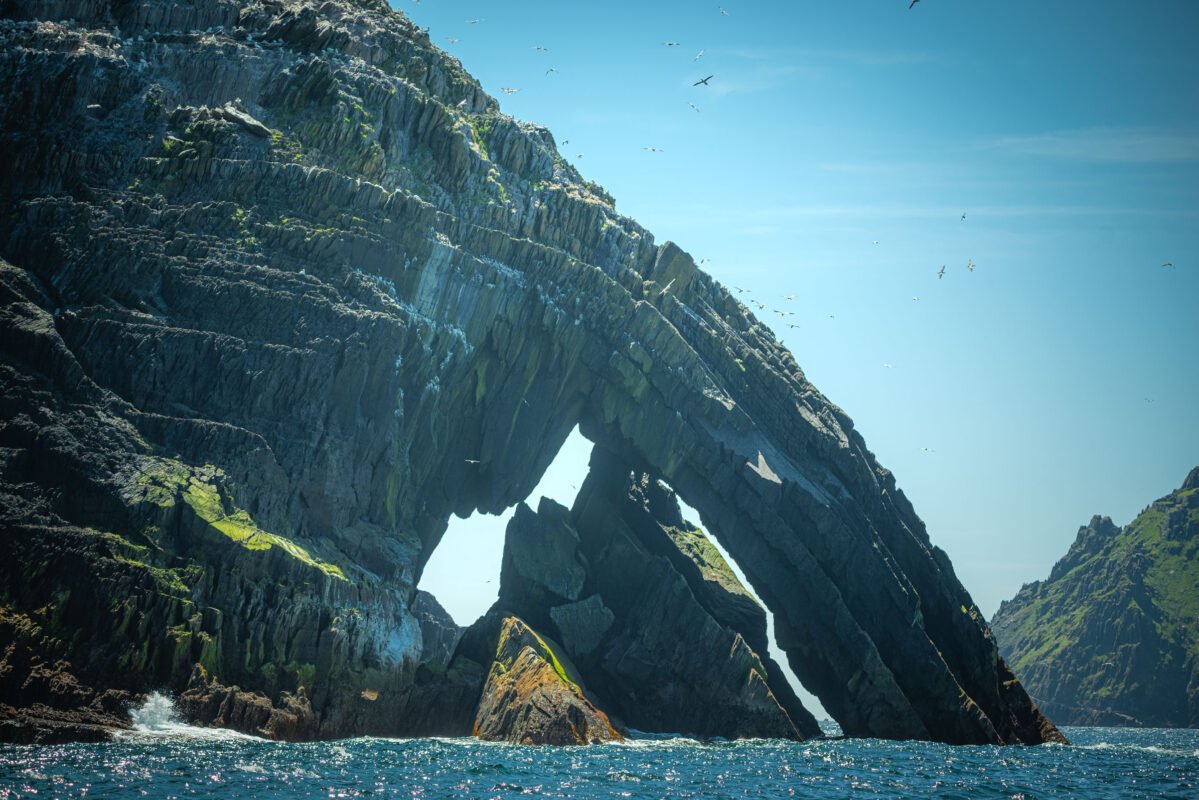
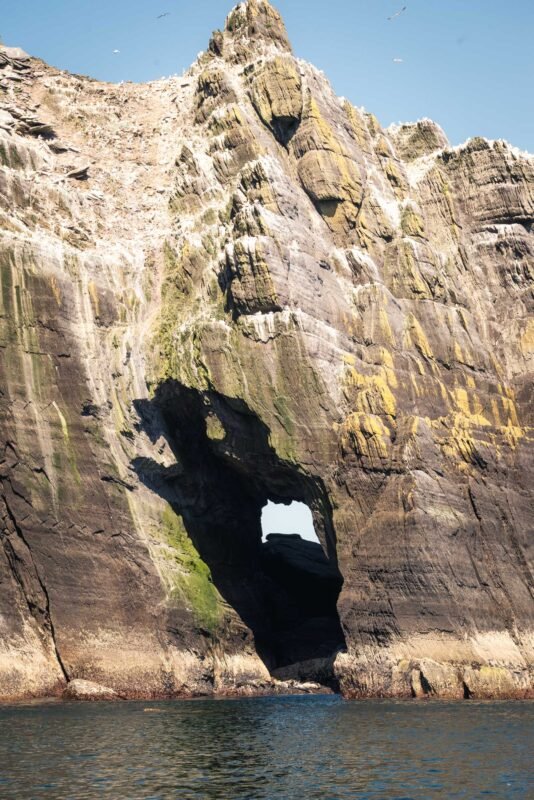
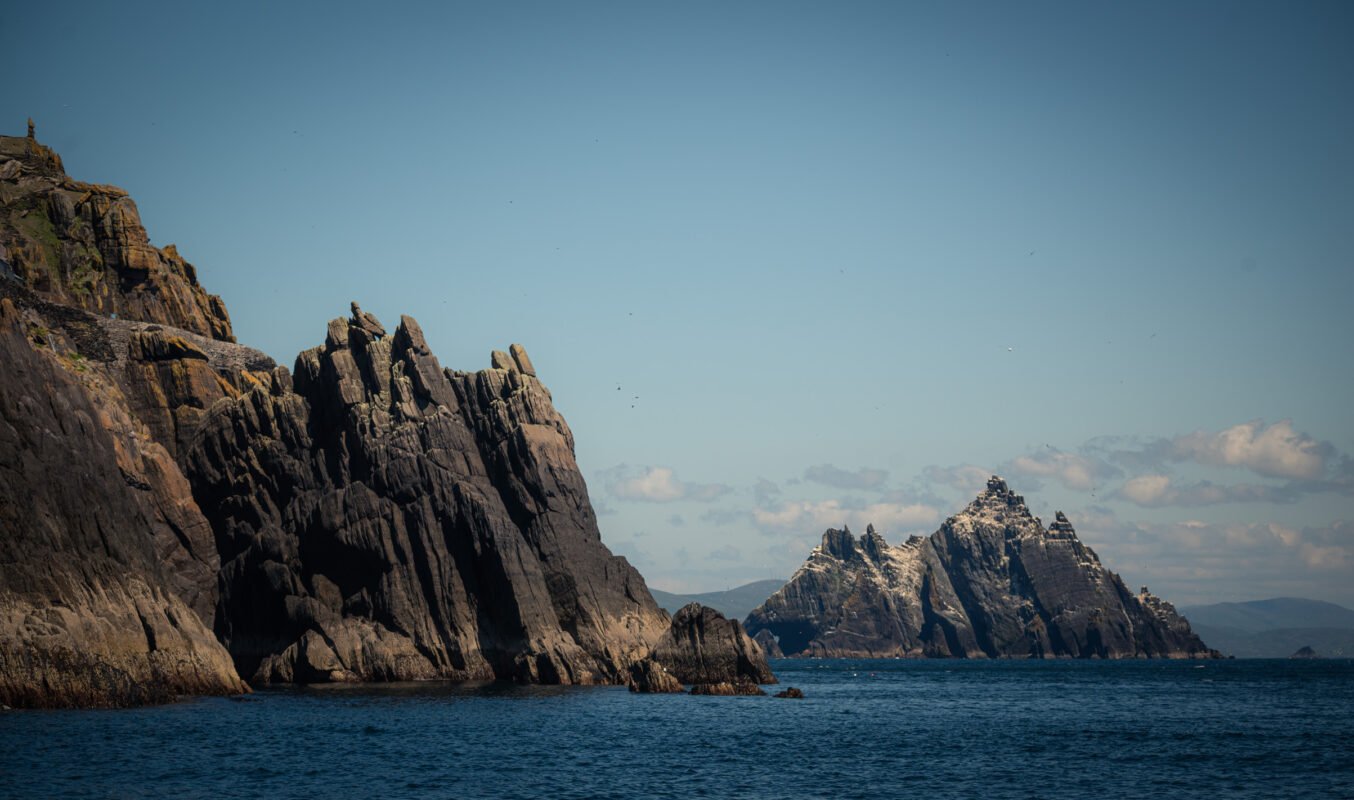
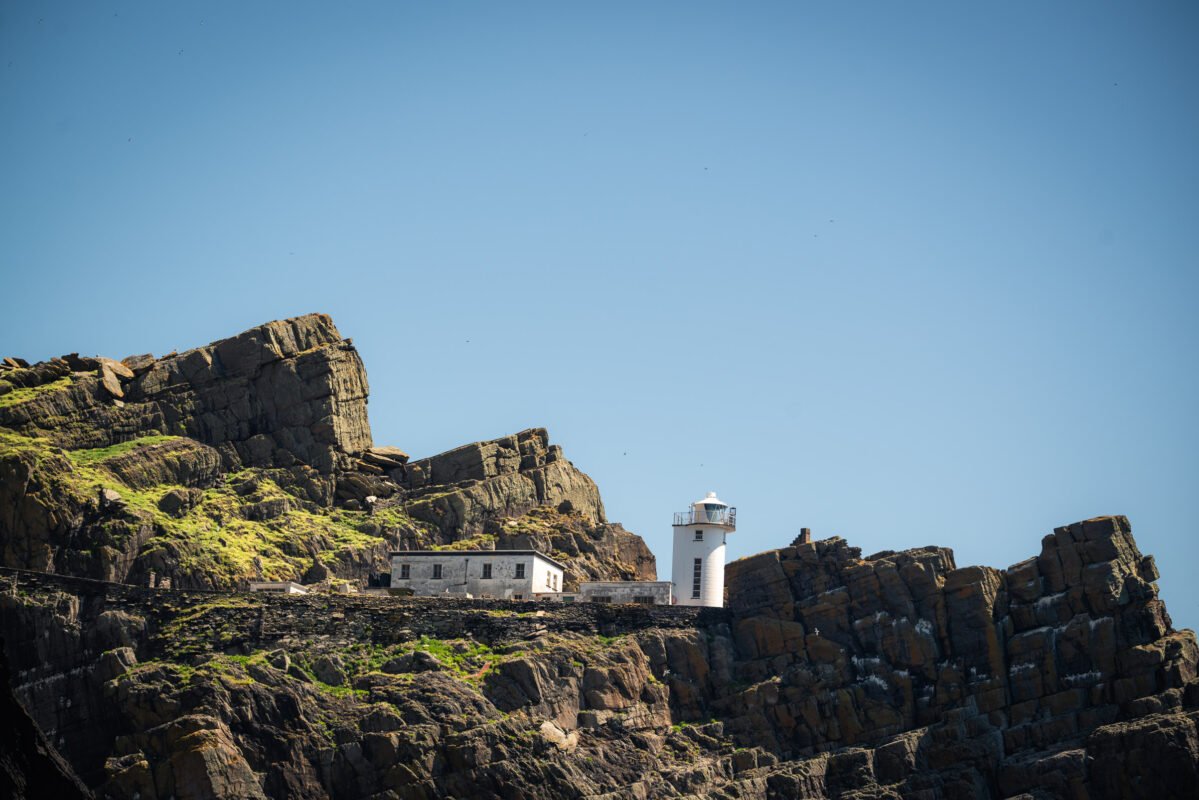
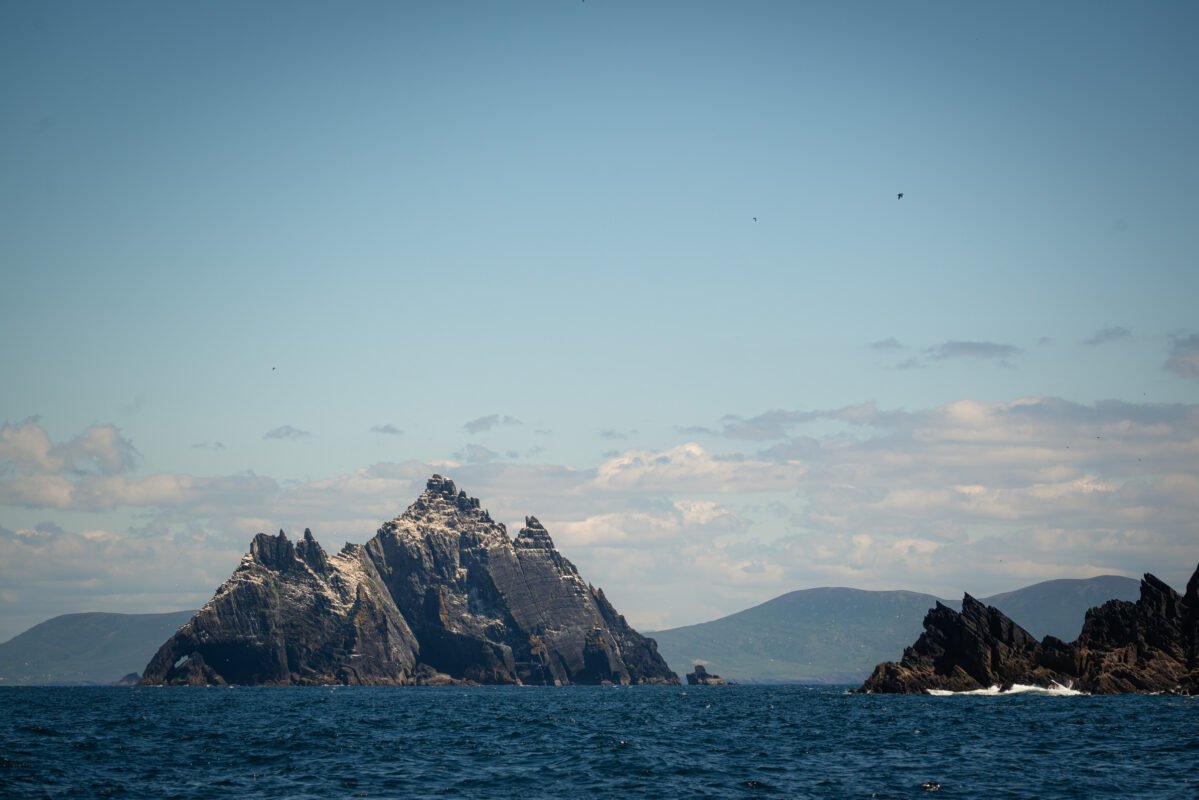
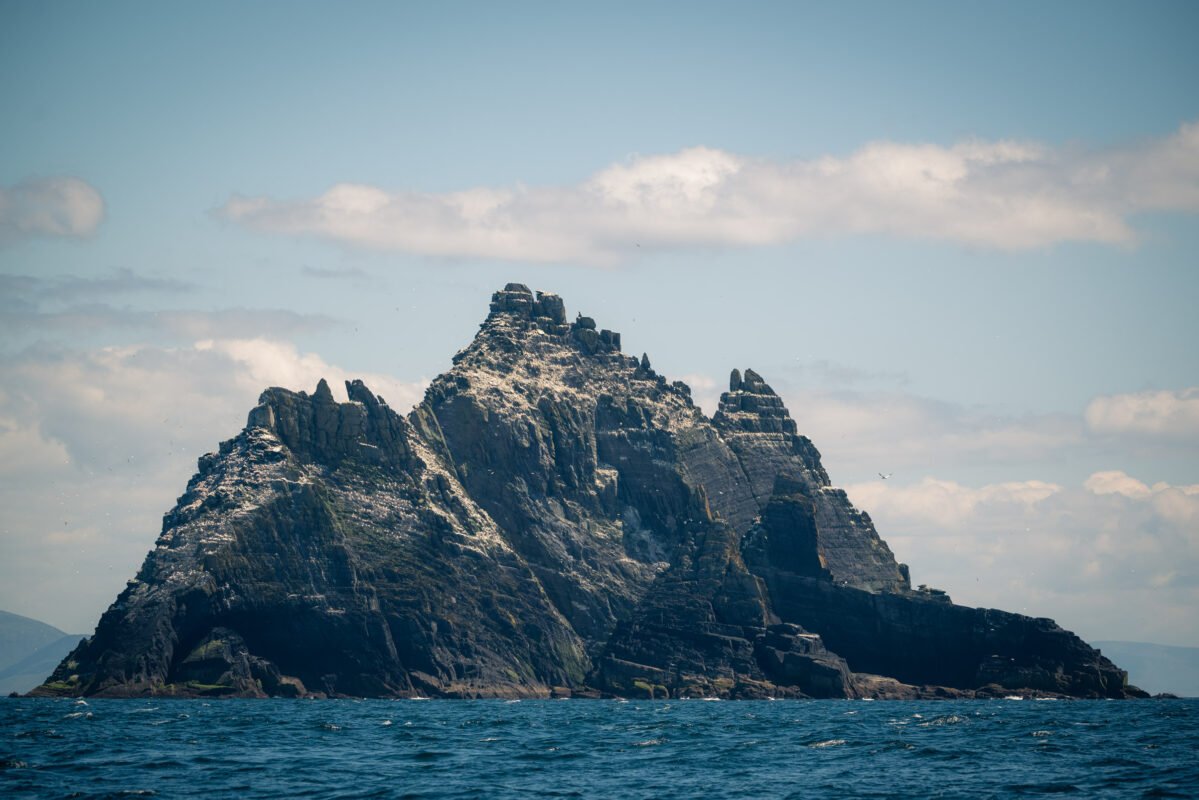
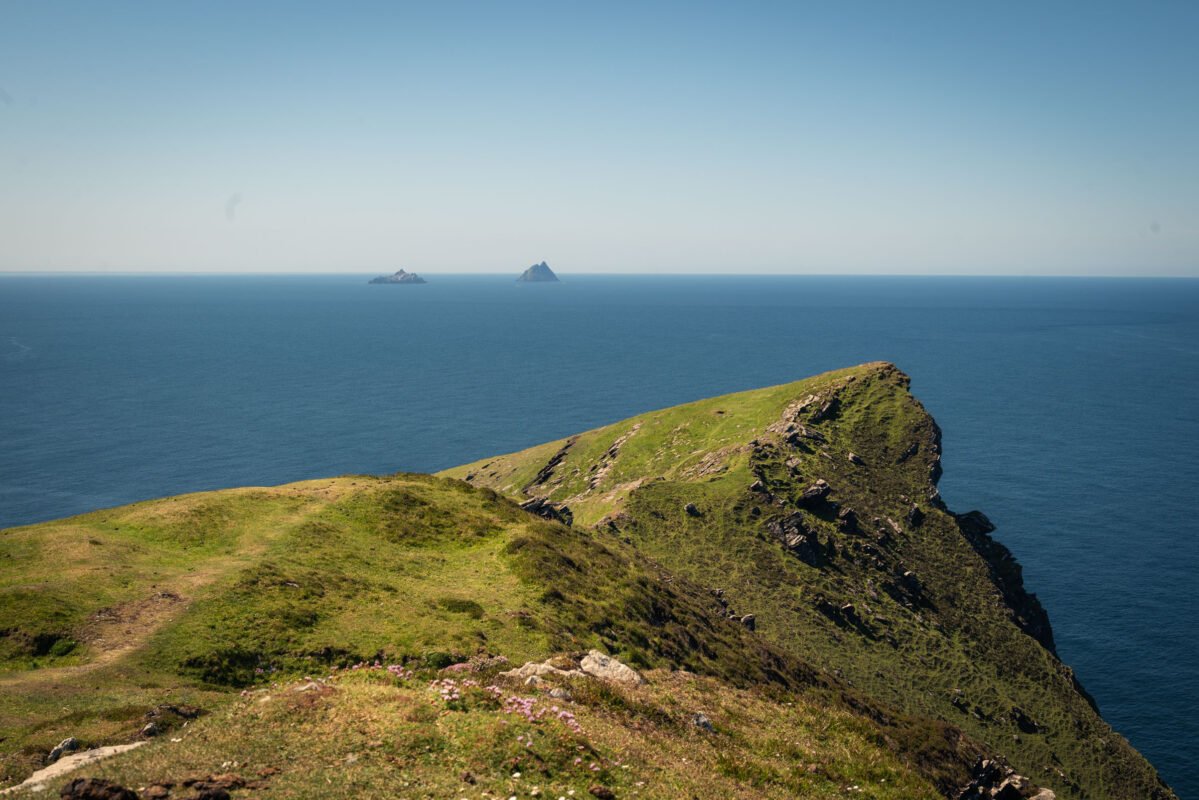
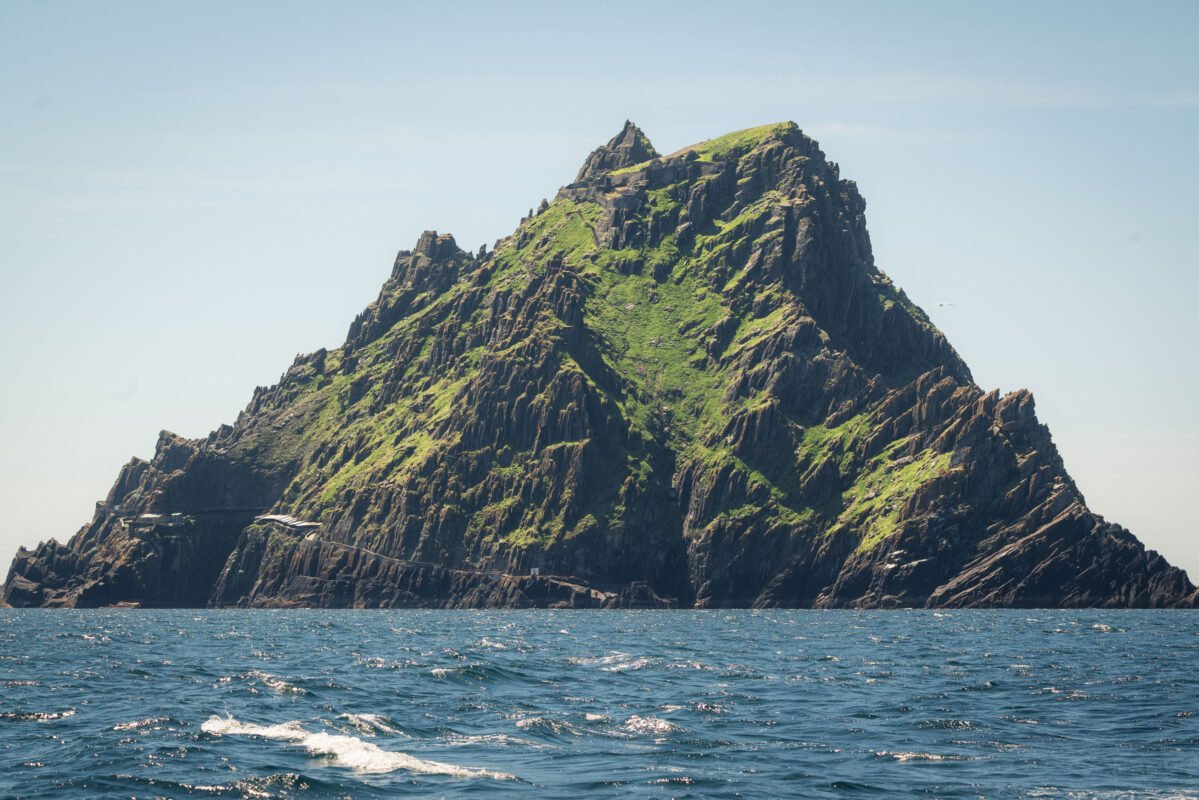
The Skellig Islands (Irish: Na Scealaga) consist of two rocky islands located approximately 12 kilometres off the coast of County Kerry. Skellig Michael (Sceilig Mhichíl), the larger of the two, rises dramatically from the Atlantic Ocean to a height of 218 metres. The smaller Little Skellig lies slightly closer to the coast and is a protected bird sanctuary.
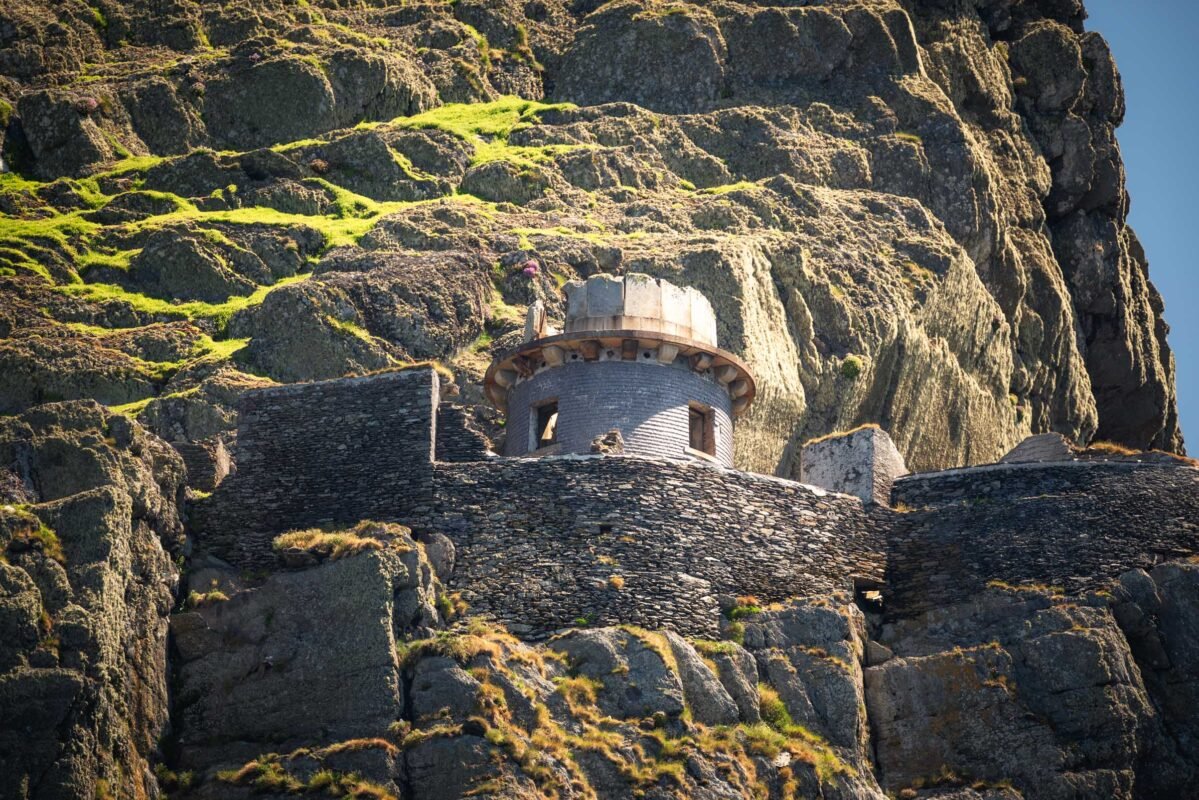
Skellig Michael was designated a UNESCO World Heritage Site in 1996 due to its exceptionally well-preserved early Christian monastery at the summit. Between the 6th and 8th centuries, monks settled here in their quest for ultimate solitude – inspired by ascetic traditions from the Middle East, they believed that isolation would bring them closer to God. The monastic community, which never numbered more than twelve monks and an abbot, remained here until the 12th or 13th century before climate change and Viking raids drove them to the mainland.
In 2014, Skellig Michael gained worldwide fame as a filming location for Star Wars: The Force Awakens, where it served as Luke Skywalker’s hidden refuge.
| Location | 12 km off the coast of Portmagee, County Kerry |
| Height of Skellig Michael | 218 metres above sea level |
| UNESCO status | World Heritage Site since 1996 |
| Monastery founded | 6th-8th century |
| Landing season | Mid-May to end of September |
| GPS Portmagee Marina | 51.8859° N, -10.3653° W |
The Monastery on Skellig Michael
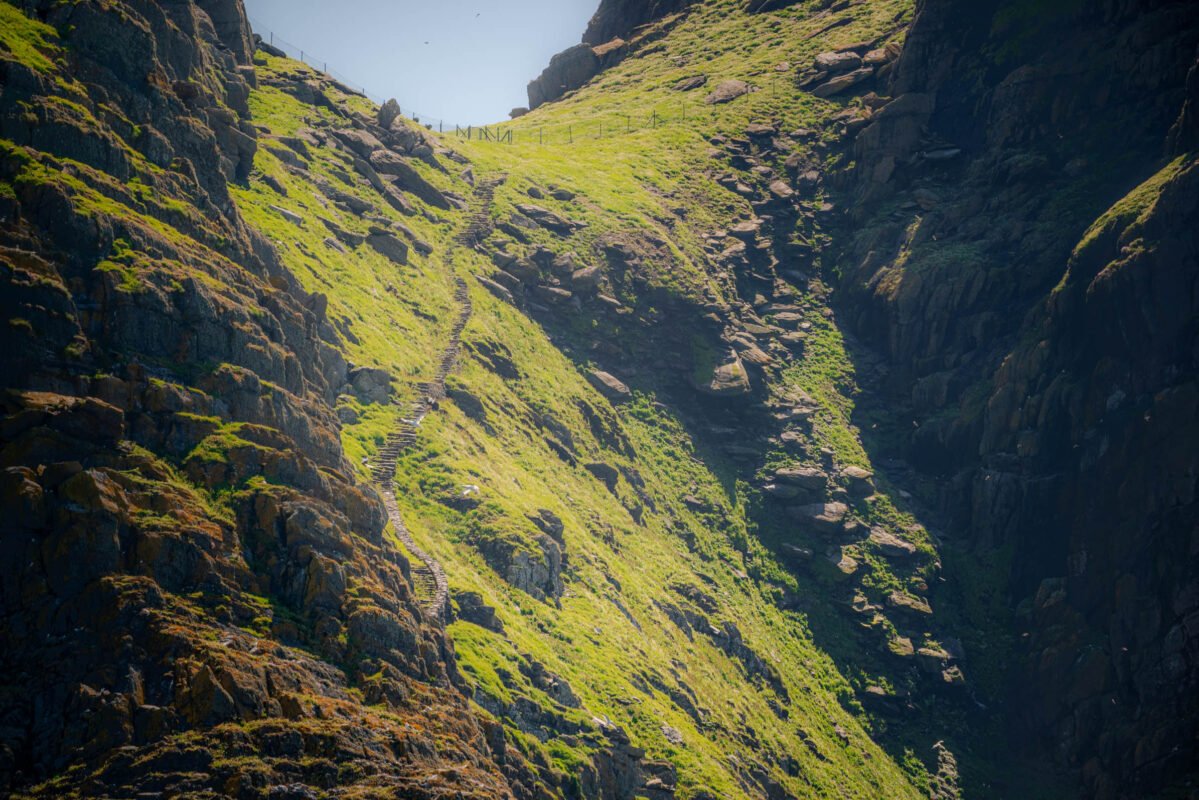
The monastery sits on a terrace on the northeastern peak, approximately 170-180 metres above sea level. To get there you must climb 618 steps carved into the rock – the same steps that the monks created by hand more than 1,400 years ago.
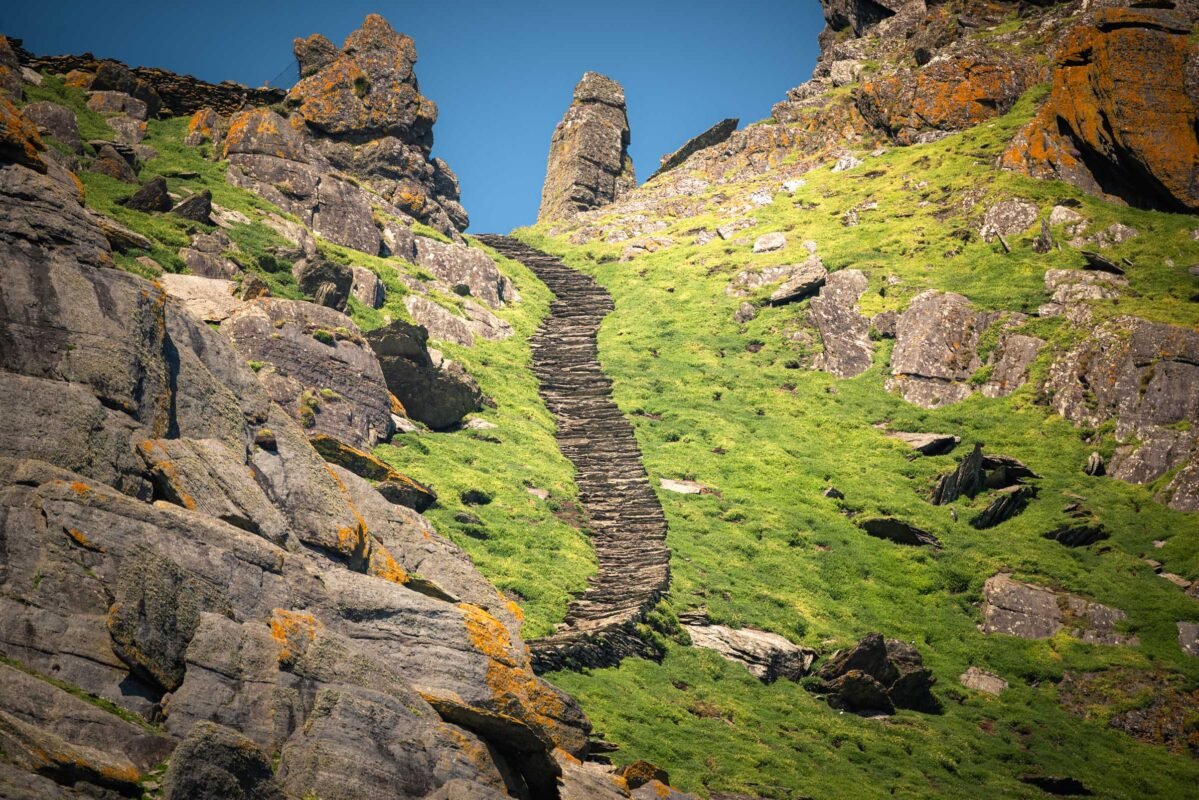
Once at the top, you’ll find a remarkably well-preserved complex of six beehive huts (clocháns), two oratories, a small cemetery and the remains of garden terraces. The beehive huts were built without mortar, with stones that spiral inward to form a domed roof. Despite centuries of Atlantic storms, these structures still stand.
On the southern peak lies an even more remote hermitage, accessible only via a dangerous route along the cliffs. This area is largely closed to the public.
Little Skellig: Paradise for Gannets
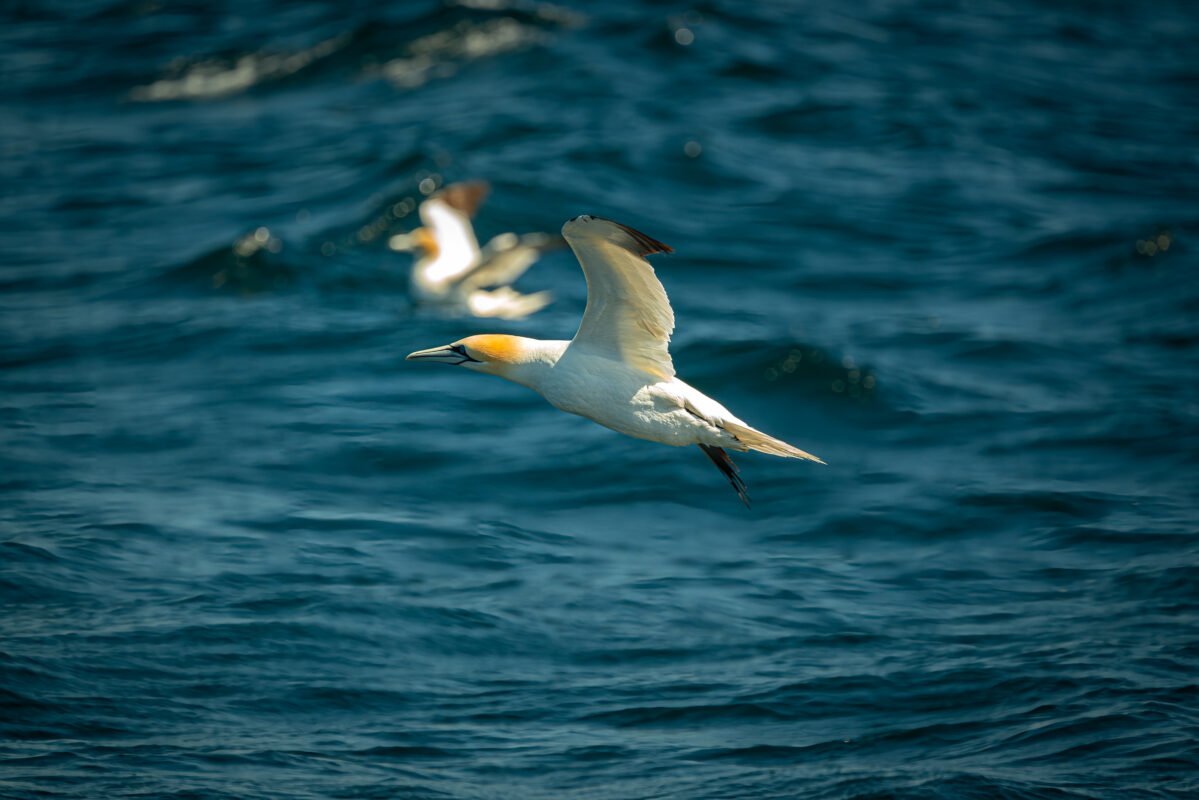
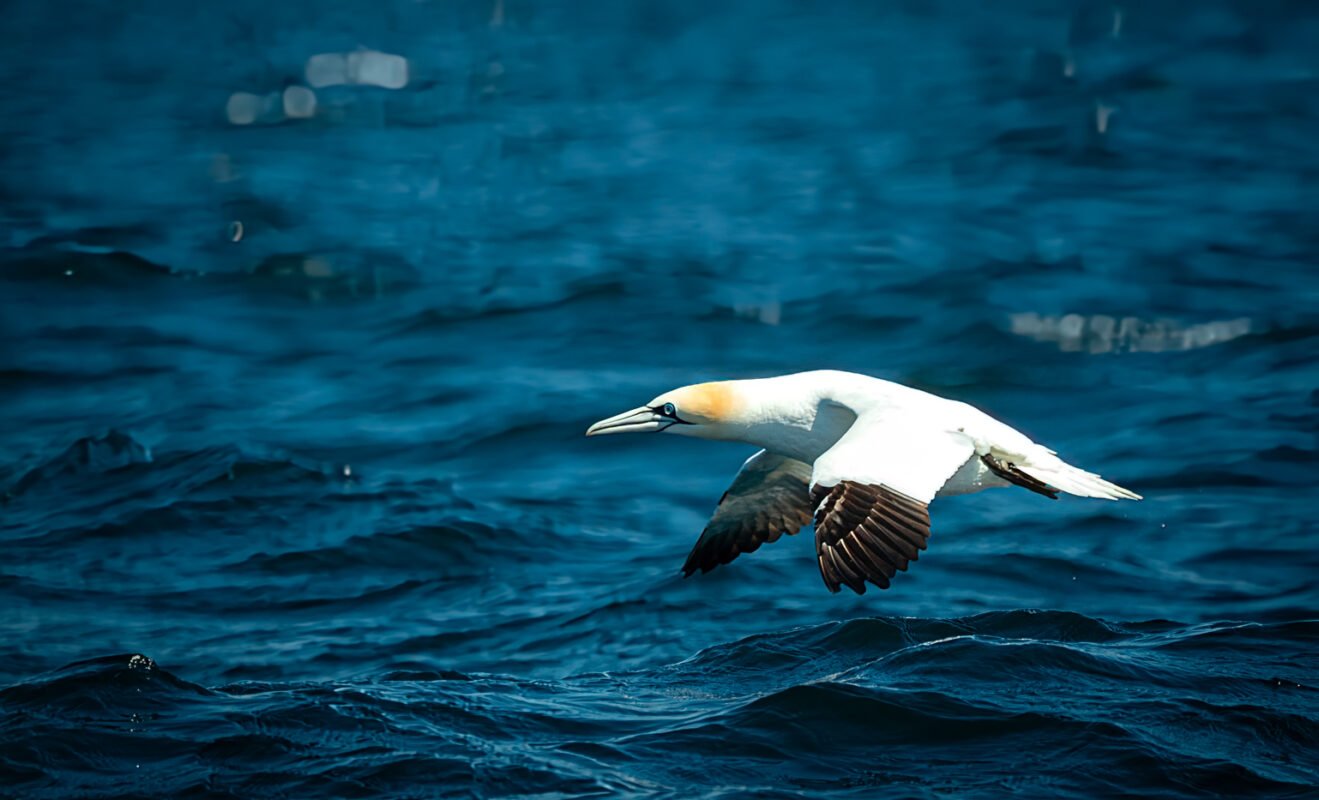
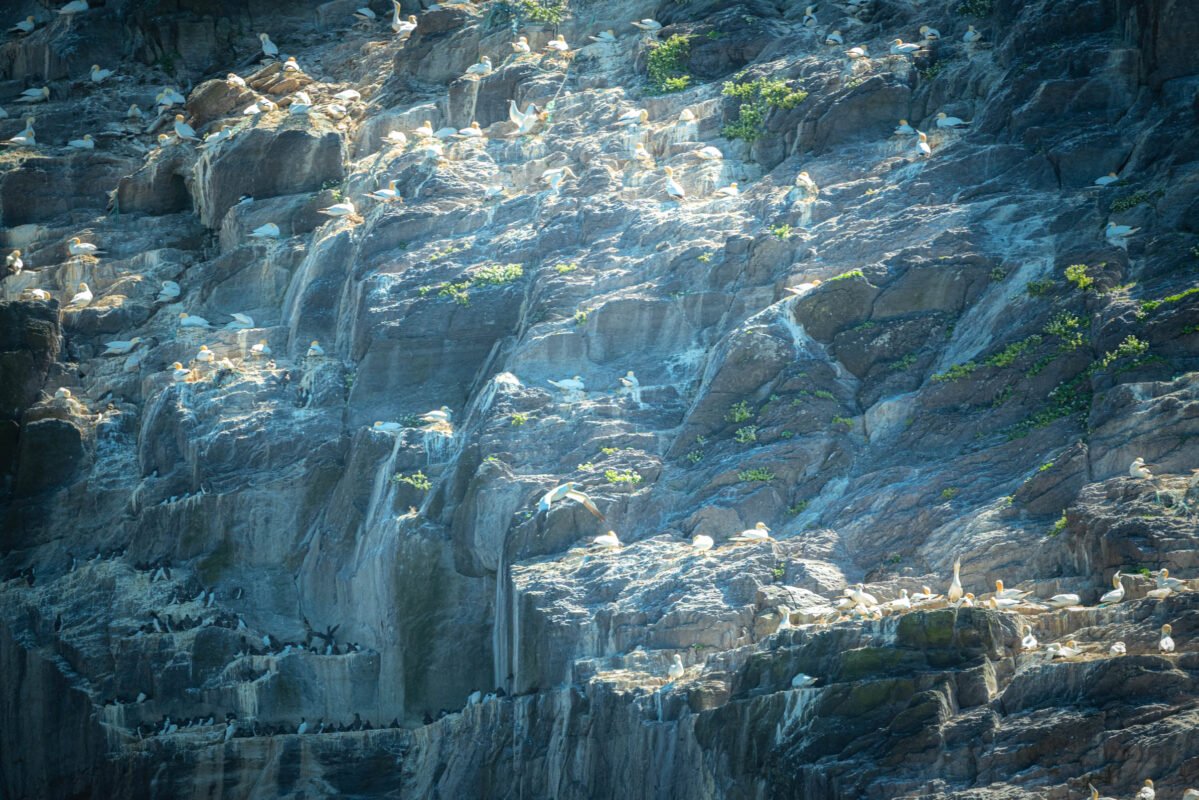
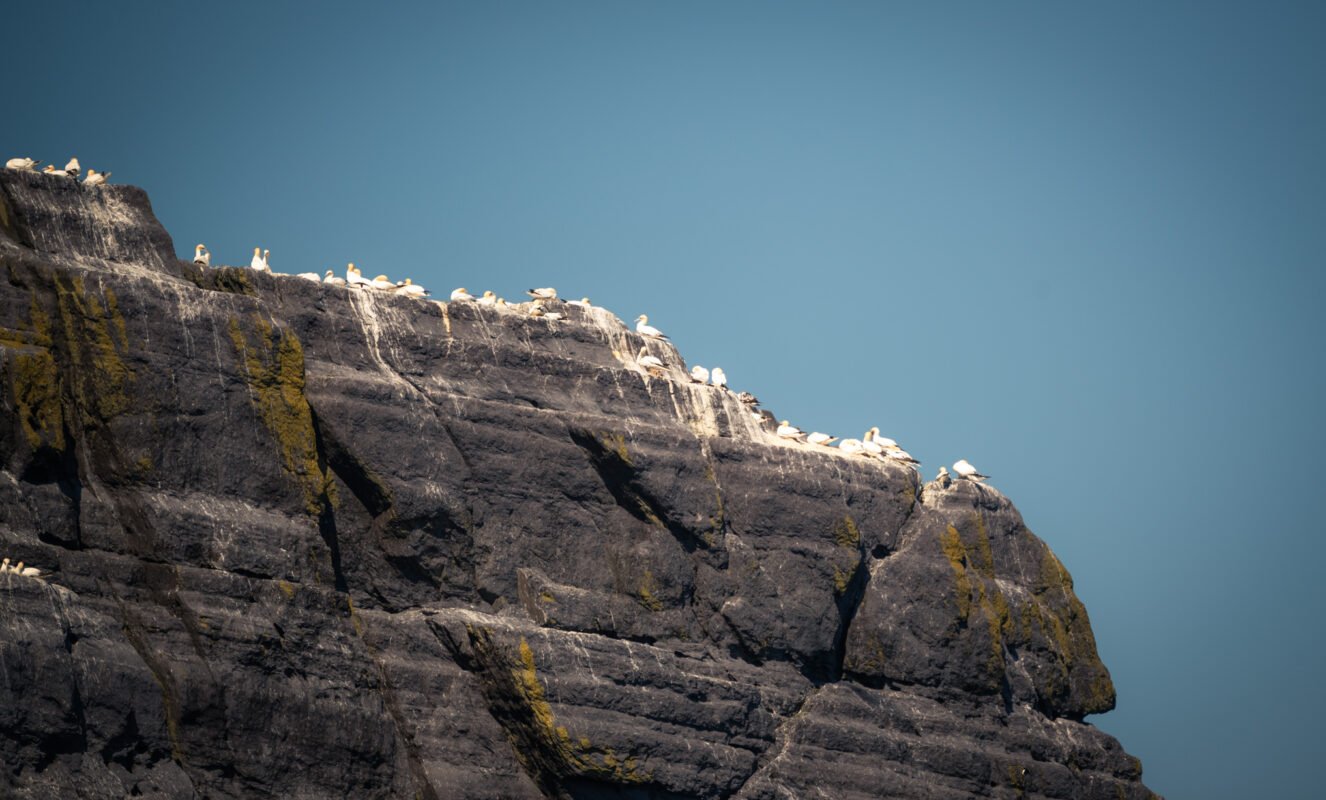
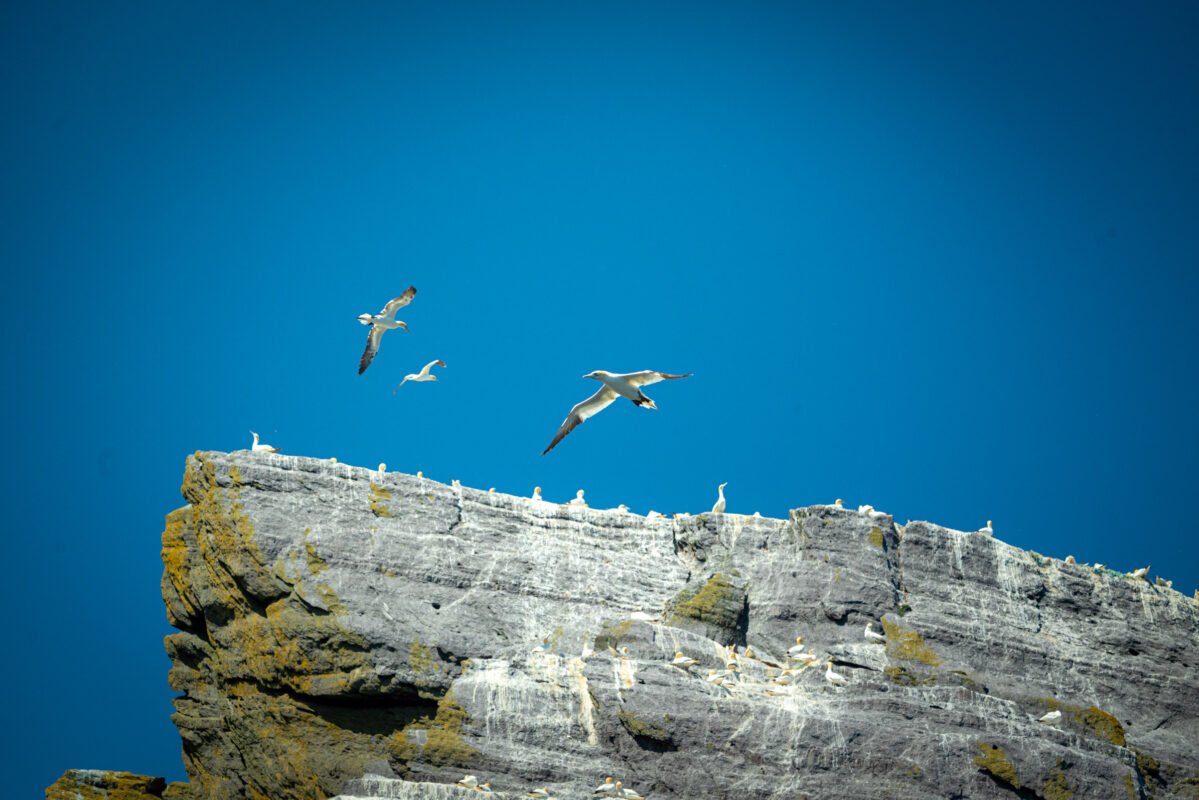
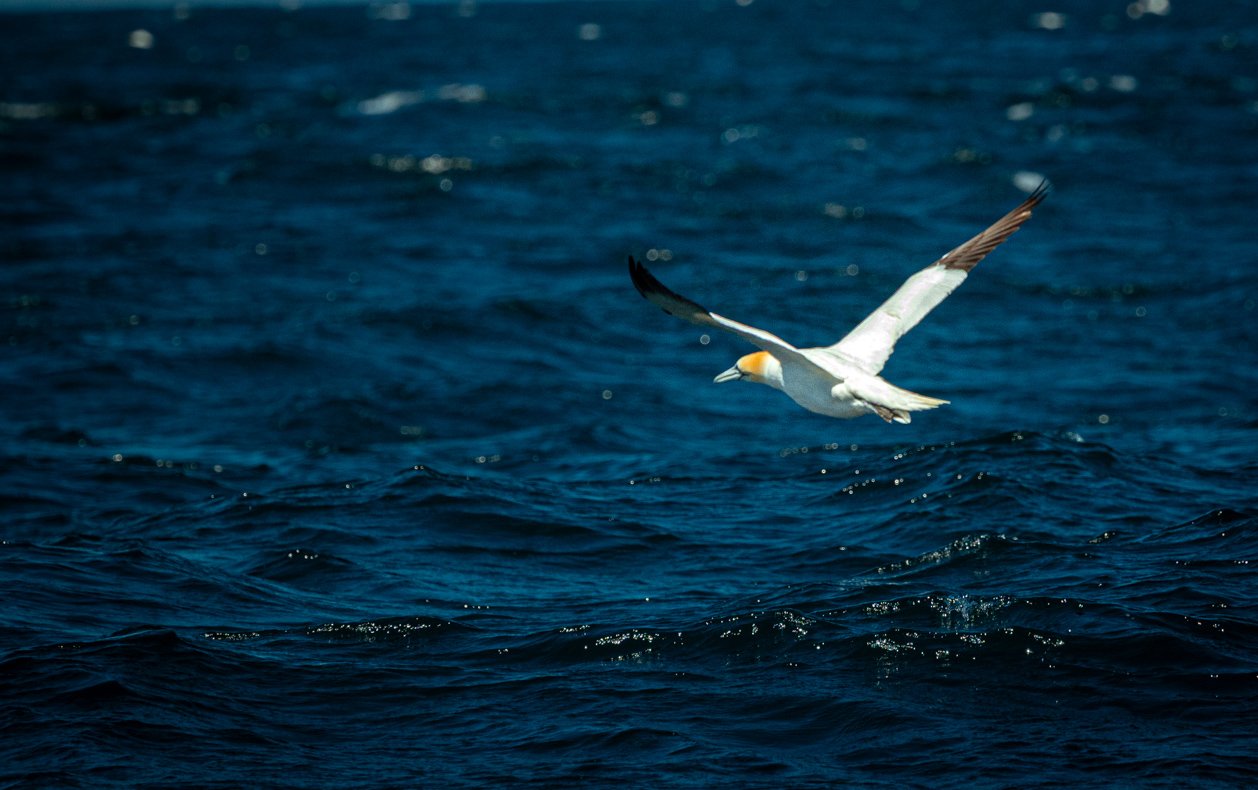
Little Skellig is a protected bird sanctuary where landing is not permitted. The island hosts the second-largest gannet colony in the world with approximately 27,000 breeding pairs. When you approach the islands, you’ll see the white rock – but it’s not snow or chalk, it’s thousands of gannets occupying every available ledge.
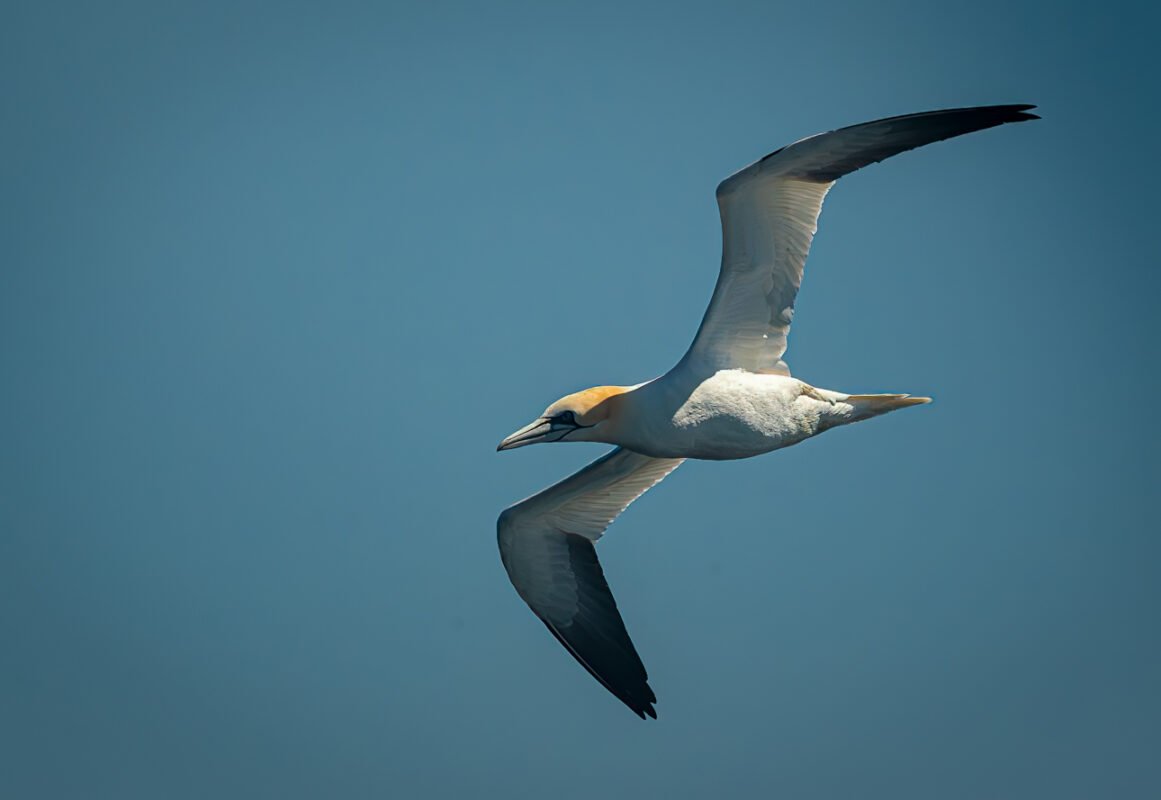
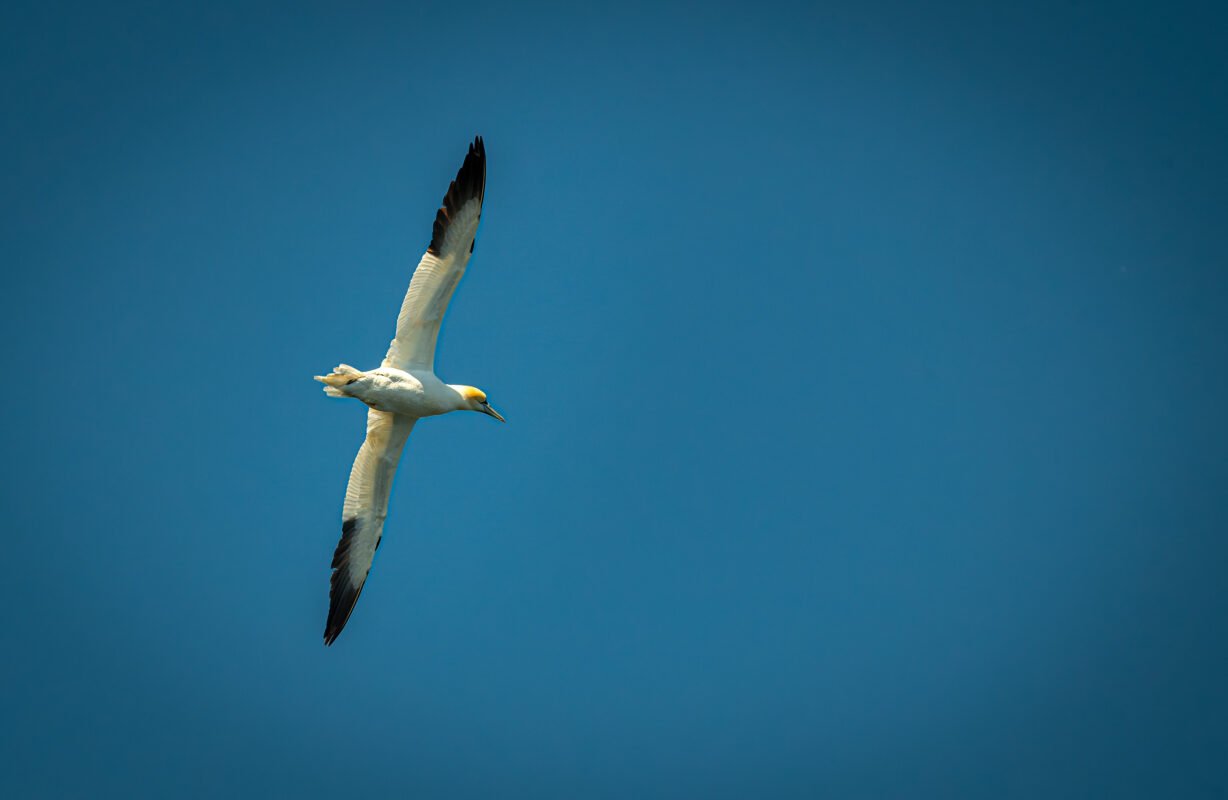
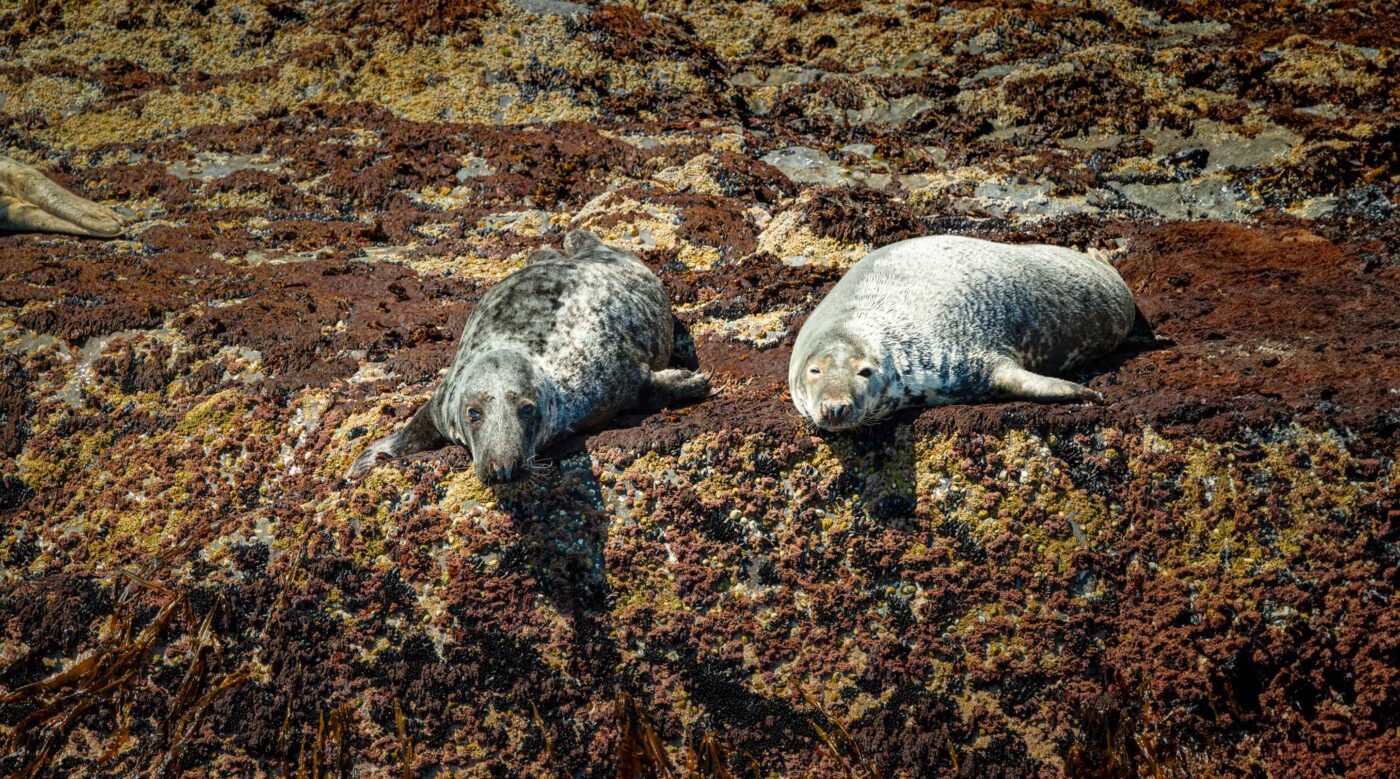
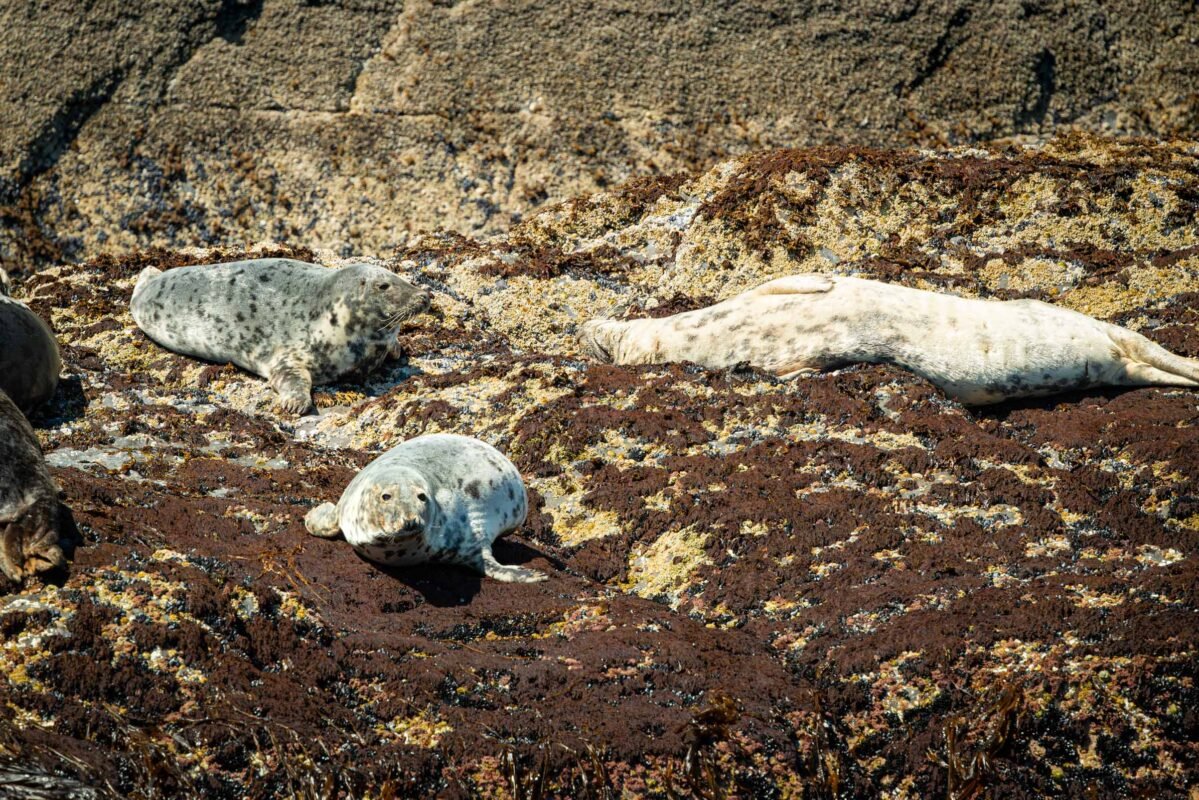
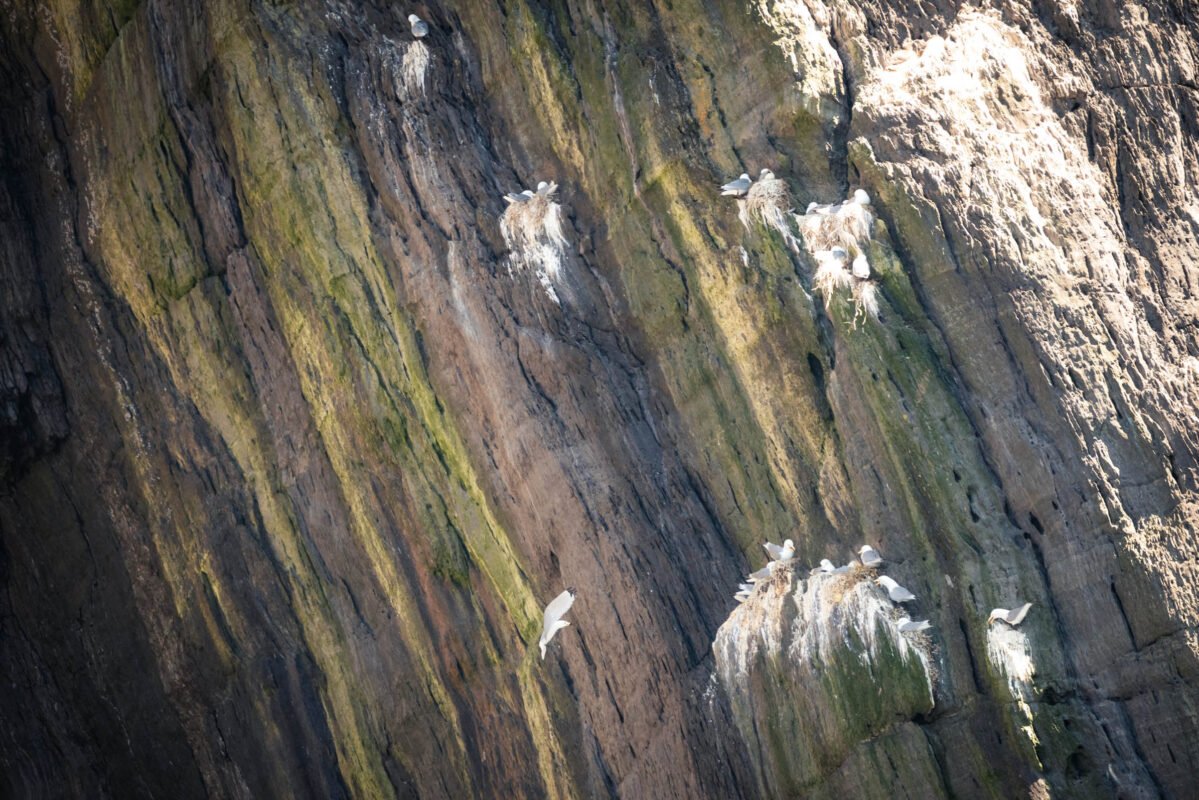
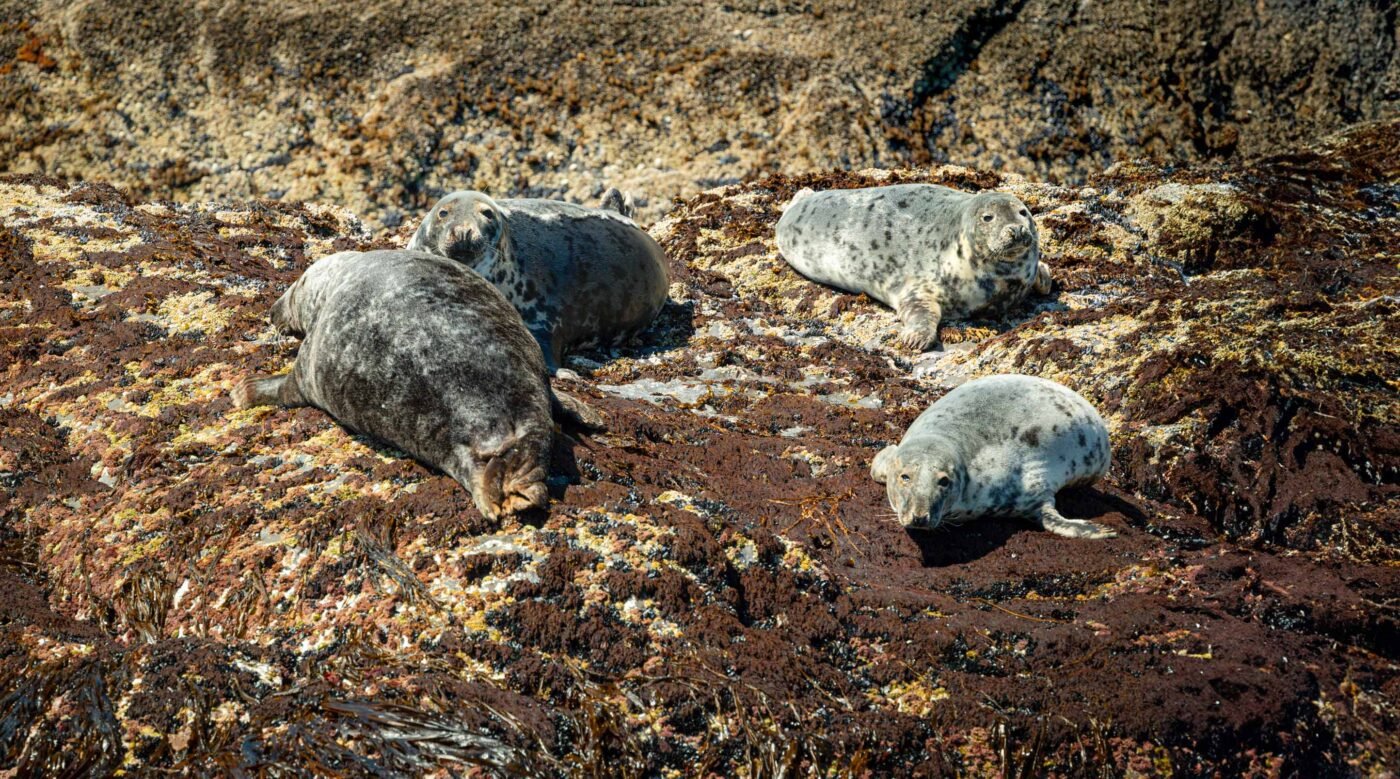
On and around both islands live countless seabirds: puffins (more than 4,000 on Skellig Michael), European storm petrels, Manx shearwaters, kittiwakes, guillemots and razorbills. In the surrounding waters you may spot grey seals, dolphins and sometimes even whales.
Along the way, there’s also a very good chance you’ll encounter various seals basking on the rocks.
Location and Getting There
The Skellig Islands lie along the Skellig Ring, a scenic coastal route that forms part of the famous Ring of Kerry. The fishing village of Portmagee is the main departure point for boat tours.
| From Killarney | ~80 km (~1 hour 25 min) |
| From Kenmare | ~55 km (~1 hour) |
| From Dingle | ~110 km (~1 hour 50 min) |
| From Cork | ~150 km (~2 hours 15 min) |
| From Kerry Airport | ~75 km (~1 hour 15 min) |
Important: The roads to Portmagee are narrow and winding. Always allow 30 minutes extra beyond what your GPS indicates – you’ll encounter slow-moving traffic, campervans and narrow passages.
Types of Boat Tours
There are two types of boat tours to the Skellig Islands:
- Landing Tour: You actually go ashore on Skellig Michael and have ~2.5 hours to explore the island and climb to the monastery. Only possible from mid-May to end of September.
- Eco Tour (cruise): The boat sails around both islands, comes very close but you don’t go ashore. Ideal for families, people with fear of heights or those who can’t manage the 618 steps. Available from March to November.
Boat Tour Prices (2025)
| Landing Tour | €115-€140 per person |
| Eco Tour adults | €60-€70 |
| Eco Tour students | €55-€65 |
| Eco Tour children | €50-€55 |
| Eco Tour family (2+2) | ~€240 |
Tip: Landing tours are extremely popular and often fully booked months in advance. Book as early as possible – preferably as soon as bookings open (usually in early spring). Children under 12-14 years (depending on the operator) are not permitted on landing tours.
The Portmagee Area
The area around Portmagee offers much more than just the Skellig Islands. The Skellig Ring is an 18 km coastal route that passes spectacular cliffs and beaches. Take the time to explore this beautiful part of the Wild Atlantic Way.
Highlights
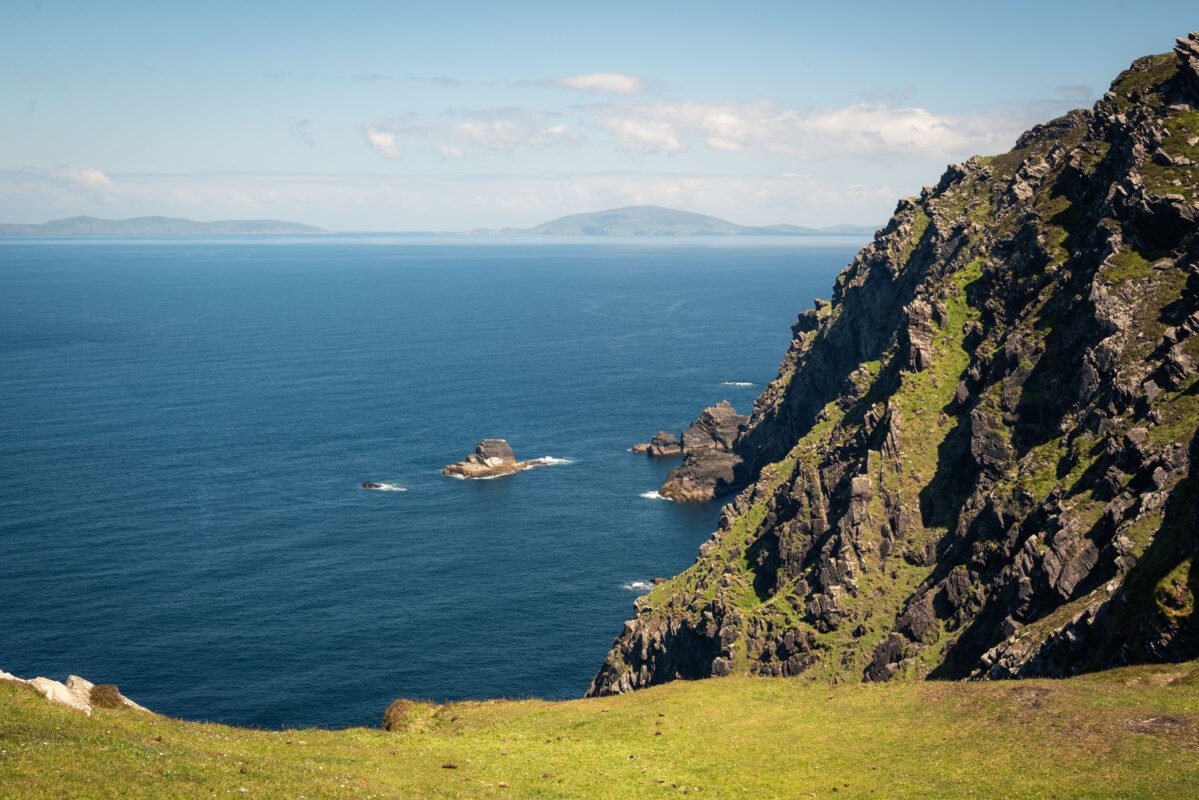
- Kerry Cliffs: Spectacular cliffs over 300 metres high – higher than the Cliffs of Moher! The best viewpoint for the Skellig Islands from the mainland.
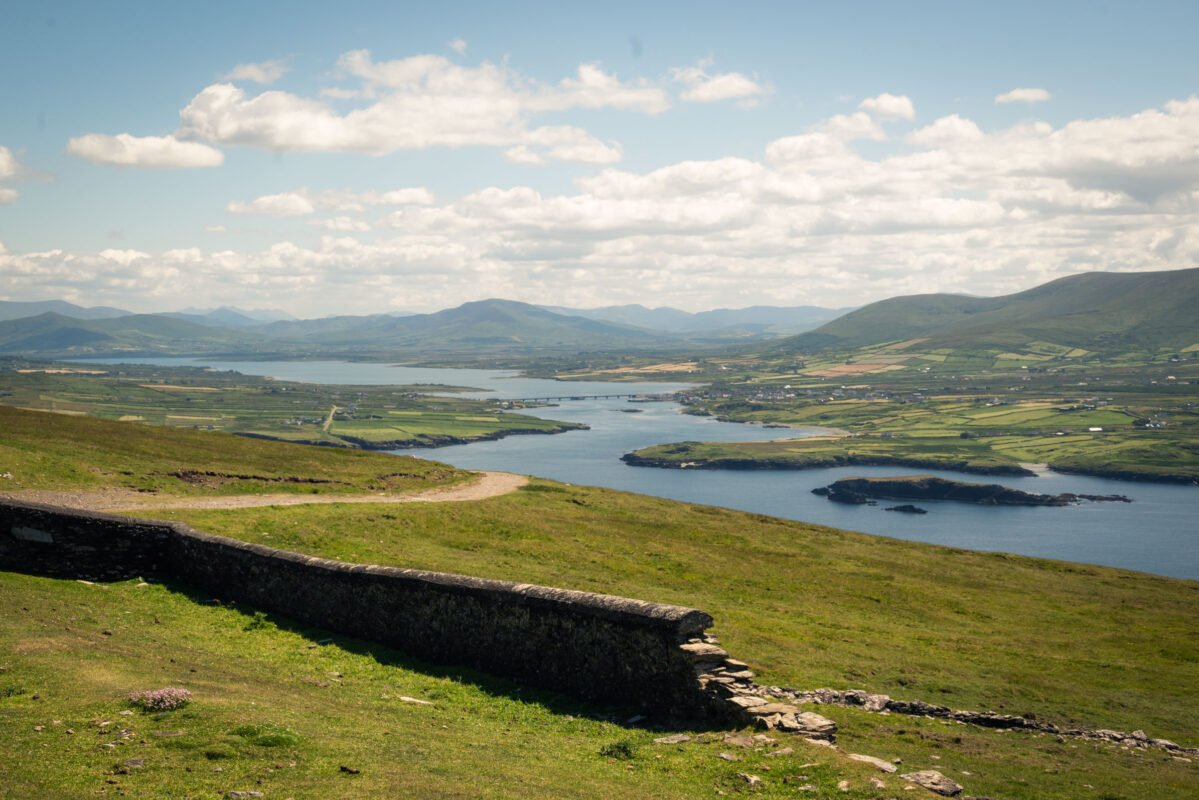
- Bray Head (Valentia Island): Impressive walk to an 1815 signal tower with panoramic views of the Skelligs and Dingle Peninsula.
- Valentia Island: Accessible via bridge from Portmagee. Visit the Tetrapod Trackway (385 million year old fossils), the lighthouse and the Skellig Experience Centre.
- Skellig Experience Centre: Visitor centre with film and exhibitions about the Skellig Islands – perfect when weather makes a boat trip impossible.
- Portmagee Whiskey: Distillery with tours through 300 years of seafaring history.
Photography at the Skellig Islands
The Skellig Islands are among the most photogenic places in the world. The dramatic rock formations, the contrast of grey granite against the blue ocean, and the countless birds offer endless possibilities.
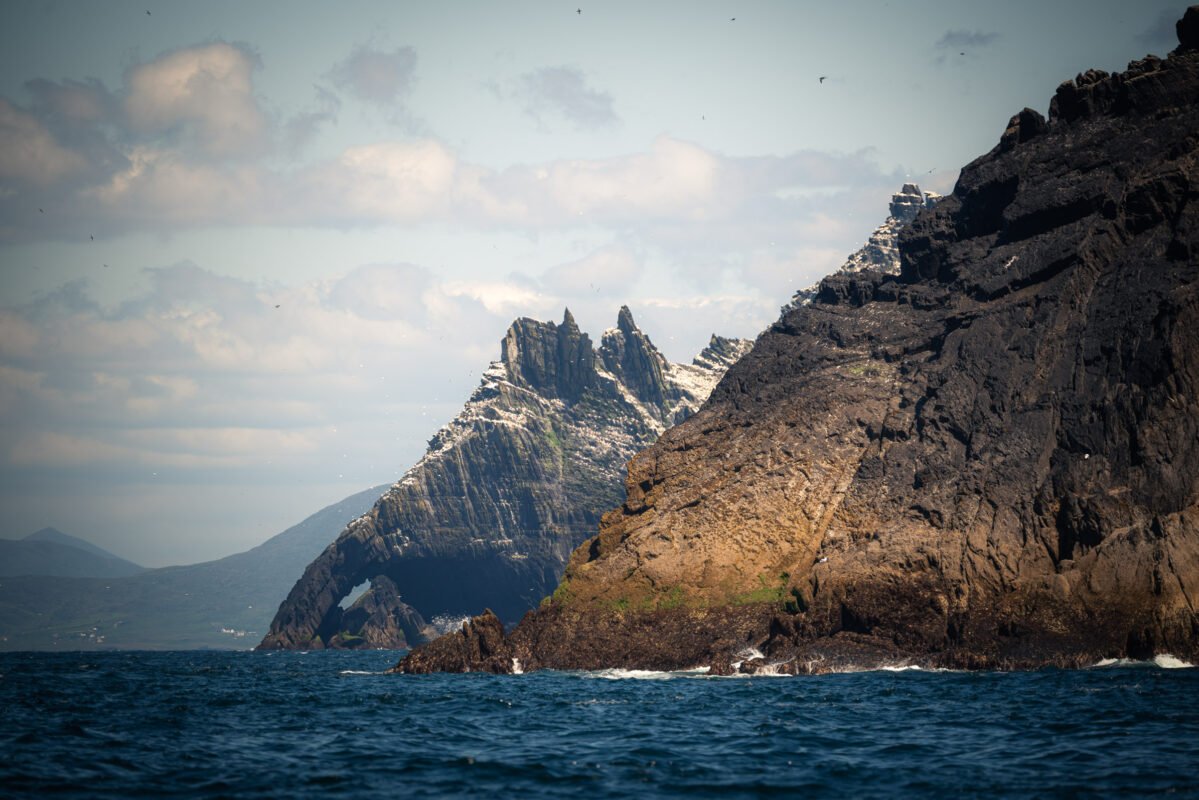
Photography tip – On the boat: Keep your camera ready throughout the entire crossing. The approach to Skellig Michael is spectacular, and you may encounter dolphins along the way. A telephoto zoom (70-200mm or longer) is ideal for bird photography on Little Skellig.
Photography tip – On the island: You have approximately 2.5 hours on Skellig Michael. Take your time at the monastery – the light changes constantly. The beehive huts with the ocean in the background are the iconic shot. Don’t forget to photograph the puffins scurrying around their burrows.
Equipment: Bring a weather-resistant camera or rain cover – sea spray and mist are inevitable. A wide-angle lens is perfect for the monastery ruins, a telephoto lens for the birds. Don’t forget extra batteries – the wind and cold drain power quickly.
Use a fast shutter speed on the boat. The swell of the sea makes it particularly difficult to get sharp photos, especially when it comes to birds in flight.
Hiking Routes in the Area
The coastline around Portmagee is beautiful and invites exploration on foot. Since we had to wait for our boat to depart, we first did a walk to Bray Head. After returning from our boat trip, we visited the Kerry Cliffs.
Route 1: Bray Head Loop (Valentia Island)
A spectacular walk to the top of Bray Head on Valentia Island, with panoramic views of the Skellig Islands, the Kerry Cliffs and Dingle Peninsula. The path leads to an 1815 signal tower and along dramatic cliffs.
| Distance | 4.5-9 km (depending on route) |
| Duration | 2.5 hours |
| Elevation gain | ~240 m |
| Difficulty | Moderate |
| Start | Bray Head Car Park (€2 parking) |
| Markings | Purple arrows on white background |
From Portmagee, drive over the bridge to Valentia Island and turn immediately left. Follow the signs to Bray Head. The first 2 km climb gradually along a wide stone road to the signal tower. From here you already have spectacular views. The loop route continues further up along the cliffs, but the return section can be muddy and uneven.
Route 2: Kerry Cliffs
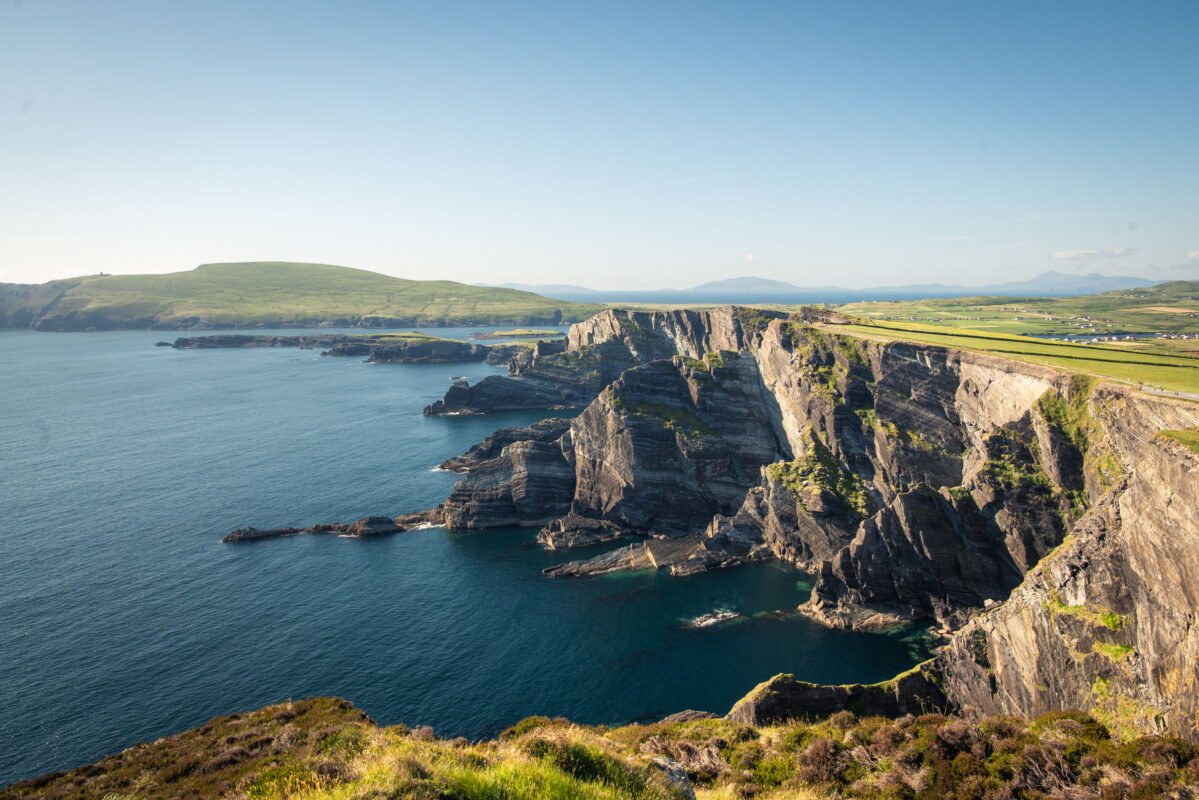
The Kerry Cliffs are the highest cliffs on the Ring of Kerry – over 300 metres above the ocean, higher than the famous Cliffs of Moher! This is also the closest point on the mainland to see the Skellig Islands.
| Distance | ~2 km (return) |
| Duration | 45 minutes |
| Difficulty | Easy (steep incline to viewpoints) |
| Entry | €5 per person (2025) |
| Facilities | Parking, toilets, café |
| Opening hours | 9:00-19:00 (longer in summer) |
The Kerry Cliffs are located along the Skellig Ring, approximately 6 minutes’ drive south of Portmagee. The path from the car park leads to two viewpoints. The left viewpoint offers the best views of the Skellig Islands and Puffin Island.
Best Time to Visit
The Skellig Islands are only accessible during the summer season, and even then a visit is entirely dependent on the weather. The Atlantic Ocean can be unpredictable – on average only 65% of planned landing tours actually go ahead.
| March-April | Eco tours available, gannets return to Little Skellig |
| Mid-May-August | Landing tours available, best chance to see puffins |
| September | Final landing tours, less crowded, puffins have departed |
| October-November | Eco tours only, chance of whales and dolphins |
Tip for puffins: Want to see the famous puffins? Plan your visit before mid-August. The birds arrive in late March/April and depart en masse in the second week of August when the chicks fledge.
Tip for flexibility: Plan several days in the Portmagee area. If your boat trip is cancelled due to weather, you’ll then have the opportunity to try another day. The disappointment of a cancelled trip is significant – be prepared.
Accommodation in the Area
The colourful fishing village of Portmagee is the ideal base for a visit to the Skellig Islands. The village has a charming harbour, several excellent pubs and is directly connected by bridge to Valentia Island.
Accommodation Options
- The Moorings Guesthouse: Historic building directly on the harbour, excellent restaurant
- Skellig Port Accommodation: Modern rooms and apartments with sea views, jacuzzi and sauna
- Skellig Ring House Hostel: Budget option with self-catering kitchen and shared facilities
- Valentia Island: Various B&Bs on the island, accessible via bridge or ferry
Eating and Drinking
- The Moorings Restaurant: Excellent seafood in Portmagee harbour
- The Bridge Bar: Cosy pub with traditional Irish atmosphere and live music
- Skellig Seafront Restaurant: Fish and shellfish with harbour views
Practical Information
Costs (2025)
| Landing tour | €115-€140 |
| Eco tour | €60-€70 |
| Kerry Cliffs entry | €5 |
| Bray Head parking | €2 |
| Skellig Experience Centre | ~€6-€8 |
What to Bring for the Boat Trip
- Waterproof jacket and layers: Even on sunny days it can be cold and wet at sea
- Sturdy hiking boots: Essential for the 618 steps on Skellig Michael
- Seasickness medication: The crossing can be rough, even on calm days
- Water and snacks: There are no facilities on the island
- Sunscreen and sunglasses: Reflection off the water is intense
- Camera with rain protection: Sea spray and mist are inevitable
Important Rules
- Maximum 180 visitors per day: 15 boats × 12 passengers – hence the need to book early
- No dogs: Dogs are not permitted on landing tours (allowed on eco tours)
- Age restriction: Children under 12-14 years not permitted on landing tours
- Stay on the paths: The cliffs are dangerous and breeding birds must not be disturbed
- Take all rubbish with you: There are no bins on the island
Tip: Arrive at least 20 minutes before departure at the harbour. The exact departure time may change depending on tides and weather conditions – you’ll usually receive the final time by email the day before.
Frequently Asked Questions
How long does the boat trip to Skellig Michael take?
The crossing from Portmagee to Skellig Michael takes approximately 45-60 minutes, depending on weather conditions. On the landing tour you have ~2.5 hours on the island, after which you sail back. The total tour takes about 5 hours.
Is the climb on Skellig Michael difficult?
The 618 steps to the monastery are steep and can be slippery. You need reasonable fitness and sturdy hiking boots are essential. There are no handrails or fences. For people with fear of heights or mobility issues, the eco tour is a better alternative.
When is the best time to see puffins?
Puffins are present from late March/April to the second week of August. The best months are May, June and July when they are actively flying back and forth with fish for their young.
What if my boat trip is cancelled?
If cancelled due to weather you receive a full refund. Unfortunately, rebooking is usually not possible as tours are booked out weeks in advance. Some operators offer to switch to an eco tour with a refund of the difference.
Are there toilets on Skellig Michael?
Yes, there are toilets on Skellig Michael at the landing pier. Most boats also have a toilet on board. However, it’s wise to check this with your specific operator.
Can I visit the Skellig Islands independently?
No, you can only visit the islands with a licensed boat operator. There are 15 boats with permits to land on Skellig Michael. Private boats are not allowed to moor. Eco tours do sail around the islands but don’t land.
In Conclusion
The Skellig Islands are among the most impressive places we have ever visited. It’s not just the spectacular natural beauty – the dramatic rocks rising from the ocean, the thousands of seabirds, the infinity of the Atlantic horizon – but above all the realisation that monks chose to live, pray and die here 1,400 years ago.
A visit to Skellig Michael requires planning, flexibility and a bit of luck with the weather. But when everything comes together – the boat ploughing through the swell, the first glimpse of that pyramid of rock on the horizon, the climb up the ancient steps, the moment when you stand among the beehive huts with nothing but ocean around you – then you understand why this is one of the most extraordinary places on earth.
In my photo book Ireland – Land of Stories and Rugged Coasts you can get a great impression of this magical country through many stunning photographs. Most locations are also provided with QR codes so you have direct access to additional location information.
Useful Links
- Skellig Michael Official – skelligmichael.com
- Heritage Ireland – heritageireland.ie
- Skellig Experience Centre – skelligexperience.com
- Kerry Cliffs – kerry-cliffs.com
- Discover Kerry – discoverkerry.com
Location on the Map
Related Articles
- Glanteenassig Forest Park – Hidden gem on the Dingle Peninsula
- Abbey Island – Tidal island on the Ring of Kerry
- Fanore Beach – Wild beach on the west coast
- Cliffs of Moher – Ireland’s most famous cliffs
- Inisheer – The smallest Aran island
Gallery
Pictures say more than words: