



Cliffs of Moher – The Impressive Coast of County Clare
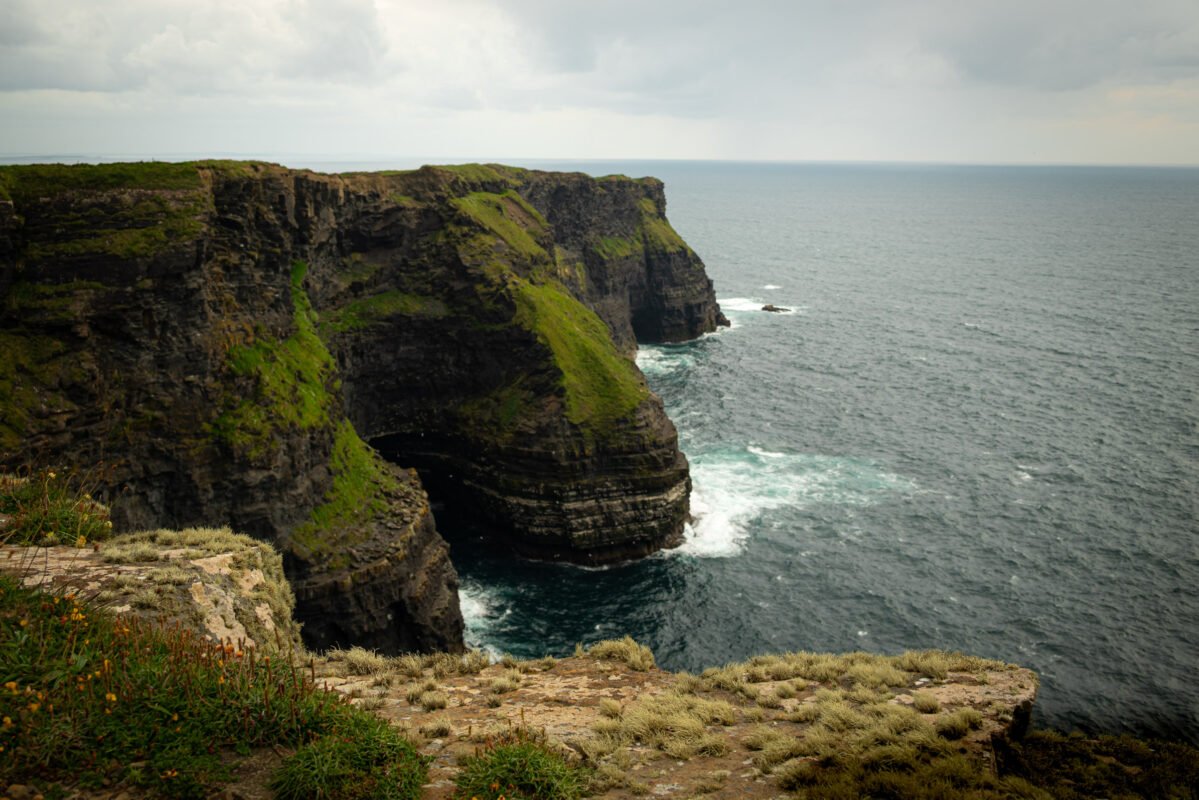
Along the west coast of Ireland, where the Atlantic Ocean relentlessly pounds against the rocks, the Cliffs of Moher rise impressively from the sea. These imposing cliffs are among Ireland’s most famous natural attractions – and with good reason. The steep walls, rising up to 214 metres above the ocean, form a breathtaking backdrop of rugged nature, wind and endless horizon.

About the Cliffs of Moher
The Cliffs of Moher are sea cliffs located at the southwestern edge of the Burren region in County Clare. They stretch for 14 kilometres along the Atlantic coast and are among the highest sea cliffs in Europe. The cliffs are part of the Burren and Cliffs of Moher UNESCO Global Geopark and a “Signature Point” on the Wild Atlantic Way.
| Length | 14 km coastline |
| Height | 120 m (Hag’s Head) to 214 m (highest point) |
| Rock age | 313-326 million years |
| UNESCO Geopark | Since 2011 |
| Visitors per year | 1.5 million+ |
| GPS Visitor Centre | 52.9719° N, 9.4285° W |
The name “Moher” comes from an old fort called Mothar that once stood on Hag’s Head, the southernmost point of the cliffs. The rock was formed when a river deposited sand, silt and clay into an ancient seabed – close to the equator! Over millions of years, these layers were compressed into the sedimentary rocks you see today, complete with fossils.
A Day Full of Highlights – From Inisheer to the Cliffs
Of course, a visit to the world-famous Cliffs of Moher cannot be missed when travelling along the Irish west coast. So this attraction was also on our list of destinations. We had chosen to stay close to the Cliffs of Moher so I could also visit in the evening for the right light. The owner recommended a trip to Inisheer. You can read more about that here. That seemed like an excellent idea, so we quickly booked a crossing. In this case, a ticket with the detour past the Cliffs of Moher.
So the next day began with a boat trip to the island of Inisheer, the smallest of the Aran Islands. After several unforgettable hours on the island, we sailed back towards the mainland – but the return journey was just as special. The boat made the extra detour past the Cliffs of Moher, allowing us to admire these giants not from above, but from the sea. It was impressive to experience the power of nature up close: the sound of the waves, the echo of birds, and the cliffs rising vertically from the water.

Tip: Book a boat trip that sails past the cliffs – the perspective from the sea is completely different and you really experience just how high and imposing these rock walls are. Plus, you can view the seabird colonies up close.
Walking on Top of the Cliffs
That evening we visited the Cliffs again, this time from above. The light was extremely suitable, it was clear with some clouds and a beautiful sunset was in prospect. From our accommodation in Liscannor, it was a short drive to the Cliffs of Moher Liscannor Walk Parking. A car park near the southern access to the Cliffs. It’s less crowded here than the main entrance via the Visitor Centre.

After a short walk you arrive at the Cliffs. Here a panoramic view unfolds over the coastline, the Aran Islands and on clear days even the mountains of Connemara.
Cliffs of Moher Coastal Walk
The next day it was time for a longer walk along the coast. We selected a route from our stay up north along the coast. The walking route to the Cliffs of Moher from Liscannor up north towards Doolin is one of the most beautiful coastal paths in Ireland and offers new light and new colours at every moment of the day.
| Total distance | 14 km |
| Duration | 4-5 hours |
| Difficulty | Moderate |
| Climbing | 350 m |
Note (2025): Large sections of the Cliffs of Moher Coastal Walk are currently closed due to safety works. The southern section from Liscannor/Hag’s Head (6 km) is fully closed. From Doolin you can still walk to Surfers Path (~1.5 km). Around the Visitor Centre ~3.5 km is accessible. Check the current status at cliffsofmoher.ie before you go.
Nature and Photography
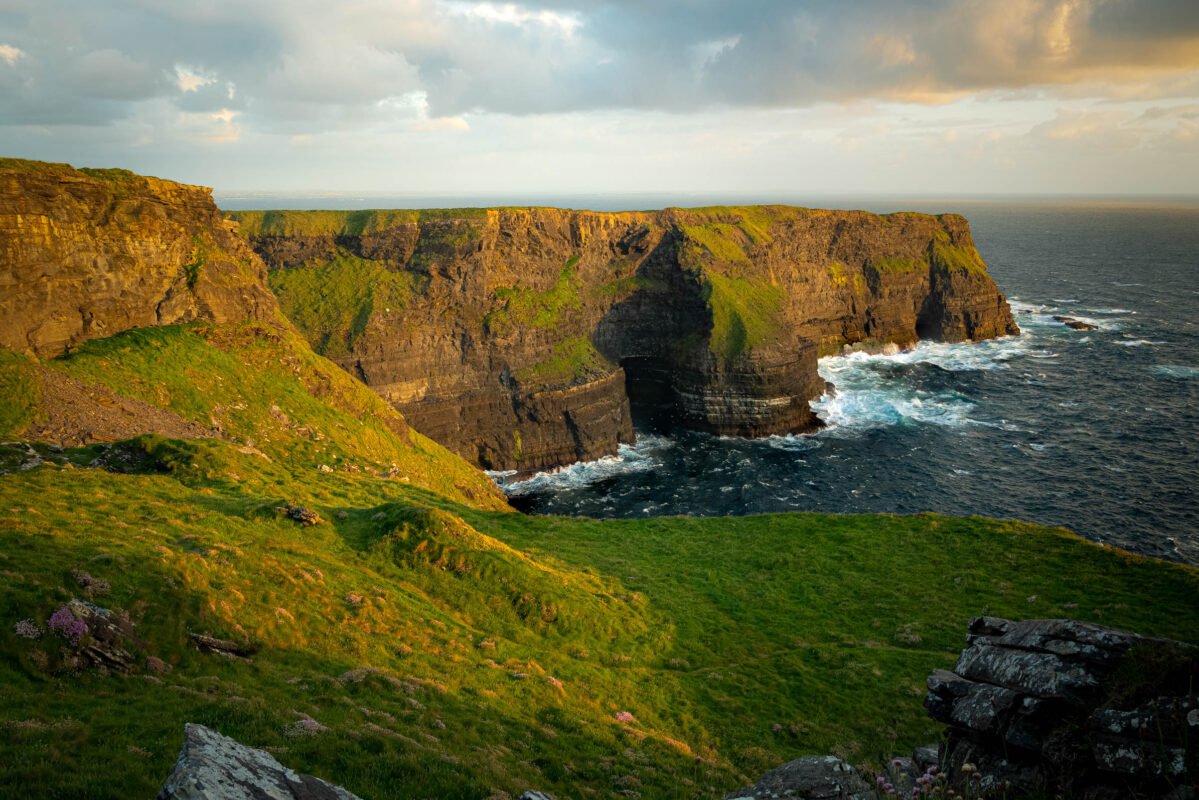
For nature lovers and photographers, this is a dream location. The combination of sky, sea and rock offers endless variations. The evening sun colours the rock walls in gold and orange. From the walking paths you can spot numerous seabirds, including puffins in spring. We didn’t see them, apparently we were too late in the season. The sound of the ocean and the wind makes it an intense experience – a place that naturally leaves you speechless.

Birds and Wildlife
The Cliffs of Moher are a Special Protection Area (SPA) under the EU Birds Directive and one of the most important breeding sites for seabirds in Ireland. More than 30,000 pairs of seabirds nest here, spread across more than 20 species.
- Puffins – The stars of the cliffs, present from late March to mid-July (best time: May-June)
- Guillemots and Razorbills – The most common species, in large numbers
- Kittiwakes – Noisy colonies on the rock walls
- Peregrine Falcon – One of the fastest animals in the world (up to 240 km/h)
- Chough – Recognisable by red beak and legs
In the water you may spot dolphins, seals and even basking sharks on calm days.
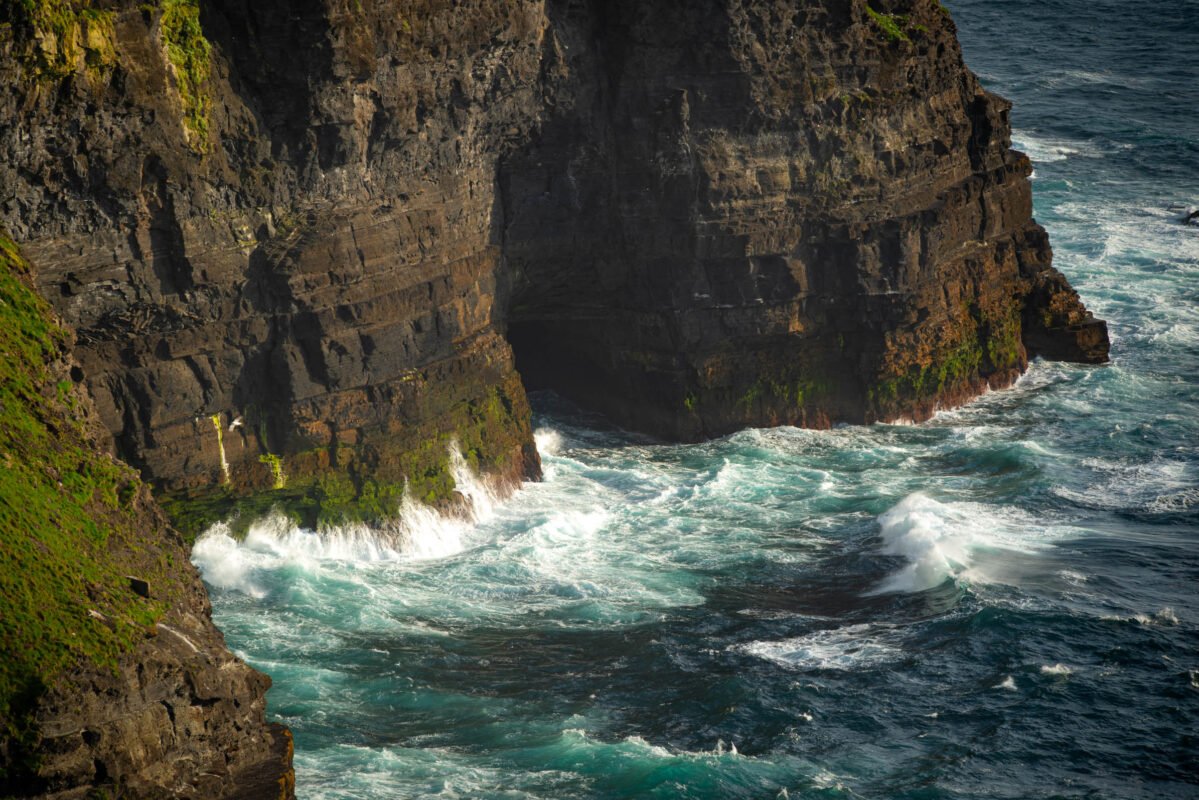
Photography tip: Don’t forget your zoom lens and zoom in on the details of the various rock formations or the water crashing against the Cliffs. From the South Platform you have the best view of the puffin colony on Goat Island.

O’Brien’s Tower
O’Brien’s Tower is a round stone tower at the highest point of the cliffs (214 metres), built in 1835 by Sir Cornelius O’Brien as a viewing point for Victorian tourists. From the tower on a clear day you can see five counties: Clare, Galway, Kerry, Limerick and Connemara. The Aran Islands and the Twelve Pins mountain range are also visible. Access to the tower is included in the entrance fee.
Accommodation and Dining
During our stay we stayed again at Aiteall Accommodation in Liscannor – a small-scale B&B with a hospitality you rarely encounter. Many hotels would be jealous of the quality of this accommodation.
The owner not only gave us the tip to visit Inisheer, but also knew exactly when the light at the Cliffs is most beautiful. From there you’re within minutes of the visitor centre or the coastal walking route.
After a day by the sea you can enjoy a wonderful meal in Doolin at McDermott’s Pub or McGann’s. Traditional dishes, live music and a warm atmosphere – exactly what you need after a day full of wind and waves. That evening we chose to eat nearby at Vaughan’s Anchor Inn in Liscannor. An excellent choice in our opinion.
Best Time to Visit
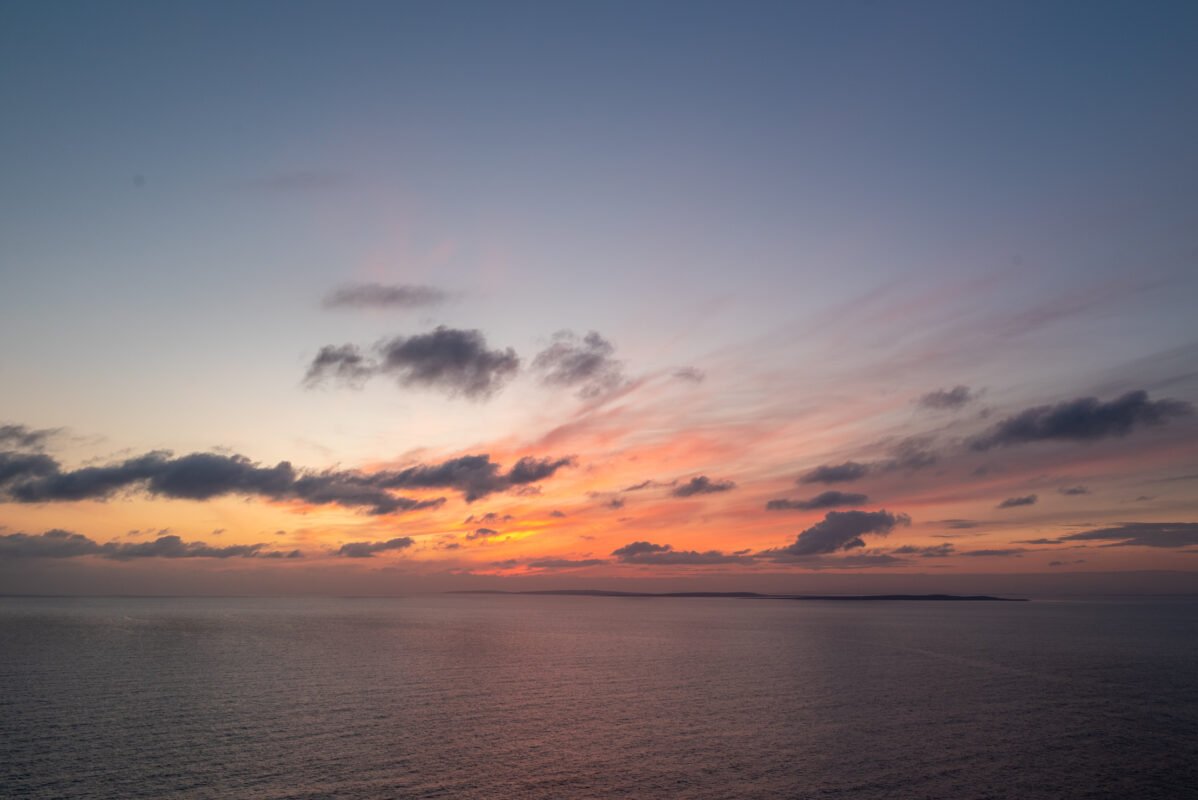
The Cliffs of Moher are impressive all year round, but the months of May to September offer the most pleasant conditions. In June, when we were there, the days were long and the light soft. The cliffs then bathe in warm colours and there are more opportunities to sail along the coast by boat. Those who want to avoid the crowds should choose early morning or late evening. But in June, when we were there, there wasn’t too much crowding. It was perfectly manageable, especially in the evening it was nice and quiet.
| Spring (Mar-May) | Seabirds return, wild flowers, changeable weather |
| Summer (Jun-Aug) | Longest days, best weather, puffins present, busiest period |
| Autumn (Sep-Nov) | Dramatic skies, golden light, quieter |
| Winter (Dec-Feb) | Impressive storms, waves up to 9 metres, very quiet |
Photography tip: For photography, evening is the best time. The sun then sets and illuminates the Cliffs in beautiful warm colours. Arrive early (before 10:30) or late (after 16:00) to avoid the crowds.
In Conclusion
The Cliffs of Moher are not just a tourist attraction, but a place where nature and emotion come together. Whether you view them from the sea or from the land, the experience leaves no one unmoved. Combined with a visit to the Aran Islands, this makes for one of the most beautiful days you can experience on the Irish west coast.
More inspiration? Also read about Inisheer or Fanore Beach. Or check out my Ireland book or the Ireland calendar 2026 with QR codes to the locations.
Practical Information
Visitor Centre and Access
The Cliffs of Moher Visitor Experience is an award-winning visitor centre built into the hillside to minimise impact on the landscape. The centre offers an interactive exhibition, the Ledge 4D Experience (virtual flight along the cliffs), two cafés and a gift shop.
| Summer opening hours | 08:00 – 21:00 (May-Aug) |
| Winter opening hours | 09:00 – 17:00 (Nov-Feb) |
| Shoulder season | 08:00 – 19:00 (Mar-Apr, Sep-Oct) |
| Closed | 24, 25 and 26 December |
| Admission includes | Parking, paths, O’Brien’s Tower, exhibition |
Tickets must be booked online. Prices vary by time slot – early morning and evening are cheaper than peak hours (11:00-16:00).
Getting There
| From Galway | 80 km (1 hour 15 min) |
| From Doolin | 7 km (10 min) |
| From Liscannor | 6 km (8 min) |
| From Shannon Airport | 75 km (1 hour) |
| From Dublin | 280 km (3 hours 30 min) |
| Public transport | Bus Éireann route 350 (Ennis-Galway) |
Facilities
- Parking: Large car park (included in admission)
- Wifi: Free in the Visitor Centre
- Cafés: Puffin’s Nest and Cliffs View Café
- Binoculars: Available on loan free of charge
- Luggage storage: Available
- Dogs: Welcome in outdoor areas (on lead), not inside the building
- Accessibility: Fully wheelchair accessible, “Lifts of Moher” electric vehicle available
- Audio Guide: Free app with audio guide
Films Shot at the Cliffs
The Cliffs of Moher have been used as a film location in several famous films:
- Harry Potter and the Half-Blood Prince – The cave where Dumbledore and Harry find a Horcrux
- The Princess Bride – The “Cliffs of Insanity”
- Father Ted – The famous scene with Father Jack’s wheelchair
Frequently Asked Questions
How high are the Cliffs of Moher?
The Cliffs of Moher vary in height: 120 metres at Hag’s Head in the south to 214 metres at the highest point just north of O’Brien’s Tower. This makes them one of the highest sea cliffs in Europe.
Do you need to book tickets in advance?
Yes, tickets must be booked online via cliffsofmoher.ie. This guarantees access and helps spread crowds. Early morning and evening slots are often cheaper. The price includes parking, access to all paths, O’Brien’s Tower and the exhibition.
When can you see puffins?
Puffins are present from late March to mid-July, with the best chance of sightings in May and June. They nest on Goat Island, visible from the South Platform. The population at the Cliffs is growing, while elsewhere in Europe it is declining.
Can you visit the Cliffs of Moher by boat?
Yes, Doolin Ferry offers boat trips past the cliffs that provide a spectacular perspective from the sea. You can also book a combo ticket with a visit to the Aran Islands. The trip gives you the chance to experience the full height of the cliffs and see seabirds up close.
Is the Cliffs of Moher Coastal Walk open?
Large sections of the trail are currently closed (2025) due to safety works. The southern section from Liscannor (6 km) is fully closed. From Doolin you can walk ~1.5 km to Surfers Path. Around the Visitor Centre ~3.5 km is accessible. Full reopening is not expected until 2026.
What is the best time to visit the Cliffs?
For photography, late afternoon/evening is ideal because of the warm light. To avoid crowds: arrive before 10:30 or after 16:00. May to September offers the best weather, but the cliffs are impressive all year round – winter storms create spectacular waves up to 9 metres high.
Location on the Map
Gallery
Pictures speak louder than words:

Useful Links
- Cliffs of Moher Visitor Centre – official information and tickets: cliffsofmoher.ie
- Doolin Ferry Company – boat trips and Aran Islands: doolinferry.com
- Burren and Cliffs of Moher Geopark – UNESCO Geopark info: burren.ie
- Aiteall Accommodation Doolin – charming B&B: aiteallaccommodation.com
- Wild Atlantic Way – route information: wildatlanticway.com