
Johan
Contents(22)
- 01Feanwâlden — a spring morning among geese, ducks and a fleeing roe deer
- 02About Feanwâlden and It Bûtefjild
- 03How to get to Feanwâlden?
- 04By car
- 05By public transport
- 06Parking at Feanwâlden
- 07History of Feanwâlden
- 08The surroundings of Feanwâlden
- 09It Bûtefjild
- 10Houtwiel
- 11Noardlike Fryske Wâlden
- 12Photography at Feanwâlden
- 13Walking route near Feanwâlden
- 14The Bûtefjild loop — 4.3 km
- 15Best time to visit Feanwâlden
- 16Practical information
- 17Access and costs
- 18Facilities
- 19What to bring
- 20Frequently asked questions
- 21Finally
- 22Useful links
Feanwâlden — a spring morning among geese, ducks and a fleeing roe deer
It is one of those mornings in May when you simply cannot stay home. The sky above Feanwâlden is clear, the trees are full of fresh green and the sound of birds that have launched their spring offensive fills the air. I know this loop well — I walk it regularly, sometimes several times a week — and yet it surprises me every single time. Today, on 13 May, is no different. Barely a hundred metres into the forest, something darts away between the trunks. A roe deer. So close that I startle at the rustle and the sudden clatter of hooves on the forest floor. In one fluid movement the animal disappears among the trees, as though it was never there.
That is precisely what makes this walking route near Feanwâlden so worthwhile. It is not a grand expedition, not an adventure that requires hours of driving. It is nature right next to a village — raw, vibrant and full of surprises, even if you have walked the route dozens of times before.

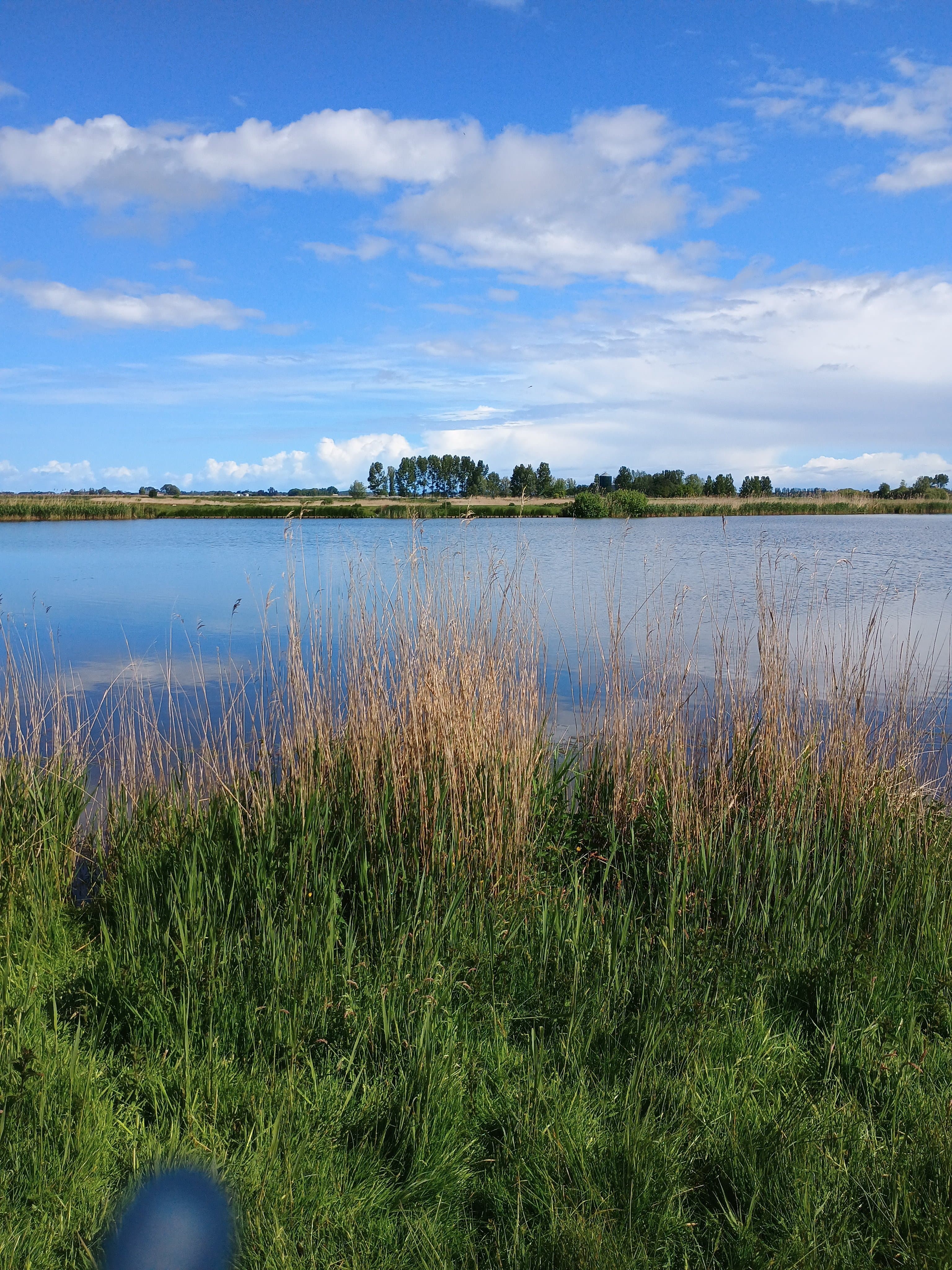
The open landscape of It Bûtefjild near Feanwâlden on a clear spring morning.
About Feanwâlden and It Bûtefjild
Feanwâlden — in Dutch Veenwouden — is a village in the municipality of Dantumadiel in the province of Friesland, situated on a boulder-clay ridge at the edge of the higher-lying Pleistocene grounds. The village has around 3,400 inhabitants and its own railway station, making it easily accessible for walkers from outside the region. What makes the village special is its direct location next to the nature reserve It Bûtefjild: 322 hectares of nature that literally begins where the built-up area ends.
It Bûtefjild is a managed nature reserve of It Fryske Gea, the Frisian nature conservation organisation. The area combines wet grasslands, reed beds and rough vegetation, open water, alder carr forests and willow scrub. This variety makes it a rich habitat for waterfowl, dragonflies, the moor frog and mammals such as the roe deer. In spring the area is at its most beautiful: young geese and ducks find their way along the banks, and the foliage of the alders and willows colours every reflection in the water green.
Location: Feanwâlden (Veenwouden), municipality of Dantumadiel, Friesland
GPS coordinates starting point: 53.2650° N, 5.9850° E (near Feanwâlden station)
Area of It Bûtefjild: 322 hectares
Best season: Spring (April–June) for young birds and blossom; autumn for colours
Admission price: Free
Difficulty: Easy — suitable for all ages, including families with children
Route length: approx. 4.3 km
Estimated walking time: approx. 1 hour 15 minutes
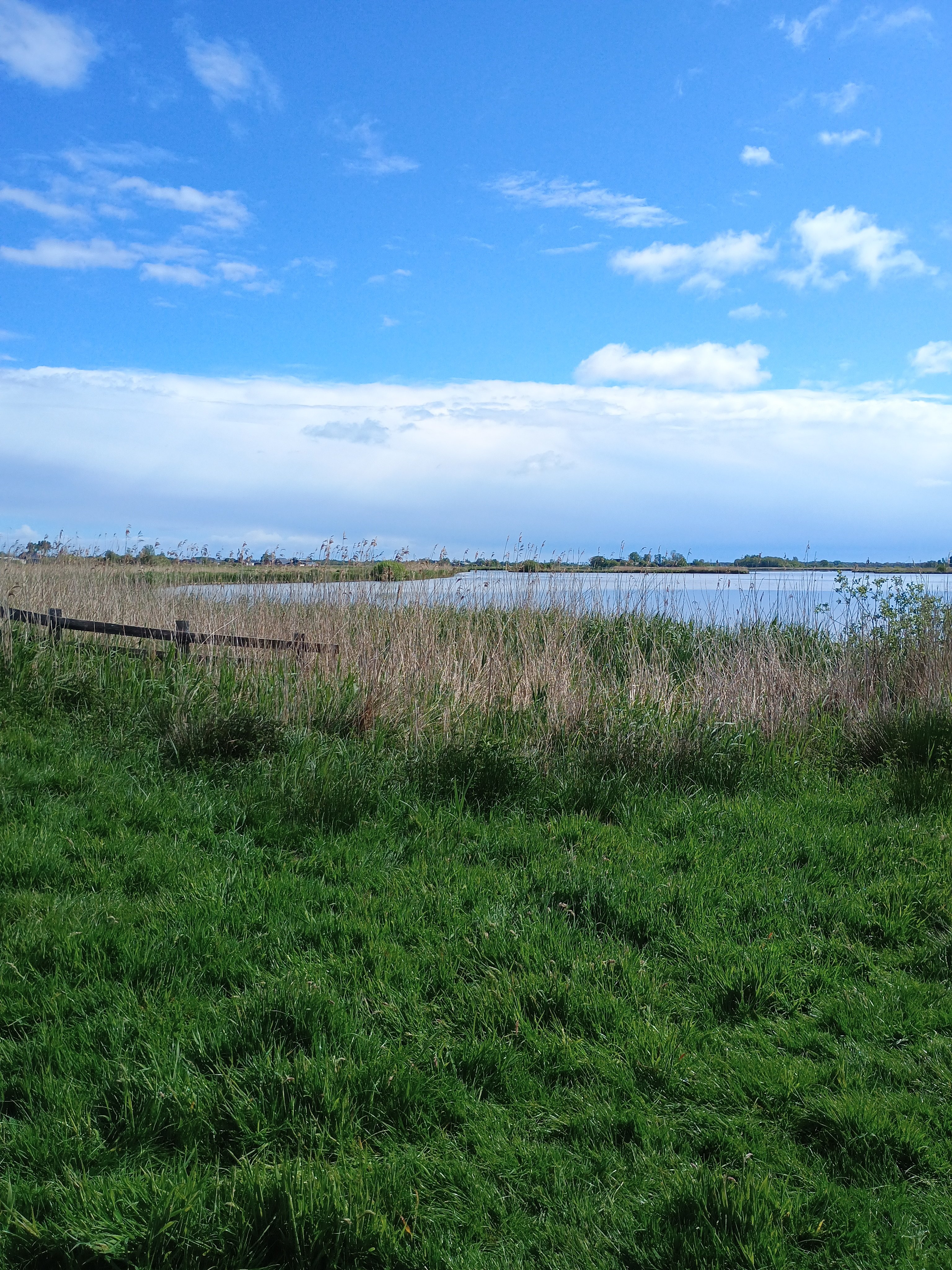
Reed banks and open water are the hallmark of It Bûtefjild — an ideal habitat for waterfowl.
How to get to Feanwâlden?
By car
Feanwâlden is located in the north-east of Friesland and is easily accessible via the A7 and A31. From the major cities the distances are as follows:
From Amsterdam: approx. 150 km, drive about 1 hour 45 minutes via the A7 towards Groningen, exit Drachten, then via the N356.
From Rotterdam: approx. 240 km, drive about 2 hours 30 minutes via the A10, A7 or A1/A6 to Friesland.
From Utrecht: approx. 190 km, drive about 2 hours via the A27 and A6 towards Leeuwarden, then via Dokkum.
By public transport
Feanwâlden has its own NS railway station on the Leeuwarden–Groningen line. From Amsterdam Centraal the journey takes approximately 2 hours and 6 minutes, with a change at Leeuwarden or Groningen. You can reach the area from the station, but in that case I would recommend a longer route that takes approximately a full day.
Parking at Feanwâlden
Right next to the station there is a Tourist Transfer Point (TOP) of Recreatieschap Marrekrite. You can park here free of charge, less than 50 metres from the bus and train station. There is also a bicycle storage facility and the option to hire a bike. Those arriving by car can start their day without any parking hassle — a rare luxury. You can also park directly at the starting point of the walking route described below.

The forest section of the route turns bright green in May with fresh foliage.
History of Feanwâlden
The name Feanwâlden — literally "peat forests" — reveals the origin of this part of Friesland. The village developed on a boulder-clay ridge at the edge of the peat area, a landscape type that has defined the character of this region for centuries. In the fourteenth century, the settlements of Sint-Johanneswâld and neighbouring hamlets stood here, gradually merging into the present-day village.
The surrounding land was largely peat bog during the Middle Ages, which generations of farmers reclaimed and excavated. This peat extraction left deep traces in the landscape: the pools, ditches and wet depressions you now see in It Bûtefjild are largely the result of centuries of peat cutting. What was once a source of fuel is now a living nature reserve — managed by It Fryske Gea, which actively restores and protects the area.

The meadows around Feanwâlden are a reminder of the agricultural past of this peat area.
The surroundings of Feanwâlden
It Bûtefjild
The central nature reserve around Feanwâlden is It Bûtefjild, which has a total of 16 kilometres of walking paths. The various sub-areas — including the Sippen-finnen with open water and reed marshes — are within walking distance of each other and are all freely accessible. In total the area offers space for several circular walks of varying lengths.
Houtwiel
Within walking distance of It Bûtefjild lies the Houtwiel, a small lake that also forms part of the walking network around Feanwâlden. It is a quiet spot, ideal for birdwatchers looking for waterfowl in a calmer setting than the reed banks of the Bûtefjild.
Noardlike Fryske Wâlden
The broader landscape area is called the Noardlike Fryske Wâlden — the Northern Frisian Forests. This bocage landscape of alder hedgerows, earth banks and woodland parcels is characteristic of the Frisian hinterland and is on UNESCO's World Heritage Tentative List. Feanwâlden is an excellent base for exploring this landscape type, also by bicycle.

Young ducks forage along the ditch banks — in May they are everywhere.
Photography at Feanwâlden
It Bûtefjild is an area that lends itself well to nature photography, precisely because it is so compact and nature comes so close. The combination of open water, reed banks, meadows and woodland edges offers multiple types of light and compositional possibilities in a single circular walk.
Best light: Early in the morning, shortly after sunrise, the light along the water features is softest and most diffuse. In May the sun is already high early, so for golden light you need to be on location before 7:30 am. In overcast weather the light works all day — ideal for close-ups of aquatic plants and birds without harsh shadows.
Best spots: The transition from meadow to water at the Sippen-finnen produces beautiful mirror images when it is calm. The woodland edges are good for backlit shots of fresh foliage in May. Waypoints 3 and 7 along the route offer open sightlines across the meadow where geese and ducks graze.
Focal lengths: For birds you need at least 300–400 mm; the animals allow you reasonably close, but are alert. For landscapes a standard 24–70 mm works perfectly. A macro lens is worthwhile if you want to capture the blooming of aquatic plants and bankside herbs.
What to avoid: Do not leave the path towards the reed banks — the ground is boggy and you will disturb nesting birds. Do not photograph roe deer with flash; the animal is already startled enough by you.
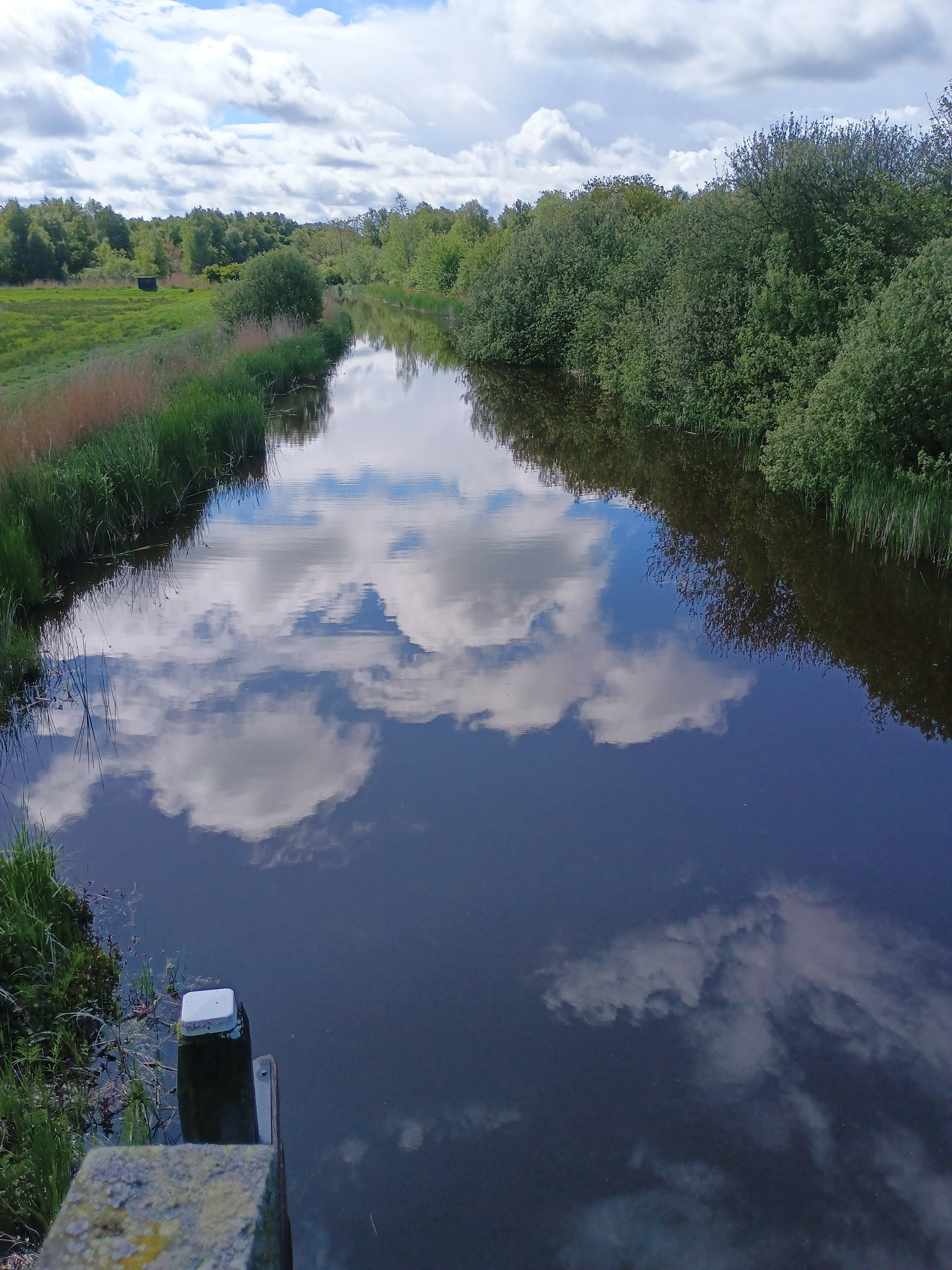
Young greylag geese are a permanent feature of the Feanwâlden landscape in May.
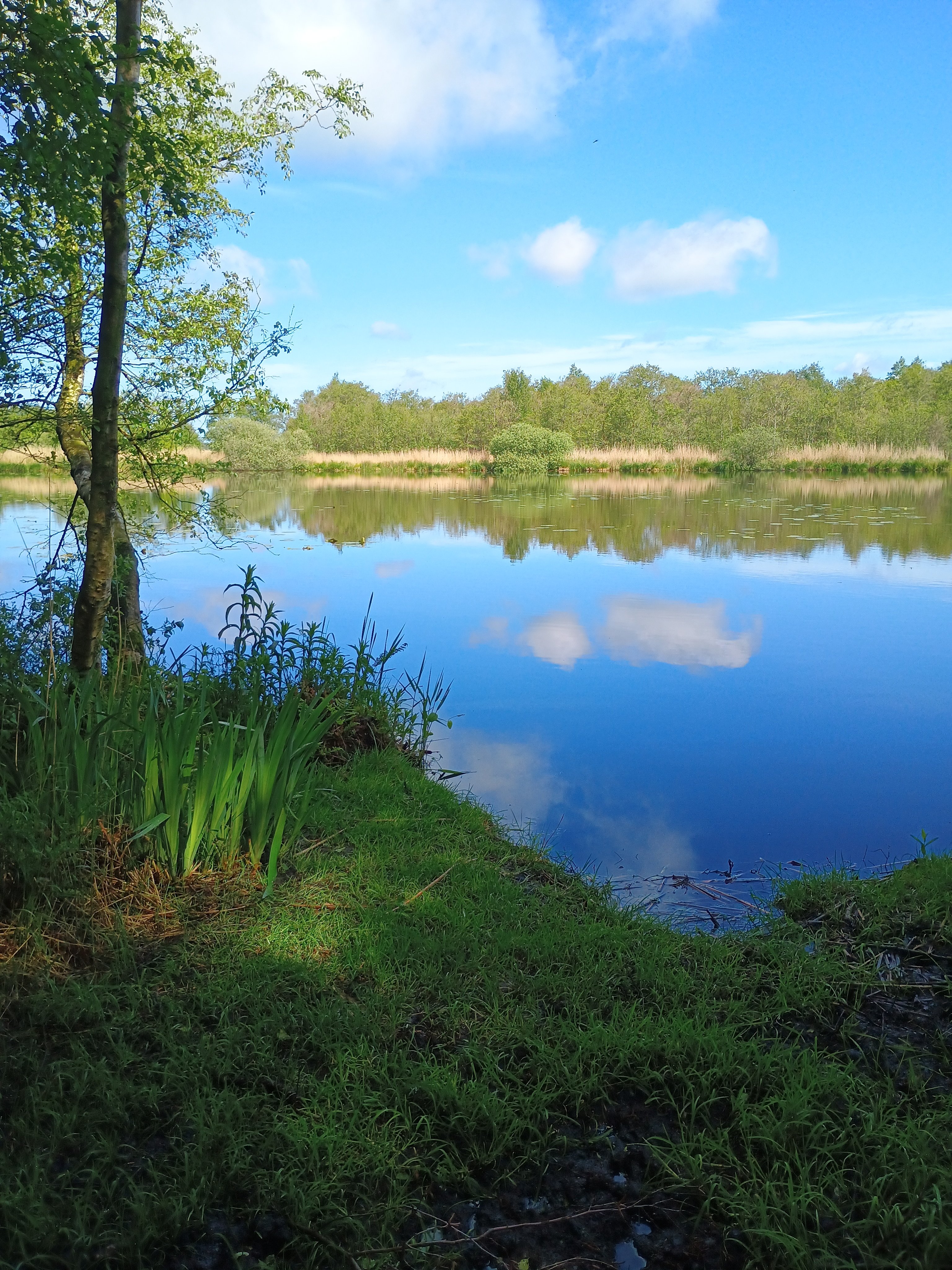
Water is everywhere in this beautiful landscape.
Walking route near Feanwâlden
The Bûtefjild loop — 4.3 km
Feanwâlden · 13 May
Hike
4.3 km
Distance
↑ 10 m
Ascent
1 h 24 min
Duration
This route starts at the car park by the small bridge on the road (Ûtefjild, 9269 TV Feanwâlden). Along the path you walk in a westerly direction into the open polder landscape. You quickly notice that this is no dull, monotonous little stroll: within the first few hundred metres, meadow, ditch bank and woodland edge alternate with each other. The grass stands tall, the air smells of wet earth and somewhere in the distance the cackling of greylag geese can be heard.
In early May the leaves are still a fresh green and the light falls through the canopy in a broken pattern on the ground. It is here that I encounter the roe deer. The animal stands still, looks at me for a fraction of a second, and then it is gone. Branches crack. Silence. My heartbeat briefly joins in.

Water is everywhere in this area.
The young geese I see here are already quite large for May — brown youngsters that barely resemble the grey adults. They graze undisturbed along the ditch bank, no more than a few metres from the path. A pair of ducks draws an inquisitive wake through the still water of a wide ditch.

The open landscape of the route — a big sky, long views, Frisian scenery at its finest.

The reed banks near waypoint 13 are still fairly bare in May, but grow dense during the summer months.
What makes the route so pleasant: there is no single stretch that gives you the feeling you are seeing the same surroundings twice. Meadow, water, forest — the three alternate constantly, and in spring nature does the rest.

Only on the main path are cyclists permitted. Do check the breeding season.
Best time to visit Feanwâlden
Spring (April–June) is the highlight. The birds are breeding, the young have just hatched, the foliage is fresh and the light is soft. Roe deer are active in May and June and come relatively close to the path. The meadows are full of flowering herbs. This is the period for those who want to get the most out of the area.
Summer (July–August) the area is lushly green but sometimes less dynamic in terms of fauna. The reed grows to its full height and closes off many ditch banks from view. The route is pleasant to walk, though mosquitoes can be a factor near the water features in calm weather.
Autumn (September–November) is the second highlight for photographers: the alders and willows turn yellow and brown, the morning mists hang low over the meadows and migratory birds make brief stops along the banks. October is the most beautiful autumn month in this area.
Winter (December–March) is quiet and austere. In frost, ice stills the ditches and pools, giving the area a completely different character. After a hard night you may encounter skaters on the larger water features. The bare trees offer long views into the forest — when the leaves are out you often see less of the forest birds in summer than in February.

On calm spring days the surroundings mirror perfectly in the ditches of It Bûtefjild.
Practical information
Access and costs
The walking route is completely free and open all year round. There are no gates, no access barriers and no mandatory registration. Parking at the Tourist Transfer Point (TOP) near the station is free. Parking at the start of the route mentioned is also free. It is rarely busy.
Facilities
Toilets: There are no public toilets directly in the area; the nearest facilities are in the village centre of Feanwâlden.
Food and drink: Bring your own; the village has a small supermarket and a few cafés and restaurants, but there is nothing in the area itself.
Accessibility: The greater part of the route is easily walkable in ordinary walking shoes. After rain some sections can be muddy. With a pushchair the route is not comfortable everywhere.
Dogs: Dogs are welcome, but keep them on the lead during the breeding season (March–July) — this is both required and respectful towards the wildlife.
What to bring
Sturdy walking shoes or light hiking boots (no trainers after rain)
Water and a snack — the route takes well over an hour
Binoculars for birdwatching
Telephoto lens if you want to photograph birds or roe deer
Insect repellent in calm summer weather near the banks
The GPX route on your phone or GPS device
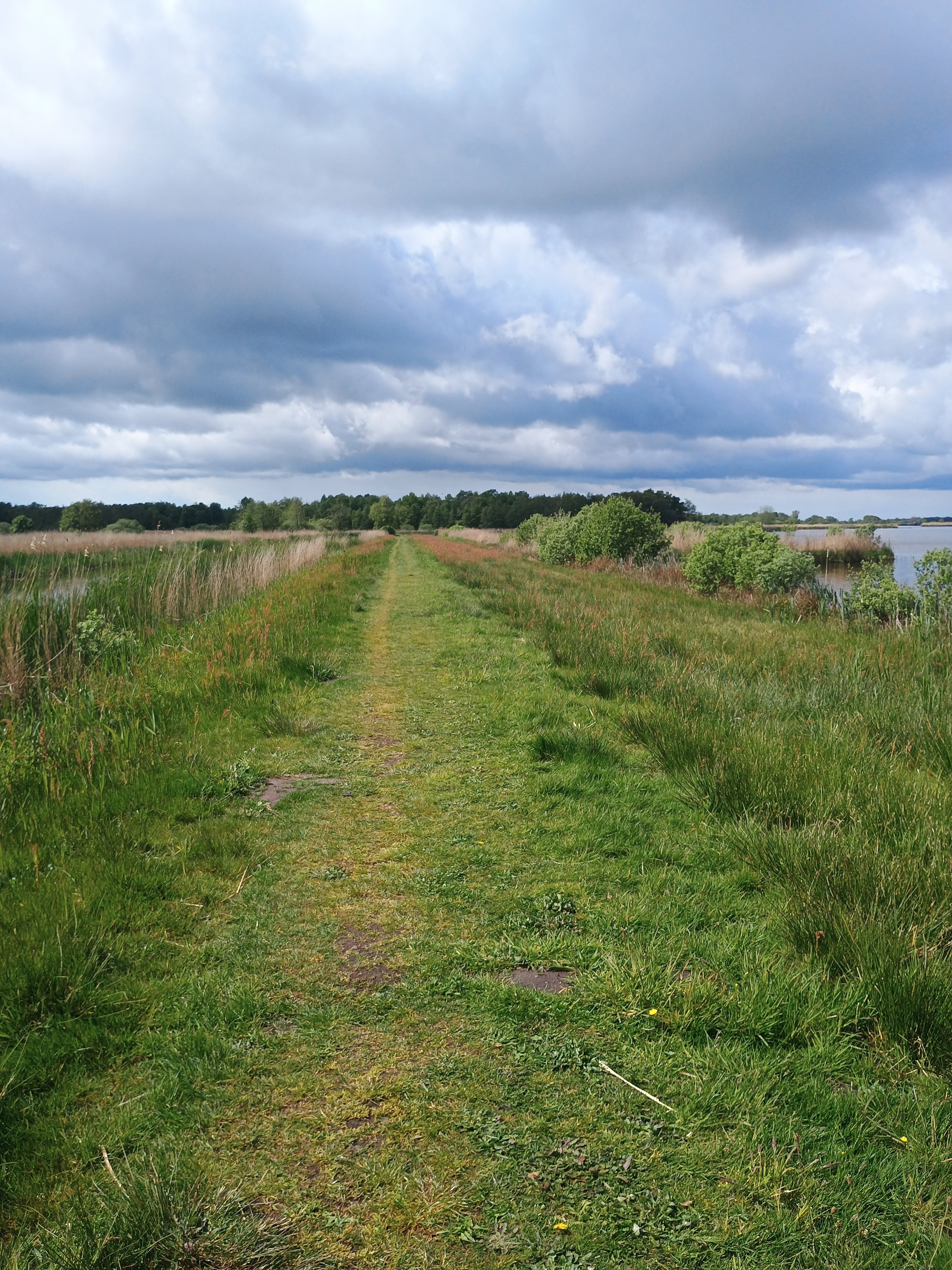
The meadow area around Feanwâlden at its best: space, silence and water.
Frequently asked questions
Is the route suitable for children?
Yes, the 4.3 km loop is very manageable for children from about age six upwards. The route is flat, there is no climbing involved and there is plenty to see to hold attention — think young ducks, geese and, if you are lucky, a roe deer.
How busy is It Bûtefjild?
On weekdays, certainly early in the morning, you encounter very few people. At weekends and during school holidays it can be slightly busier, but compared with popular walking areas in Noord-Holland or Utrecht it is always quiet.
Can I also cycle here?
Yes. The area around Feanwâlden is part of an extensive cycling junction network. Junction 58 is 900 metres from the TOP near the station. If desired, the walking route can also be incorporated as part of a cycling trip.
Is there a longer walking route?
Certainly. It Fryske Gea has mapped out a total of 16 kilometres of walking path in It Bûtefjild, spread across several routes. Some can be combined into a circular walk of 8 to 10 kilometres. These routes can be downloaded via AllTrails.
When will I see the most wildlife?
Early in the morning, from April to June. Roe deer are most active at sunrise and sunset. Waterfowl can be seen throughout the year, but in spring the young are most picturesque. Keep your eyes open in autumn too: many bird species pass through then.
Is the area worth visiting in winter too?
Yes, though it is more austere. The bare trees offer long views and in frost the area changes character completely. When the ditches are frozen over, you may encounter skaters — a typically Frisian sight.
Finally
The walking loop near Feanwâlden is not a spectacle. There is no grand canyon, no spectacular mountain pass, no iconic viewpoint that everyone wants to photograph. What there is: real nature, right next to a village, accessible to everyone and rich enough to return to time and again. I walk this loop so often that I watch the seasons change within it — the geese from small to large, the reed shoots from knee height to head height, the woodland edge from bare to deep green and back again.
I will not soon forget the roe deer of 13 May. Not because it was such a rare apparition, but because nature at such a moment briefly takes you by the arm and says: look. Here. Now. For those who regularly need that feeling — this is the place.
Useful links
It Fryske Gea — Walking route Bûtefjild: itfryskegea.nl/natuurroutes/butefjild
It Fryske Gea — Area information Bûtefjild: itfryskegea.nl/gebieden/butefjild
Recreatieschap Marrekrite — TOP Feanwâlden: marrekrite.frl — TOP Feanwâlden
AllTrails — Walking routes Feanwâlden: alltrails.com — Feanwâlden walking
NS Journey Planner: ns.nl — plan your journey to Feanwâlden station