


Helligdomsklipperne – The Sacred Cliffs of Bornholm
Regular readers will know by now that Bornholm is one of our favourite destinations. It’s a beautiful island in the Baltic Sea. It belongs to Denmark, although its location is actually closer to Sweden than to Denmark itself.
It’s an island with many faces. You could say: Denmark in miniature. From the most beautiful beaches in the south to rugged rocky coasts in the north. In between, charming harbour towns. And let’s not forget the treats you’ll encounter on the island, such as the exquisite smoked salmon.
On the east coast, you’ll find Helligdomsklipperne – the “Sanctuary Cliffs”. If you’re on the island, this is definitely a location that should be on your list. It’s not without reason that it’s one of the most important landmarks not only of Bornholm, but of all Denmark.

About Helligdomsklipperne
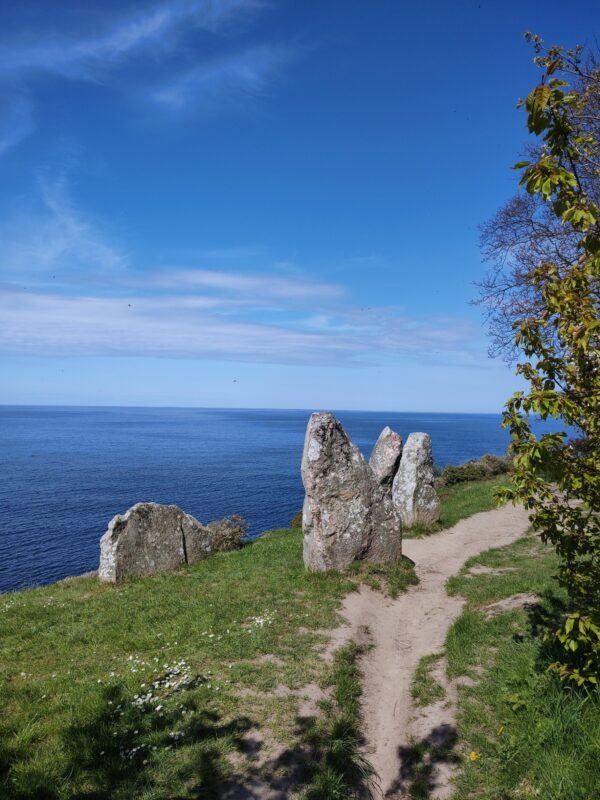
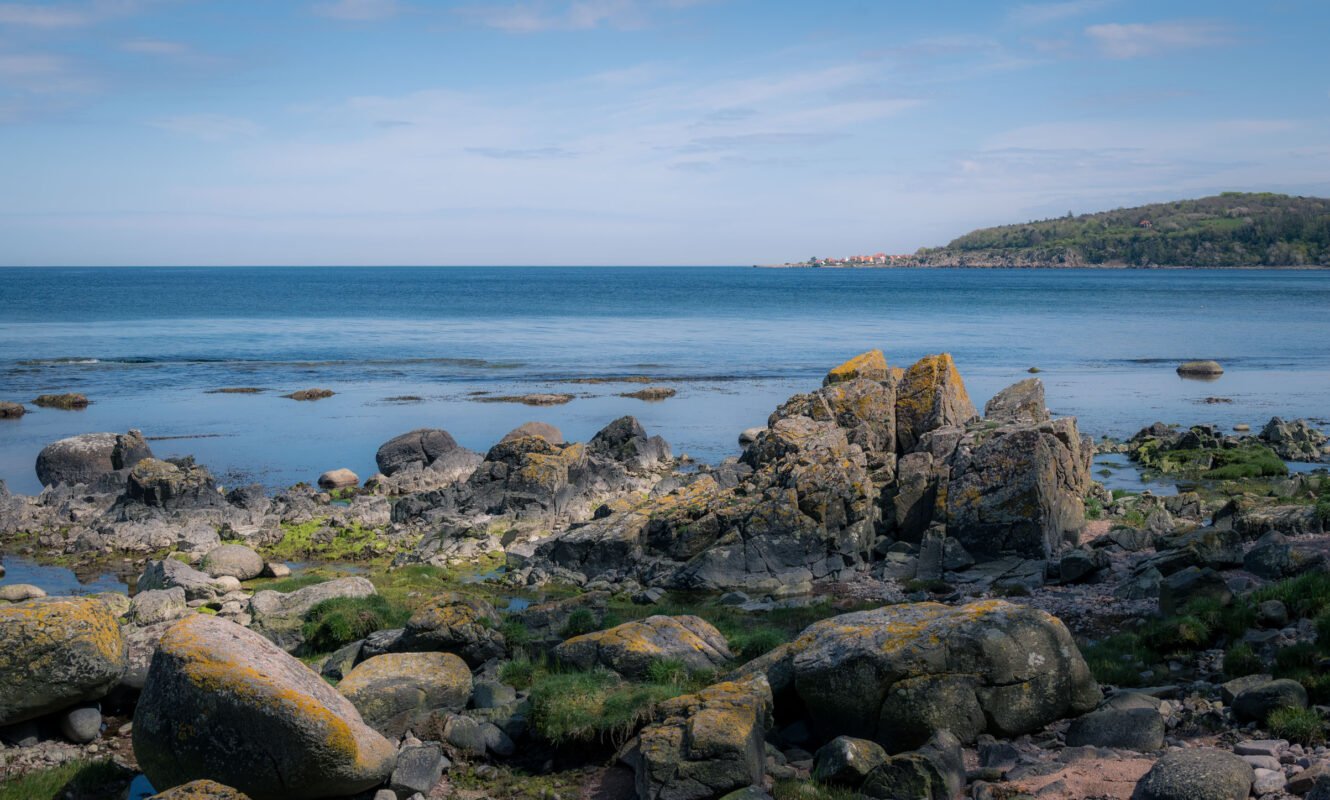
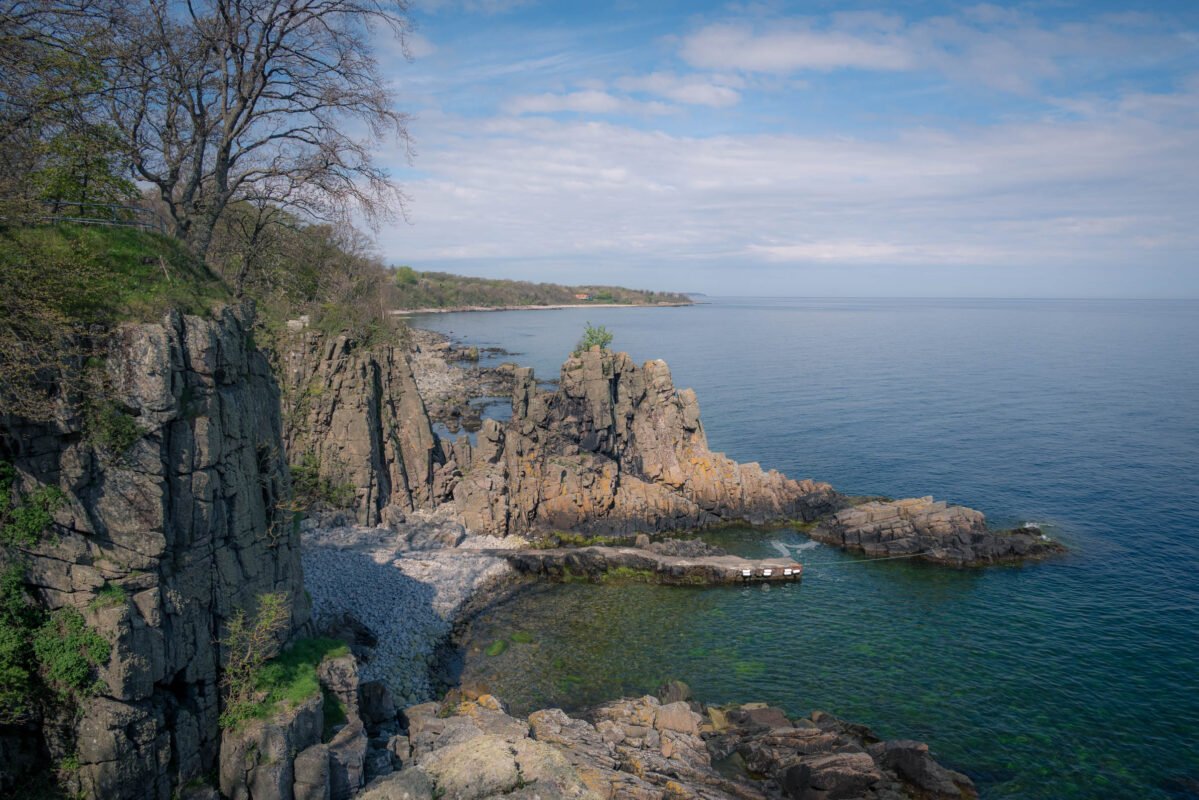
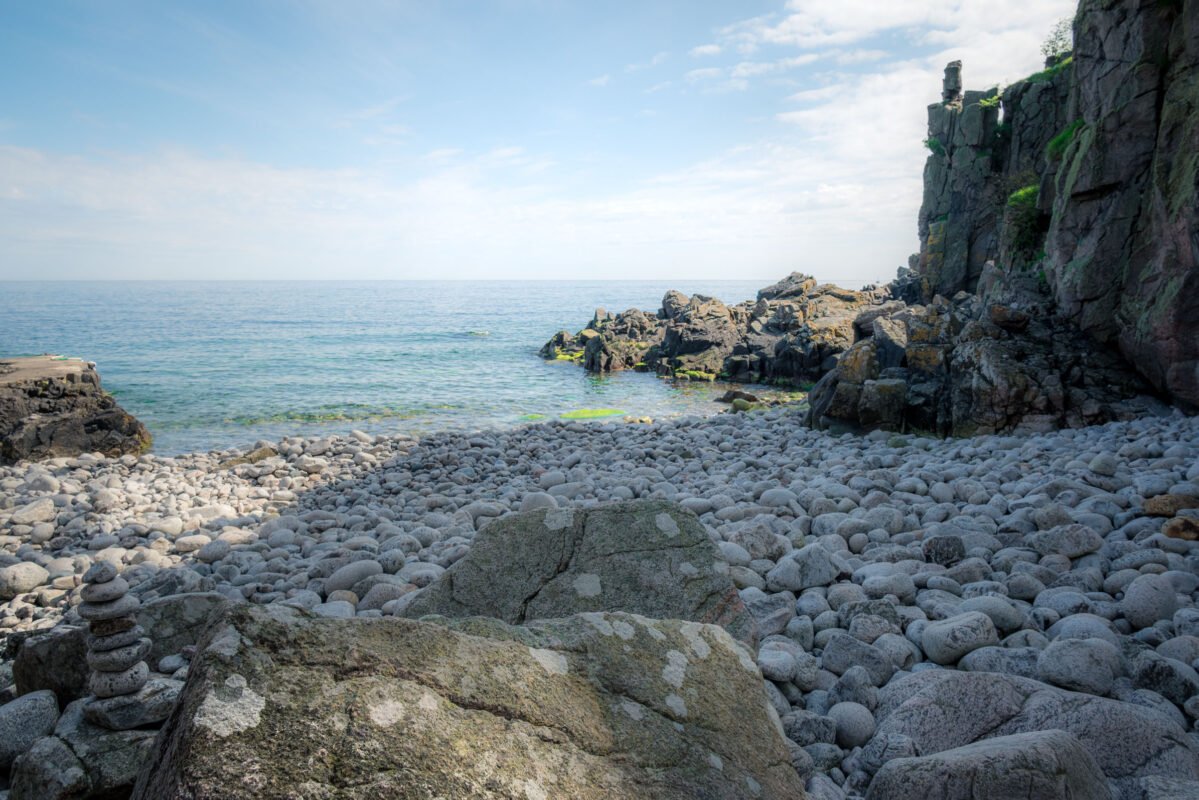
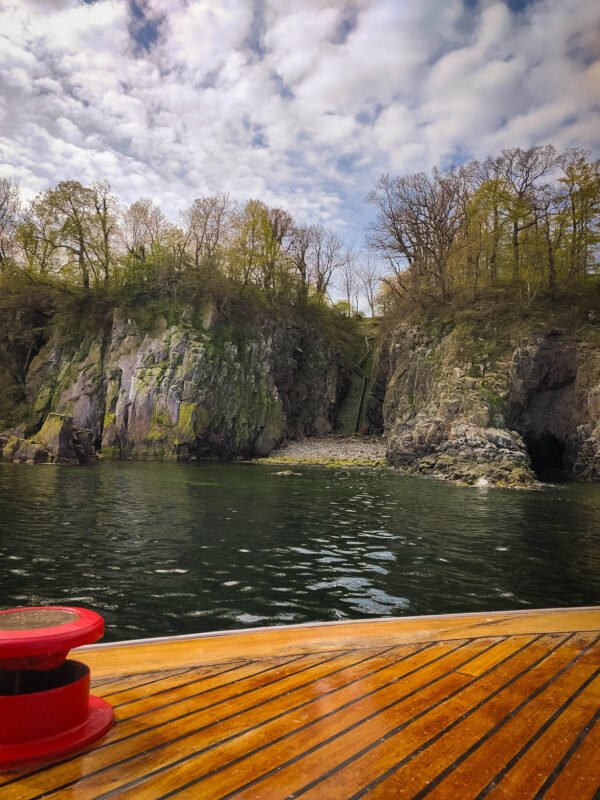
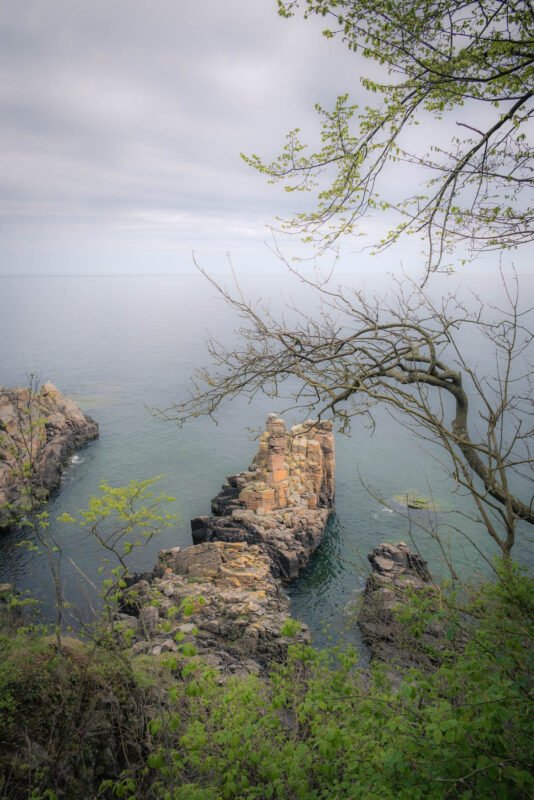
Helligdomsklipperne (Danish for “Sanctuary Cliffs” or “Holy Rocks”) is a spectacular series of granite coastal cliffs on the northeast coast of Bornholm, between the towns of Tejn and Gudhjem. The cliffs rise up to 22 metres vertically from the Baltic Sea, forming a landscape of dramatic rock formations, deep caves, and impressive columns.
The name refers to a holy spring that emerged here at the foot of the rocks during the Middle Ages. Pilgrims came from far and wide to drink the “holy water”, hoping to be cured of their ailments – especially during Sankt Hans Aften (Midsummer’s Night). Above the cliffs once stood the Trefoldighedskapellet (Trinity Chapel), where the spring water was brought for healing rituals.
The geological origins of these rocks go back an incredible 1.7 billion years. The cliffs consist of striped gneiss, crisscrossed by countless diabase veins. During the last Ice Age, the entire area was below sea level; when the ice melted, the land rose and erosion created the characteristic “ovens” and caves that you can explore today.
| Location | Northeast coast of Bornholm, between Tejn and Gudhjem |
| Height | Up to 22 metres |
| Rock type | Granite/gneiss (~1.7 billion years old) |
| Access | Free, accessible 24/7 |
| Deepest cave | Sorte Gryde (60 metres deep) |
| GPS | 55.1544° N, 14.9147° E |
Location and How to Get There
Helligdomsklipperne is located on the northeast coast of Bornholm, approximately 6 km northwest of Gudhjem and near the village of Rø. You can reach the cliffs in several ways:
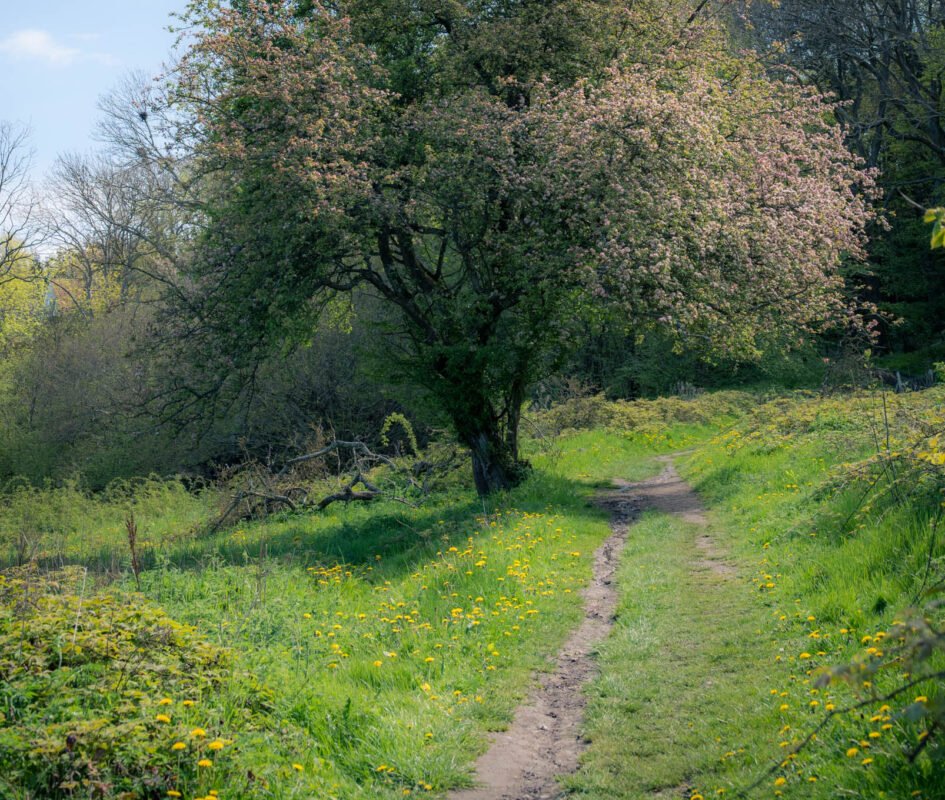
On foot from Gudhjem: A beautiful coastal walk of approximately 5-6 km along the Bornholm coastal path. This is one of the most scenic walks on the island.
By car: There’s a free car park at Bornholmerpladsen, from where you can walk through the forest to the Bornholm Art Museum and the cliffs.
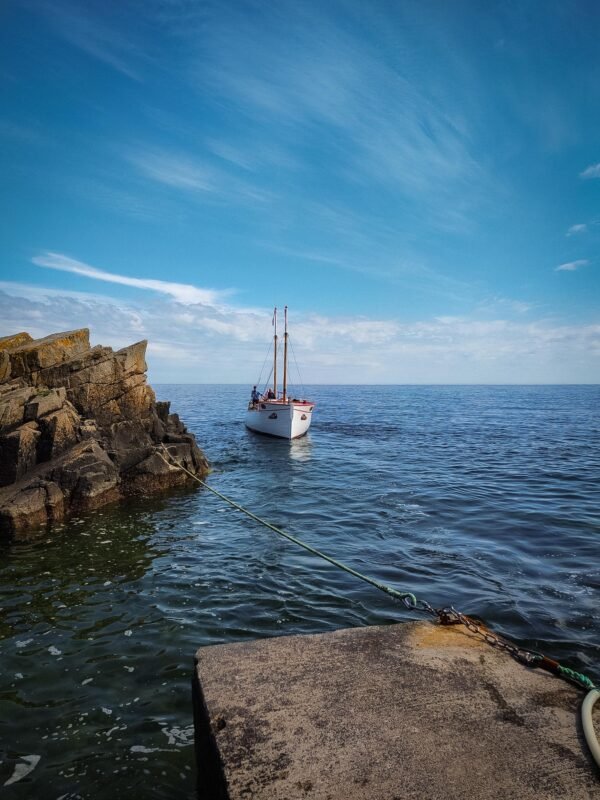
By M/S Thor: But far more beautiful is to take a boat trip from Gudhjem! On the historic wooden ship M/S Thor – which has been sailing along this coast since 1913 – you’ll experience the cliffs from the water. The skipper shares stories about the Vikings and local history along the way.
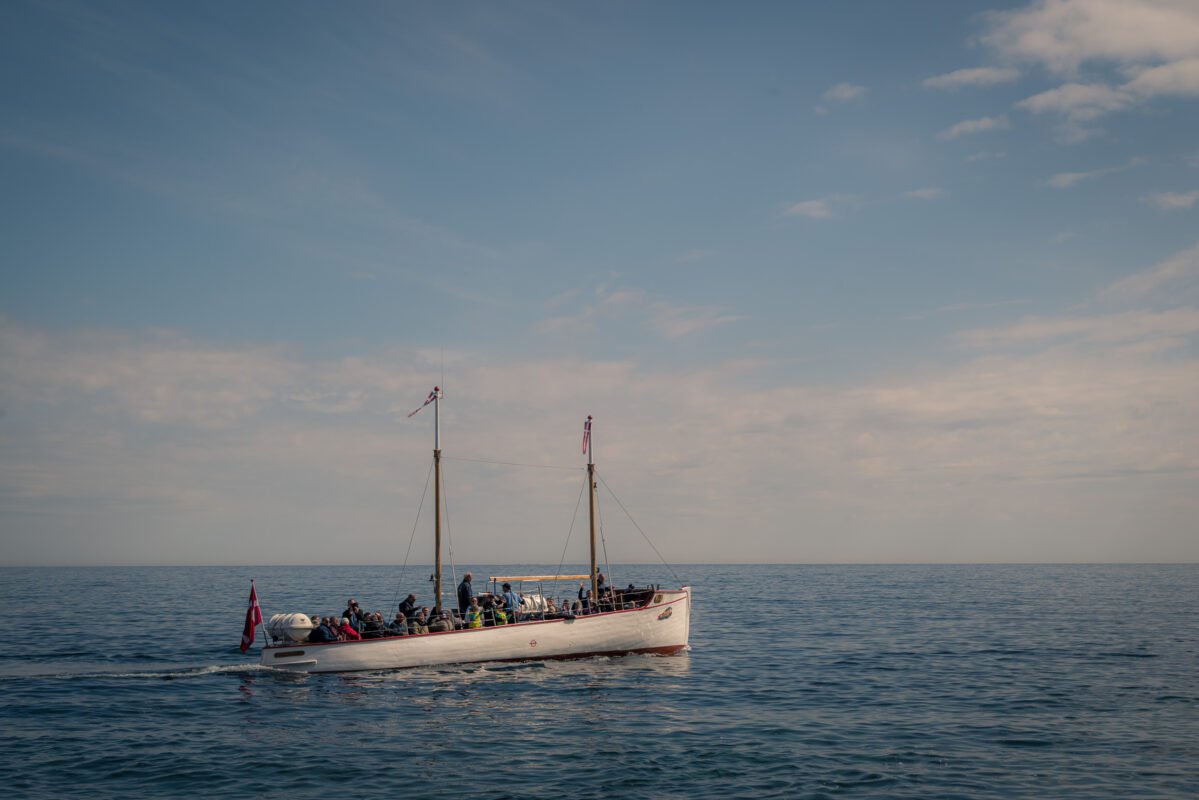
Naturally, we chose to be dropped off at the landing stage at the furthest point of the boat trip and walk back to Gudhjem on foot. A wonderful journey that takes you past the most stunning views on Bornholm.
Tip: The M/S Thor only sails during the summer season (April-October) and in good weather. Tickets can be purchased on board, but reserving via info@ms-thor.dk is recommended. A return trip costs approximately 100 DKK per person (2025 prices).
| From Gudhjem | ~6 km (on foot or by boat) |
| From Allinge | ~8 km (coastal path) |
| Parking | Free at Bornholmerpladsen/Art Museum |
| Bus stop | “Helligdommen (Bornholms Kunstmuseum)” |
| M/S Thor | ~30 min one way from Gudhjem |
History of the Sacred Cliffs
The history of Helligdomsklipperne as a pilgrimage site dates back to the Middle Ages. At the foot of the rocks, a spring emerged that was considered holy. The water was said to have healing properties, and especially during Sankt Hans Aften (Midsummer’s Night, 23 June), pilgrims came from all over the island to be healed.
On the field directly behind the rocks stood the Trefoldighedskapellet (Trinity Chapel). Water from the holy spring was carried up to the chapel, where the sick would drink it or wash themselves with it. An account from 1806 notes, incidentally, that the spring produced so little water that a woman was paid to refill it with seawater each Midsummer…
In the 19th century, artists and romantics discovered the dramatic beauty of this place. The painter Georg Emil Libert (1820-1908) was so impressed that one of the rocks was named after him: Libertsklippen. Other formations also received romantic names: Lyseklippen (Light Cliff), Måneskinsklipperne (Moonlight Cliffs), Kærlighedsbænken (Love Bench).
When a German purchased Hotel Helligdommen in 1906, including part of the coast, there was great unrest among the population. This led to the founding of Foreningen Bornholm, which ensured the cliffs remained publicly accessible. In 1911, Bornholmerpladsen was established to accommodate the growing stream of tourists.
The Surrounding Area
Bornholm Art Museum
Directly above the cliffs lies the Bornholm Art Museum, an architectural gem built in 1993 and extended in 2003. The modern building contrasts beautifully with the rugged nature and offers views of the sea, the fields, and on clear days even Christiansø in the distance.
The museum displays art by painters with connections to Bornholm, from the Danish Golden Age to the present day. Special attention is given to the Bornholm School – modernist painters who were attracted by the light and landscape of the island in the early 20th century. Outside, there’s a freely accessible sculpture park.
| Entry | 100 DKK (adults), children free |
| Opening hours | Seasonal, check website |
| Visit duration | ~2-3 hours (museum + cliffs) |
| Website | bornholms-kunstmuseum.dk |
The Caves and Rock Formations
The cliffs harbour several impressive caves, formed by millions of years of erosion:
- Sorte Gryde (Black Pot) – the deepest cave, up to 60 metres deep. Home to the rare Bornholm cave spider.
- Våde Ovn (Wet Oven) – the M/S Thor sails in here to within 20 cm of the rock wall!
- Tørre Ovn (Dry Oven) – easily accessible from the path
- Lyseklippen (Light Cliff) – named after the light that falls in here
- Libertsklippen – named after painter Georg Emil Libert
Other Attractions
- Gudhjem – picturesque harbour town, famous for “Sol over Gudhjem” (smoked herring)
- Døndalen – Denmark’s highest waterfall, accessible via the coastal path heading west
- Hammershus – Scandinavia’s largest castle ruin, further north along the coast
- Oluf Høst Museum – the studio of Bornholm’s most famous painter in Gudhjem

Photography at Helligdomsklipperne
For photographers, Helligdomsklipperne is a paradise. The combination of dramatic rocks, deep blue sea, caves, and the characteristic Bornholm light offers endless possibilities. It’s no wonder these cliffs were a favourite subject for the Bornholm painters!
Photography tip: The best photos are taken early in the morning or late in the afternoon, when the light is warm and the shadows are deep. From the water (on the M/S Thor), you get a unique perspective on the monumental scale of the cliffs. Bring a wide-angle lens for the caves.
Note: The paths can be steep and slippery, especially on the descent to the caves. Wear sturdy footwear and be careful near the cliff edge – there are no barriers!

Walking Routes at Helligdomsklipperne
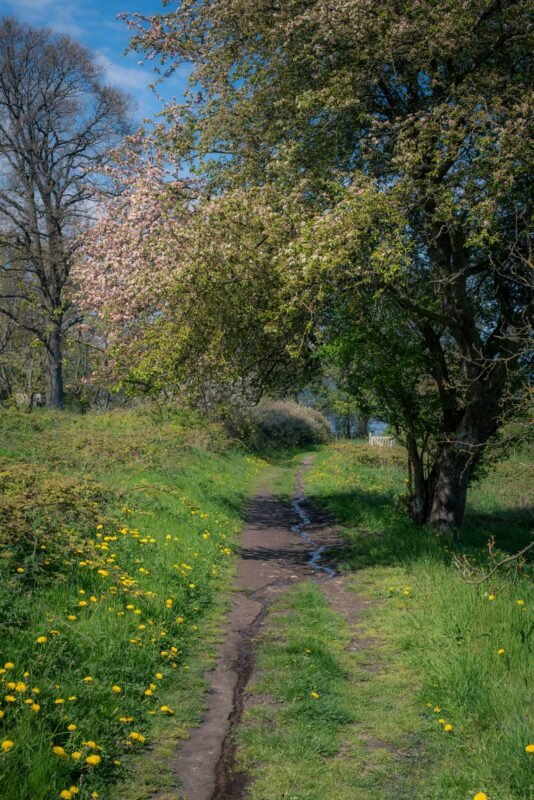
The Bornholm coastal path (Kyststien) runs directly past Helligdomsklipperne and offers spectacular walking opportunities. You can approach the cliffs from both the south (Gudhjem) and the north (Allinge/Tejn).
Route 1: Gudhjem – Helligdomsklipperne (return)
This route assumes you’re walking from Gudhjem to Helligdomsklipperne on foot. The distance is therefore there and back. If you go by M/S Thor, the walking distance is halved.
| Distance | ~12 km (return) or ~6 km (one way) |
| Duration | 3-4 hours (return) or 1.5-2 hours (one way) |
| Difficulty | Moderate (steep stairs) |
| Terrain | Coastal path, rocks, stairs |
Route 2: Coastal Path Allinge – Helligdomsklipperne
You can also reach Helligdomsklipperne from the north along the coast. The route below starts in Allinge, but you can of course start wherever suits you. This longer route takes you past even more spectacular coastal views.
| Distance | ~15 km |
| Duration | 4 hours |
| Difficulty | Moderate |
| Terrain | Coastal path, forest trails |

Best Time to Visit
Helligdomsklipperne is accessible year-round, but each season has its charm:
| Spring (April-May) | Wildflowers, quiet, M/S Thor starts again |
| Summer (June-Aug) | Best weather, all facilities open, busier |
| Autumn (Sept-Oct) | Autumn colours, dramatic light, quieter |
| Winter (Nov-March) | Wild and empty, no M/S Thor, museum limited hours |
Tip: The M/S Thor sails from April to October. For the best combination of weather, facilities, and relative peace: visit Helligdomsklipperne in May-June or September. Midsummer’s Night (23 June) is a special time due to its historical significance as a pilgrimage date.
Accommodation on Bornholm
Helligdomsklipperne combines well with a stay in the north of Bornholm. Places like Allinge and Sandvig are nearby and offer a peaceful base. From here, you can easily explore other parts of the island.
We always choose a holiday home – that way we have all the space and peace we need. Usually on the south side, where you’ll find the most beautiful beaches. This gives us the opportunity to take a lovely evening walk along the beach as the sun sets. Read more about Dueodde Beach here.
Gudhjem is also an excellent base: picturesque, full of good restaurants, and right on the coastal path to Helligdomsklipperne.
Practical Information
Getting There
| Ferry to Bornholm | Bornholmslinjen from Ystad (Sweden) or Køge (DK) |
| Flight to Bornholm | Bornholm Airport (RNN) from Copenhagen |
| From Rønne | ~30 km to Helligdomsklipperne |
| Bus | Line to stop “Helligdommen” |
| Parking | Free at Bornholmerpladsen |
Facilities
- Cliff access: Free, 24/7
- Art Museum: 100 DKK, children free
- Café: At the Art Museum
- Toilets: At the Art Museum and Bornholmerpladsen
- M/S Thor: ~100 DKK per person (return)
- Dogs: Welcome, on lead
What to Bring
- Sturdy footwear: Essential for the steep stairs and rocky paths
- Windproof jacket: It can be fresh on the coast
- Camera: This is one of the most photogenic spots on Bornholm
- Water & snacks: Limited facilities along the way
- Torch: If you want to explore the caves
Frequently Asked Questions
How do you get to Helligdomsklipperne?
You can reach Helligdomsklipperne on foot via the coastal path from Gudhjem (~6 km), by car to the car park at the Art Museum, or – most beautifully – by boat on the M/S Thor from Gudhjem (~30 min).
How much does it cost to visit Helligdomsklipperne?
The cliffs themselves are free to access. The Bornholm Art Museum costs 100 DKK (children free). A boat trip on the M/S Thor costs approximately 100 DKK per person for a return journey.
How long do you need for a visit?
Allow at least 2-3 hours to explore the cliffs. Including a visit to the Art Museum and lunch at the café, you could easily spend half a day here. The walk from Gudhjem makes it a full day out.
Is Helligdomsklipperne suitable for children?
Yes, children often find the caves exciting to explore. Do watch out near the cliff edge and steep stairs – there are no barriers. The boat trip on the M/S Thor is a hit with children of all ages.
When does the M/S Thor sail?
The M/S Thor sails from April to October, only in good weather (the ship is open). Tickets can be purchased on board, but booking is recommended via info@ms-thor.dk or by phone.
What is the best time to visit Helligdomsklipperne?
The summer months (May-September) are ideal, when all facilities are open and the M/S Thor is sailing. Early morning or late afternoon offer the best lighting conditions for photography.
Final Thoughts
If you’re on Bornholm or planning to visit this beautiful island, definitely put Helligdomsklipperne on your list. It’s a place where nature, history, and art come together in a way you won’t soon forget. The combination of a boat trip on the M/S Thor and a walk back to Gudhjem is, in my opinion, one of the most beautiful experiences Bornholm has to offer.
In my photo book Bornholm – Pearl of the Baltic Sea, you can get a wonderful impression of this beautiful island through many stunning photographs. Most locations also include QR codes giving you direct access to additional location information.
Or read about Hammershus in this article. Or visit the beautiful Christiansø.
Useful Links
- Visit Bornholm – Tourist information: bornholm.info
- M/S Thor – Boat trips from Gudhjem: ms-thor.dk
- Bornholm Art Museum – Museum at the cliffs: bornholms-kunstmuseum.dk
- Ferry to Bornholm – Bornholmslinjen: bornholmslinjen.com
- Hiking on Bornholm – Trail info: bornholm.info/hiking
Location on Map
Related Articles
- Hammershus – Scandinavia’s largest castle ruin
- Christiansø – Island paradise east of Bornholm
- Dueodde Beach – Bornholm’s most beautiful beach
Gallery
Pictures speak louder than words: